
The agricultural sector faces unprecedented challenges from increasingly frequent and severe disasters that are fundamentally reshaping how we approach impact assessment and measurement in agrifood systems. The economic ripple effects of disasters extend far beyond immediate production losses, as demonstrated by recent major events. For instance, the 2018 drought in Europe caused agricultural losses exceeding EUR 9 billion,14 while the 2019–2020 Australian bushfires resulted in agricultural losses of over AUD 5 billion, destroying livestock, crops, wildlife and agricultural infrastructure across vast areas.15 The 2021 extreme heat dome in North America resulted in agricultural losses exceeding USD 600 million in the Pacific Northwest alone, devastating fruit crops and causing widespread livestock mortality that affected regional food supplies for several months.16
These examples illustrate how localized disasters can have cascading and transboundary impacts on global agrifood systems, affecting prices, trade patterns and food security far beyond the initial impact zone. The interconnected nature of modern agrifood systems means that disruptions in one region can quickly propagate through international markets, supply chains and trade relationships, creating vulnerabilities that extend well beyond the immediately affected areas. Understanding these complex impact pathways is essential for developing effective assessment methodologies and response strategies that address both local and systemic consequences of disasters for the agricultural sectors.
Although the foundation of effective disaster risk reduction lies in improving risk knowledge and the accurate measurement and comprehensive understanding of how disasters disrupt agrifood systems, the systematic documentation and analysis of these impacts is limited by methodological and practical constraints. Current assessment approaches are limited to evaluating immediate production losses and economic costs. They are unable to systematically capture the complex, cascading effects that ripple through interconnected agrifood systems, resulting in an underestimation of disaster consequences and inadequate evidence for informed recovery and resilience building.
As a first step towards accounting for both immediate, direct losses and the longer-term, indirect impacts of disasters on agrifood systems, the first chapter of this part of the report outlines the main trajectories and dimensions through which such extreme events disrupt agricultural production, value chains and livelihoods. Only through the identification of appropriate loss components and variables – what, exactly, is being lost? - can we develop analytical frameworks to capture the full complexity of disaster impacts on agriculture.
This is followed by a review of the two main tools that monitor the global impacts of disaster events and provide a breakdown of losses for the agricultural sector – namely the Sendai Framework Monitor and the PDNAs. Updated data from these two sources are analysed to demonstrate the relative share of losses in agriculture versus other productive sectors, and impacts in agriculture by hazard types.
The last chapter presents estimates of global losses in crop and livestock production, utilizing a methodology developed by the Statistics Division at FAO and drawing on production data for 191 agricultural commodities across 205 countries and territories from FAOSTAT, as well as disaster event data from EM-DAT.17 The model offers insights into the overall loss trends in agriculture and reveals variable levels of vulnerability and risk experienced in agricultural sectors across regions, subregions and country income groups. In the absence of systematic data to analyse production losses in the fisheries subsector, a limited evaluation of the impact of marine heatwaves on fisheries is presented as a first step towards more comprehensive assessments in the future.
2.1 The complex nature of disaster impacts on agriculture
Today’s agricultural systems face escalating pressures from disasters that extend beyond immediate production losses to encompass complex disruptions across entire agrifood value chains. The interconnected nature of modern agrifood systems means that a disaster affecting one component can trigger cascading effects through multiple pathways, often resulting in impacts greater than the sum of its parts.
The vulnerability of agricultural systems is also compounded by their exposure to multiple, often simultaneous hazards that create complex emergencies, which ultimately challenge established risk management approaches. In 2020, East Africa faced a “triple threat” of the COVID-19 pandemic, flooding and desert locusts, creating a complex emergency that reactive disaster management practices struggled to address.18 The compounding effects of these simultaneous crises led to a 20 percent increase in acute food insecurity in the region.19 Similarly, Cyclone Idai, which struck Southern Africa in 2019, did not just destroy 780 000 hectares of crops on impact, but it also triggered cholera outbreaks and created conditions for increased pest infestations, affecting 3 million people across Mozambique, Zimbabwe and Malawi.20 The interaction between these different types of crises created synergistic effects that exceeded what any single hazard might have produced, highlighting the need for integrated assessment approaches that can capture compound and cascading risks.
The temporal dimension of impacts presents unique challenges for loss assessments, as effects may emerge immediately during disaster events but also develop gradually over months or years as recovery processes unfold and secondary impacts become apparent. Similarly, spatial complexity adds another layer of difficulty, as the impact of disasters on agriculture often extends far beyond the immediate disaster zone through market linkages, supply chain disruptions and population movements.
These examples underscore the fundamental challenge facing assessments of disaster impacts in agriculture: understanding these multifaceted impacts requires comprehensive frameworks that capture the full spectrum of consequences across temporal, spatial and sectoral dimensions. The following section systematically outlines how disasters can impact agricultural systems, laying the groundwork for developing methodologies and indicators that capture the complex, interconnected nature of contemporary disaster risks.
PATHWAYS OF AGRICULTURAL SYSTEM DISRUPTION
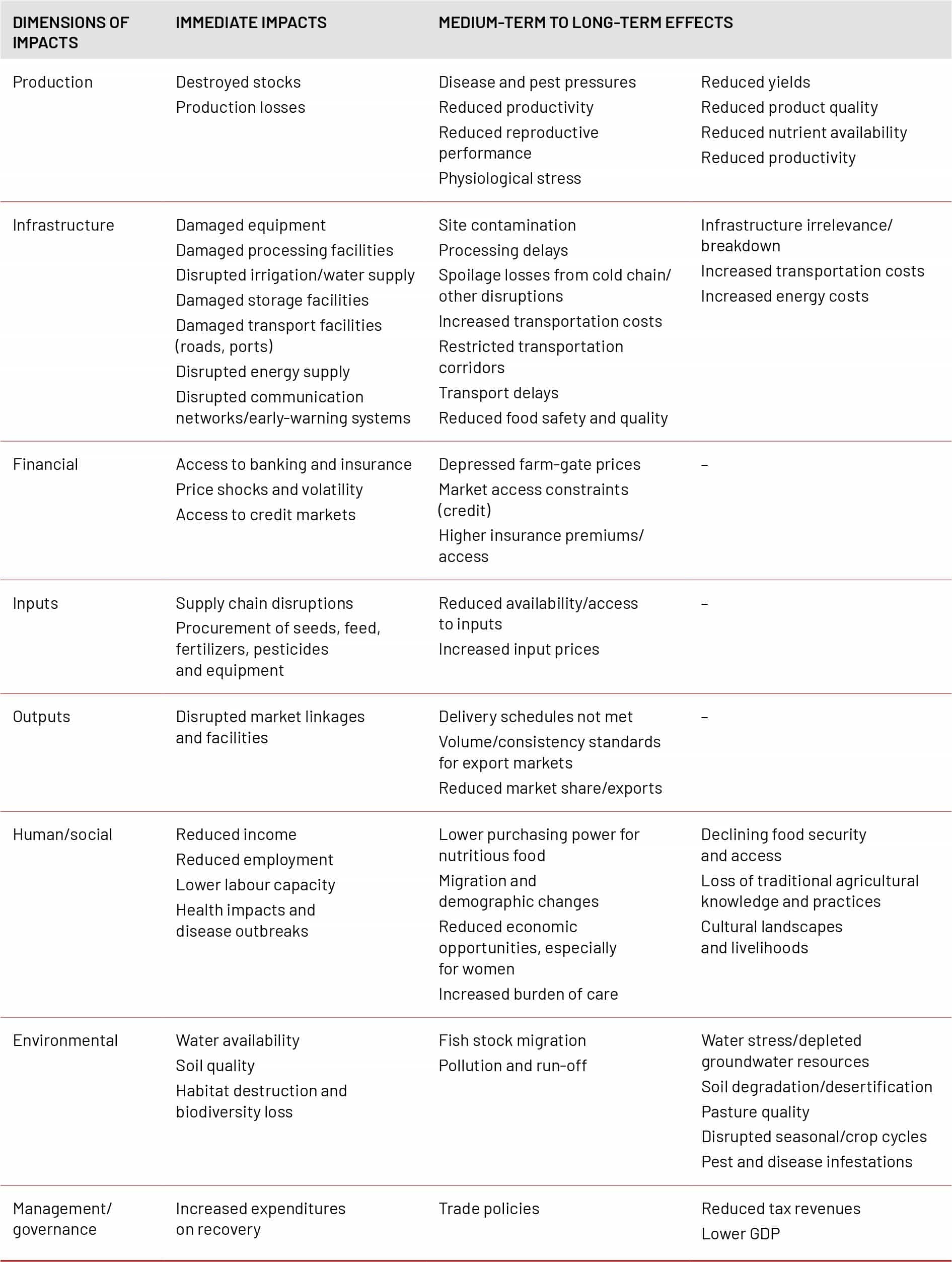
Understanding the transmission pathways and mechanisms of agricultural losses is essential for developing comprehensive impact assessment frameworks that can capture the full scope of disaster impacts and inform effective response and recovery strategies (see TABLE 1). The most visible and immediate pathway through which disasters affect agriculture occurs through disruptions to production systems themselves. Yet even these straightforward impacts involve complex interactions between environmental stresses, biological systems and management practices. Extreme weather events destroy crops through multiple mechanisms, including physical damage from hail, wind and flooding, as well as physiological stress from temperature extremes and moisture deficits. These primary impacts often trigger secondary effects such as increased pest and disease pressure in weakened plants, creating cascading consequences that extend beyond the initial damage.21 For instance, increased humidity resulting from flooding can create favourable conditions for fungal pathogens, while stressed plants may exhibit compromised immune responses.22 Livestock systems experience similar multifaceted impacts, including direct mortality from extreme weather, heat stress that reduces productivity and reproductive performance, disrupted feed supplies that compromise animal nutrition and disease outbreaks that can spread rapidly through stressed populations.23
TABLE 1 PATHWAYS OF DISASTER IMPACTS IN AGRICULTURE
Adding another layer of complexity to impact assessment, the temporal dynamics of these disruptions vary significantly. While some effects are felt immediately – such as crop destruction from severe storms – others develop gradually, including the weakening of plants from prolonged stress, reduced long-term productivity due to soil degradation and diminished future production capacity from the loss of breeding stock. Perennial crops such as fruit trees and coffee present unique assessment challenges, as damage may not become fully apparent until subsequent growing seasons, while recovery may require multiple years of replanting and establishment before productive capacity is restored.24,25
The intersection between production impacts and environmental degradation becomes particularly evident in fisheries and aquaculture systems. Disasters can simultaneously affect fish stocks through direct mortality, habitat destruction and water quality deterioration. Coastal aquaculture facilities are particularly vulnerable to storm surge, saltwater intrusion and infrastructure damage, while inland systems may be affected by flooding, drought or pollution from agricultural runoff.26 The mobile nature of wild fish populations introduces an additional challenge, as environmental changes can cause stock migrations that affect fishing communities far from the original disaster area.
Beyond direct production impacts, the destruction and damage of infrastructure create bottlenecks that amplify and extend the effects of disasters throughout agrifood systems, often resulting in consequences that persist long after production systems have recovered.27, 28 When transportation networks experience disruption, farming communities become isolated from input suppliers and output markets, creating both immediate access problems and longer-term economic consequences. In Nepal, farmers struggled to obtain necessary inputs for the next growing season or market their products post-harvest after the 2015 earthquake.29 The strategic importance of specific infrastructure elements means that damage to key facilities such as ports, processing plants or major transportation corridors can reverberate throughout entire regional agrifood systems.
Storage and processing facilities emerge as critical vulnerability points throughout the production and agrifood system. Damage to these facilities can result in massive food losses even when primary production remains intact. Cold storage facilities are particularly vulnerable to power outages, which can render high-value perishable products unusable within hours.30 Grain storage facilities may experience moisture intrusion, pest infestation or structural damage that render stored products unmarketable.31 When processing plants experience equipment damage, contamination or operational disruptions, their impaired capacity to handle agricultural products creates bottlenecks that can lead to production losses, even in areas with undamaged farming operations.32
These infrastructure impacts become compounded when communication systems fail, limiting farmers’ access to critical information about weather conditions, market prices, input availability and technical assistance.33 The increasing reliance on digital technologies for farm management, market access and government services means that communication disruptions can simultaneously affect multiple aspects of agricultural operations. Early-warning systems become ineffective when communication networks are damaged, limiting the ability of farmers to take protective actions before subsequent disaster events and thereby increasing their vulnerability to cascading impacts.
Similarly, widespread effects occur when energy infrastructure sustains damage, affecting irrigation systems, cold storage facilities, processing operations and transportation networks. These impacts cascade throughout the agrifood system in complex ways.34 Irrigation system failures can lead to crop losses even when water supplies remain adequate, while processing plant shutdowns create bottlenecks that affect multiple farming operations simultaneously. The interconnected nature of energy systems means that damage to generation, transmission, or distribution infrastructure can impact agricultural operations across broad geographic areas, resulting in regional-scale disruptions from localized damage.35
The financial dimension of disaster impacts creates additional layers of disruption by limiting access to credit, insurance, and other essential financial services necessary for agricultural operations and recovery. Banking systems may experience physical damage or operational disruptions that limit the ability of farmers to access funds for inputs, equipment repair, or household needs during critical periods for planting or harvesting. The concentration of financial services in urban areas means that rural agricultural communities often face prolonged periods without access to banking services following disasters that damage transportation or communication infrastructure, creating hardships for remote farming operations. A study of the 2019 floods in the Islamic Republic of Iran found that rural communities with access to a local bank branch experienced early recovery due to immediate access to financial services, although the banking facilities themselves faced higher physical risks due to their greater exposure to hazards.36
In the aftermath of major disasters, insurance systems frequently become overwhelmed by claims, potentially restricting coverage for future seasons and creating additional uncertainty for agricultural producers as they attempt to plan recovery investments. The interdependence between insurance markets and capital markets means that major disasters can affect insurance availability and pricing across entire regions or sectors, influencing risk management decisions for farmers who were not directly affected by the initial disaster.37 This ripple effect through insurance markets can fundamentally alter the risk landscape for agricultural production across broad geographic areas.
As disaster impacts move through financial systems, credit markets typically tighten as lenders become more risk-averse, constraining capital availability for both immediate recovery and longer-term adaptation investments. As was the case after Hurricane Katrina, such credit constraints affected not only farmers directly impacted by the disaster but also those in surrounding areas or similar production systems, as lenders reassessed risk profiles across entire sectors or regions.38 The timing of credit restrictions relative to agricultural production cycles proves particularly problematic when farmers struggle to access necessary financing during critical planting periods, potentially affecting multiple growing seasons.
The economic consequences of disasters extend further through disruptions to market access, affecting both input procurement and output marketing. These disruptions create economic impacts that may persist long after physical infrastructure is repaired and can fundamentally affect the viability of farming operations even when production capacity is restored. Input suppliers experiencing supply chain disruptions increase costs and reduce the availability of seeds, fertilizers pesticides and equipment.39 Farmers in remote areas who depend on complex supply chains for essential inputs face unique vulnerabilities. Indeed, these disruptions can affect multiple growing seasons if farmers are unable to obtain quality seeds or other essential inputs during critical planting periods, resulting in long-term impacts on productivity.
On the output side, markets become disrupted through multiple pathways, including damaged transportation infrastructure, reduced storage capacity, destroyed processing facilities and consumer concerns about food safety from disaster-affected areas. The perishable nature of many agricultural products means that even temporary market access problems can result in total product losses. Longer-term market disruptions impact farmer income and investment decisions, shaping agricultural development trajectories for years to come. Price volatility increases as supply disruptions interact with speculative trading, hoarding behaviour, and emergency purchasing by governments and humanitarian organizations, creating uncertainty that affects planning decisions throughout agrifood systems.40
These local and regional impacts ultimately connect to global systems through international trade, demonstrating how disasters in one location can have far-reaching consequences through interconnected markets.41 As seen during the spread of ASF in China’s pork industry in 2018 and 2019, when major producing regions experience disasters that affect global supply chains and commodity prices, the effects ripple through international markets.42 Export disruptions can affect foreign exchange earnings and market reputation for entire countries, while import dependencies make countries vulnerable to disasters occurring in their main supplier regions. Trade policy responses to disasters, such as export restrictions or emergency imports, can further exacerbate market disruptions and impact global food security, creating feedback loops that extend and intensify the original disaster’s impacts across international boundaries.
A comprehensive understanding of disaster impacts requires recognizing that agricultural systems generate both economic outputs that can be quantified in monetary terms and non-economic values that are harder to quantify but may be equally or more valuable for community welfare, cultural identity and long-term sustainability. This distinction is crucial for developing assessment methodologies that capture the full range of disaster impacts and inform response strategies that address all dimensions of impact rather than focusing solely on measurable economic losses.
The economic dimension of disaster impacts on agriculture – some of which were outlined in the previous section – includes damage and loss that can be valued using market prices or established economic methodologies, providing quantifiable measures that enable comparison across different hazard types, regions and time periods. Among these, physical asset damage – including destroyed or damaged crops, livestock mortality, damaged equipment and buildings, and infrastructure destruction – can be valued using replacement costs, market values or depreciated replacement costs, depending on the specific assets involved. As mentioned in the previous section, this direct physical damage is often the most visible and immediately apparent consequence of disasters, making it an expected primary focus for initial assessment efforts.
Beyond the immediate destruction of physical assets, disasters generate production losses that represent foregone output, which can be quantified using yield data, production statistics and market prices to estimate the monetary value of lost agricultural production (see Section 2.3). These losses may result from complete crop failure, reduced yields due to stress or damage, or disrupted production cycles that affect the timing and quality of output. Estimating livestock production losses can be more complicated as it includes not only direct mortality but also reduced productivity resulting from stress, disrupted breeding cycles and compromised animal health, which may persist for extended periods following the initial disaster event.
The measurement of the human dimensions of the economic impact of disasters requires a broader scope of assessment. It must also examine how loss of income affects anyone whose livelihood depends on agriculture, including farmers and agricultural workers, and the ripple effects of disasters throughout rural economies that often extend beyond the agricultural sector itself.43,44 This loss of income may result from reduced production, lower product prices, increased input costs or lost employment opportunities in agriculture-dependent communities. The distribution of income losses across different population groups reflects existing structural inequalities and vulnerabilities, with smallholder farmers, agricultural workers, women and other marginalized groups often experiencing disproportionate impacts.45
As disasters reverberate along agricultural value chains, they generate economic losses that impact processing, storage, transportation and marketing activities throughout the agrifood system. Disruptions in interconnected value chains can lead to indirect impacts such as increased transportation costs, spoilage losses from broken cold chains, processing delays that reduce product quality, diminished processing capacity and market access constraints that depress farm-gate prices. These impacts are amplified in international markets when disaster-affected regions are unable to meet delivery schedules or maintain the volume and consistency required for export. These losses can have lasting consequences as international buyers may shift to alternative suppliers, affecting market share and reputation beyond the immediate disaster period. As noted in a recent study,46 the concentration of export production in specific regions can make entire countries vulnerable to disasters, affecting their key export areas, with consequences on foreign exchange earnings and economic development.
Secondary economic impacts are also generated in the financial sector through post-disaster adjustments in insurance and risk management costs, which influence agricultural investment and risk management decisions across entire sectors.47 Similarly, public sector finances face dual pressures from disasters through increased expenditures for disaster response and recovery activities, while simultaneously experiencing reduced tax revenues from damaged economic sectors. These fiscal pressures can affect government capacity to provide agricultural support services, invest in rural infrastructure or fund disaster risk reduction measures, creating longer-term consequences for agricultural development and resilience building.48
ECONOMIC AND NON-ECONOMIC LOSS DIMENSIONS
While economic losses capture important dimensions of disaster impacts, the full consequences of disruptions to agrifood systems extend into non-economic realms that cannot be easily quantified in monetary terms but may have profound effects on individuals, communities and ecosystems. These non-economic losses often determine the long-term sustainability and resilience of agricultural systems. Among the most significant non-economic losses are those related to cultural heritage, including traditional farming practices, Indigenous crop varieties, and cultural landscapes that embody generations of agricultural knowledge and cultural identity accumulated through centuries of adaptation to local environmental conditions.49 When traditional knowledge holders are displaced, environmental conditions change sufficiently to make traditional practices unviable. Likewise, the disruption of social structures that maintain cultural transmission may perpetuate permanent losses, reducing a community’s capacity to adapt to environmental changes and manage agricultural risks using locally appropriate strategies.
Displacement, migration, breakdown of traditional support systems and competition for scarce resources can have profound effects on agricultural communities. Community institutions, including farmer organizations, cooperative societies, established governance structures, and informal mutual support networks may be weakened or fragmented following disasters. The erosion of social capital reduces a community’s capacity for collective action, mutual support and collaborative resource management during crises, all of which are integral for agricultural sustainability.50
It is also challenging to quantify the cost of post-disaster changes in individual and collective well-being due to psychological and health impacts, including stress trauma, and mental health consequences experienced by farming communities affected by disasters. These impacts may persist long after physical damage is repaired and can affect productivity, decision-making, community cohesion, and overall quality of life in ways that are difficult to quantify but significantly influence recovery and adaptation processes.51 These impacts may be particularly severe when disasters result in loss of life, destroy homes and personal property, or fundamentally disrupt livelihood systems that provide both economic security and cultural identity.
The environmental systems that support agriculture and provide ecosystem services and biodiversity are critical for agricultural sustainability, environmental health, and resilience and recovery from disasters, yet their non-economic monetary value is very difficult to quantify. Pollination services exemplify this challenge, as they may decline when habitat destruction reduces wild pollinator populations, when managed beekeeping operations are disrupted, or when pesticide use increases following disasters.52 While the economic value of pollination services is substantial, their cultural and ecological significance extends well beyond monetary measures.
Similarly, the intricate balance of agricultural ecosystems relies on natural pest control services that regulate pest populations through predator–prey relationships and habitat management, reducing reliance on external pest control inputs while maintaining ecological balance.53 Disaster-induced habitat destruction may reduce beneficial insect populations while creating conditions favourable for pest outbreaks, affecting both agricultural productivity and environmental sustainability. The restoration of natural pest control services may require ecosystem restoration efforts that extend far beyond agricultural areas, highlighting the interconnected nature of agricultural and natural systems in maintaining productive and sustainable farming landscapes.
In general, agricultural productivity is supported by complex biological processes, soil health and fertility services that maintain agricultural systems through nutrient cycling, organic matter decomposition and soil structure formation. Disasters can disrupt these processes through erosion, contamination, compaction or altered soil biology.54 Similarly, disruptions to water regulation services, including watershed protection, groundwater recharge and flood control provided by natural ecosystems, can fundamentally affect agricultural water availability and quality.55 Such impacts may not become apparent until subsequent growing seasons but can affect long-term agricultural sustainability and productivity.
The quantification of losses resulting from such indirect or non-economic services would require specialized methodologies and data collection tools that are currently not available. Nonetheless, it is important to recognize the trajectory of losses in these dimensions and to take into consideration longer-term processes and drivers that influence, and are in turn influenced by, disruptions to agrifood systems.
CLIMATE-DRIVEN RISKS
Long-term climatic shifts function as an overarching driver that intensify the onset of hazards, thereby contributing to the creation of new risk dimensions that challenge agricultural systems and disaster management practices. When it intensifies existing agricultural vulnerabilities, the result is compound risks that go beyond the impact of individual climate and non-climate stressors, fundamentally reshaping the risk landscape for agrifood systems worldwide. Understanding climate as a risk amplifier is essential for developing assessment methodologies and response strategies that can address current and projected future risks facing agricultural systems.
The most direct pathway through which climate affects disaster risk in agriculture occurs through the increased frequency and intensity of climate-related hazard events. Yet perhaps more concerning is how it pushes environmental conditions beyond critical limits for agricultural production.56 When temperatures exceed heat tolerance thresholds for specific crops or livestock breeds, farming systems face discontinuous changes that customary adaptation strategies struggle to address. These threshold effects require shifts to heat-tolerant varieties, adjustments in production timing or the relocation of agricultural activities to more suitable geographic areas, making adaptation increasingly difficult and expensive, while potentially requiring fundamental transformations in how agriculture is practised.
Beyond its effects on biological systems, threatens the viability of agricultural infrastructure designed for historical climate conditions. Existing irrigation systems, natural water resources, and drainage infrastructure may prove inadequate in the context of changing precipitation patterns, necessitating significant investments in water management systems or fundamental changes in crop selection and farming practices. The challenge goes beyond total water availability to include the timing and intensity of precipitation events. More intense rainfall increases flood risks, while longer dry periods between events heighten drought stress, even when total annual precipitation remains adequate.
While sudden disasters capture immediate attention, slow-onset represent a particularly significant challenge that conventional disaster assessment frameworks often overlook, despite their potential to cause greater cumulative damage to agricultural systems over time. These gradual changes often fall below the threshold for emergency response systems designed for acute disasters, yet their cumulative impacts can fundamentally alter agricultural viability and rural livelihoods. The insidious nature of these changes makes them particularly dangerous, as communities may not recognize the need for adaptation until degradation has progressed beyond critical thresholds.
Among slow-onset climate processes, persistent drought and shifts in precipitation patterns stands out as the most significant threat to agricultural systems globally, creating progressive impacts that intensify over months or years while interacting with other environmental and economic stressors.57 Initial effects of reduced soil moisture and water stress gradually diminish crop yields and pasture quality, but extended drought periods unleash cumulative impacts, including depleted groundwater resources, degraded soil structure, increased pest and disease pressure, and reduced livestock productivity due to inadequate food and water stress. Multiyear drought cycles create compound impacts that exceed the sum of individual season effects by depleting soil organic matter, reducing seed viability, destroying perennial crops and forests, forcing fundamental changes in farming systems and livestock management, and affecting regional water resources that support multiple users.
Desertification and land degradation exemplify how slow-onset processes affecting crops, livestock and forestry sectors proceed gradually through soil erosion, loss of organic matter, salinization and reduced vegetation cover.58 These processes often begin slowly but accelerate under stress from resource overuse or mismanagement, climate variability or extreme weather events. Once advanced, desertification may become irreversible using currently available technologies and resources, resulting in the permanent loss of agricultural land and forcing population displacement from affected areas. The economic and social consequences of land degradation extend far beyond agriculture, affecting water resources, ecosystem services and rural livelihoods across entire landscapes.
Coastal agricultural systems face unique challenges from sea-level rise and coastal degradation, which impact agricultural areas through progressive saltwater intrusion, coastal erosion and increased flooding during storm events. These impacts typically develop over decades but accelerate during extreme weather events, resulting in the permanent or long-term loss of agricultural land in coastal areas while also affecting freshwater resources used for irrigation and livestock. The gradual nature of sea-level rise can make adaptation planning challenging, as the timing and magnitude of impacts remain uncertain, yet the irreversible nature of many coastal changes necessitates long-term planning and potentially expensive adaptation measures.
As changing climate patterns disrupt natural systems, the ecosystem services essential for agricultural productivity face unprecedented challenges, creating indirect impacts that can be difficult to anticipate and manage. Forest ecosystems may experience dieback that reduces watershed protection and carbon storage while increasing fire risk that threatens agricultural areas and rural communities. Changes in pest and disease dynamics expose crops and livestock to new threats while reducing the effectiveness of existing management strategies. Gradual shifts in temperature and precipitation patterns also create changes in agricultural suitability that affect crop selection, growing season timing, irrigation requirements and pest management strategies without necessarily triggering emergency response systems. These changes may benefit some regions while harming others, but often require significant adaptation investments and technical knowledge that may not be readily available to vulnerable farming communities.
The human dimensions of shifting climate patterns manifest through the contribution to migration patterns that can create social tensions affecting agricultural labour availability and community stability, while also putting pressure on destination areas that may already be experiencing environmental stress. Competition for scarce water or land resources increases conflict risk while reducing the cooperative resource management that supports agricultural sustainability. Economic stress from climate impacts reduces the capacity for adaptation investments, creating negative feedback loops that increase vulnerability over time.
The intricate web of interactions between climate and ecosystem processes creates unprecedented uncertainties that challenge conventional risk assessment and management approaches. As climate events affect multiple environmental and social systems simultaneously, compound and cascading risks emerge that amplify when combined with population growth, economic development pressures, political instability or environmental degradation from non-climate sources. The resulting risk scenarios can overwhelm adaptive capacity, creating tipping points where agricultural systems lose resilience and the ability to recover from additional stresses, ultimately leading to permanent changes in productivity, viability or sustainability. Understanding these complex interactions requires loss assessment approaches that capture multiple stressors and their synergistic effects, rather than treating changing climate patterns as an isolated risk factor. The future of agrifood systems depends on our ability to comprehend and respond to these interconnected challenges.
OVERSIGHTS AND LIMITATIONS OF ASSESSMENT TOOLS
A critical dimension of the limitations of loss assessment exercises lies in their lack of consideration of social vulnerabilities, which represent the experiences and needs of women, Indigenous Peoples, ethnic minorities and other vulnerable groups in agricultural communities. Such oversights reflect both methodological limitations and institutional biases that fail to capture the differentiated impacts experienced by diverse population groups and may inadvertently perpetuate inequalities and undermine the effectiveness of disaster response and recovery efforts by reinforcing existing disparities rather than promoting more equitable outcomes.
Within agrifood systems, disaster impacts experienced by women mirror structural inequalities that influence exposure to disaster risks, access to resources for protection and recovery, and participation in decision-making processes that determine response strategies and resource allocation. Women often bear disproportionate responsibility for food production, post-harvest processing and household food security, yet have limited control over productive resources, financial assets, and income-generating opportunities that significantly impact their ability to prepare for and recover from disasters.59,60 According to a report by FAO in 2024,61 rural female-headed households lose around 8 percent more of their income due to excessive heat events, and 3 percent more due to floods.
The agricultural roles typically performed by women often involve activities that are particularly vulnerable to climate extremes, including small-scale crop production, livestock management, and food processing and preservation activities, which may face greater exposure to environmental stresses than larger-scale, more capital-intensive agricultural operations. Additionally, women’s responsibility for water collection, fuelwood gathering, and household food preparation increases their exposure to environmental stresses while limiting their ability to engage in alternative livelihood activities during and after disasters.
Compounding these vulnerabilities, decision-making constraints limit the ability of women to access and implement protective and preparedness measures before disasters, evacuate to safer locations during emergencies, or participate in recovery planning processes that determine how communities rebuild and adapt following disaster events.62 Traditional social roles may restrict women’s mobility, limit their participation in public meetings, or exclude them from formal decision-making institutions that control resource allocation and recovery planning. For example, restricted participation in farmer organizations and cooperatives affects access to information, technical assistance and collective action opportunities that can enhance resilience.63 It is estimated that until recently, women only received 5 percent of agricultural extension services at a global level.64 Furthermore, limited land ownership and tenure security reduce women’s control over agricultural assets while constraining their access to credit, insurance, and other financial services that support disaster preparation and recovery.
The vulnerabilities of Indigenous Peoples and other minority communities often remain invisible in standard assessment approaches that employ mainstream frameworks and indicators without considering culturally specific impacts, priorities, capacities and coping strategies that may be more appropriate for particular communities. When displacement, environmental change or social disruption interrupts the transmission of agricultural knowledge between generations, traditional knowledge systems face disruption, reducing community capacity for culturally appropriate adaptation and resilience-building.
For these communities, cultural heritage impacts extend beyond material losses to include traditional crop varieties, livestock breeds, and agricultural practices that embody generations of accumulated knowledge and cultural identity, while providing genetic resources crucial for climate adaptation. Sacred sites and cultural landscapes may suffer damage or destruction, affecting spiritual well-being and cultural continuity in ways that are harder to quantify but significantly impact community resilience and recovery capacity.
Institutional barriers further marginalize Indigenous Peoples and minority communities by constraining their participation in formal disaster management systems while limiting access to government services and assistance programmes that may not be culturally appropriate or accessible. Language barriers can also prevent access to early warning information, technical assistance and recovery support, while discrimination in service access may result in inadequate or inappropriate assistance that fails to meet community needs and priorities.
Vulnerabilities related to age, ethnicity, disability, and migration or citizen status create additional layers of differential impacts that require specialized assessment approaches, yet standard protocols often overlook these factors.65 Children and youth face disrupted education and skill development that affects their long-term agricultural capacity and innovation potential, while elderly populations may encounter physical limitations, reducing their disaster response ability despite possessing traditional knowledge critical for community resilience.
These assessment methodology gaps become particularly evident through data aggregation practices that mask intra-household and intra-community inequalities by concentrating on household-level impacts without examining differential effects on various family members or community groups. Systematic underrepresentation of women and other minority groups’ experiences and priorities in standardized indicators leads to a failure in capturing intersectional, culturally specific impacts and priorities important for Indigenous Peoples and minority communities.
Perhaps one of the most significant yet overlooked assessment challenges involves biodiversity and ecosystem services, as existing disaster impact assessments rarely address impacts on agricultural biodiversity and ecosystem services despite their fundamental importance for agricultural sustainability, resilience and long-term productivity.66 This oversight stems from both conceptual limitations in understanding agricultural systems as components of broader ecological systems and practical challenges in measuring and valuing ecosystem services that lack established market prices.
The scope of agricultural biodiversity encompasses the variety and variability of animals, plants, and microorganisms used directly or indirectly for food and agriculture, including crop varieties, livestock breeds, forest species, fish species and their wild relatives that provide the foundation for adaptation to changing environmental conditions. This genetic diversity represents a critical component of agricultural resilience frequently overlooked in disaster impact assessments focused on immediate production losses and economic damage.67
The broader category of ecosystem services represents benefits people derive from natural ecosystems, including services directly supporting agricultural production and those contributing to environmental stability and human well-being. Provisioning services encompass genetic resources, freshwater and soil formation that directly support agricultural activities, while regulating services include climate regulation, water purification, pest control and pollination, which maintain the conditions necessary for productive agriculture.68 Disaster impacts that affect these services may remain latent until subsequent growing seasons but can affect long-term agricultural sustainability and productivity in ways exceeding immediate production losses.
When disasters strike, crop genetic diversity faces severe threats. Disasters destroy seed stocks, disrupt established seed-saving and exchange systems or force farmers to adopt uniform commercial varieties during recovery periods when traditional varieties may remain unavailable. Local crop varieties and landraces adapted to specific environmental conditions risk permanent loss when seed stocks suffer destruction and replacement seeds cannot be obtained from established sources, thereby reducing long-term adaptive capacity and eroding cultural heritage.69
The disruption of existing seed systems, which maintain agricultural biodiversity through farmer-to-farmer exchange, occurs through displacement, social disruption, or economic stress that forces farmers to rely on commercial seed sources potentially unsuited to local conditions or incompatible with traditional farming practices. Extreme climate events compound these challenges by making conventional varieties unsuitable for new environmental conditions while exerting pressure to adopt new varieties that may poorly match local social and economic contexts.
Livestock genetic resources encounter similar threats when disasters cause disproportionate mortality among locally adapted breeds, while forcing farmers to restock with commercial breeds potentially less suited to local environmental and management conditions. Long-established breeding programmes and selection practices suffer disruption through displacement, loss of breeding animals, or breakdown of community institutions that manage genetic resources and maintain breed characteristics.
Beyond domesticated species, wild biodiversity in agricultural landscapes experiences impacts affecting ecosystem services essential for agricultural productivity while contributing to global biodiversity conservation goals extending beyond agricultural production. Beneficial organisms, including pollinators, natural enemies of agricultural pests and soil microorganisms, may also experience population declines following habitat destruction, pesticide contamination, or disrupted ecological relationships affecting agricultural productivity and environmental sustainability.
The challenge of assessing biodiversity and ecosystem services encounters multiple obstacles, beginning with valuation difficulties. Many ecosystem services lack established market prices enabling direct economic quantification, which makes their incorporation into standard economic impact assessments problematic.70 Temporal dynamics introduce additional complexity as ecosystem impacts may emerge gradually over months or years following initial disaster events, necessitating long-term monitoring and assessment approaches extending beyond immediate post-disaster periods.
Spatial complexity emerges because ecosystem services operate across multiple scales from local pollination services to regional watershed protection and global climate regulation, requiring assessment approaches capable of capturing impacts across different spatial and temporal dimensions. These interdisciplinary requirements demand expertise spanning ecology, economics and social sciences that standard disaster assessment teams may lack, creating capacity constraints that limit comprehensive ecosystem assessment capabilities.
The cumulative effect of these assessment gaps and limitations extends far beyond technical inadequacies, fundamentally undermining our ability to understand and respond to the complex ways disasters affect agrifood systems and the communities that depend on them. Without comprehensive assessment frameworks that capture production system impacts, social vulnerabilities, and ecosystem service impacts across multiple scales and timeframes, disaster responses will continue to address symptoms rather than root causes, potentially exacerbating inequalities and environmental degradation, while missing opportunities for building more resilient and sustainable agrifood systems. Addressing these limitations requires more than incremental improvements to existing methodologies. It calls for a fundamental reconceptualization of how we understand and assess disaster impacts on agriculture, integrating diverse knowledge systems, recognizing differential vulnerabilities, and acknowledging the interconnected nature of agricultural, social and ecological systems. Only through such comprehensive approaches can assessment tools fulfil their potential to inform effective, equitable, and sustainable disaster risk reduction strategies that support efforts to enhance the resilience of agrifood systems and rural communities facing an increasingly uncertain future.


