
OPPORTUNITIES
MOVE FOOD
FORWARD
YOUTH
MOVE FOOD
FORWARD
ENGAGEMENT
MOVE FOOD
FORWARD
SOLUTIONS
MOVE FOOD
FORWARD

ENGAGEMENT
MOVE FOOD
FORWARD



©FAO/FAO/HEBA KHAMIS IN BANGAR EL SOKOR, EGYPT, MOHAMED ATTIA, LOADS TOMATOES TO THE WHOLESALER TRUCK.
06 VULNERABILITY AND RESILIENCE OF YOUTH IN AGRIFOOD SYSTEMS

©FAO/FAO/HEBA KHAMIS IN BANGAR EL SOKOR, EGYPT, MOHAMED ATTIA, LOADS TOMATOES TO THE WHOLESALER TRUCK.


©VISIONTIME/MELANIE BOUTROS IN RAS SIDR, EGYPT, AKRAM BADR, A YOUNG COOPERATIVE FARMER STRUGGLES WITH WATER SCARCITY ON HIS PLOT OF LAND IN THE BASAYSA YOUTH COOPERATIVE.
KEY MESSAGES
- Agrifood systems are generally less prone to job losses than other sectors during economic downturns. However, youth are more likely to lose their jobs in agrifood systems during economic downturns than adults, and young women are more likely to lose their jobs than young men.
- The downturn due to the COVID-19 pandemic was particularly detrimental to young women’s employment in agrifood systems. While adult employment in agrifood systems increased by 3 percent, youth employment declined by 2 percent, driven by a 7 percent reduction in employment among young women.
- Weather shocks in rural areas have different impacts on youth and adult employment in terms of if, where and how much they work. There are also important differences between their impacts on young men and young women.
- Heat stress is associated with an increase in the likelihood of youth working, and a decreased likelihood among adults. Youth increase their weekly working times by two hours more per week, compared to one hour more for adults. This effect is driven by young men, while young women tend to work less.
- Floods increase young women’s likelihood of working, while older adults and young men work relatively less. Young female workers exposed to floods also work longer hours and are more likely to work in agriculture, while young male workers are more likely to be employed in other sectors.
- Young women tend to be more adversely affected by climate stress than young men in terms of human capital formation. In addition, climate stress makes young women more likely to marry early and have children at a younger age, compared with young men. These factors, in turn, shape their labour market opportunities.
- Youth have higher levels of subjective resilience than adults in protracted crises contexts. Despite the hardships they face, they maintain a positive view of their ability to cope with these challenges and create conditions for a better future
- In the context of conflicts, young women assume a larger work burden in agriculture, sustaining production by working more and longer hours in agriculture activities.
INTRODUCTION
The ability of youth to participate in and contribute to the transformation of agrifood systems requires successful navigation of the challenges posed by an increasingly volatile and uncertain world. The escalating frequency and intensity of economic crises, extreme climatic events and conflicts exacerbate the livelihood challenges youth face and inhibit agrifood systems transformation. Building the resilience of youth is, therefore, fundamental for enhancing their wellbeing and, more broadly, facilitating and sustaining the transformation of agrifood systems.
Resilience is a concept with many definitions and applications.1 Yet, at its core, it is the “capacity that ensures shocks and stresses do not have long-lasting adverse development consequences”, where capacity is understood to include economic, political, social and psychological capacities.1 In practice, resilience implies the ability of individuals, households and broader systems to adapt, absorb and transform in the face of shocks and stresses.2
Resilience is both an ability and set of capacities – including material, institutional and psychological capacities – that explain why some households and communities fare better in the face of shocks than others. Resilience is shaped by the ability to access and control key resources and services needed to mitigate the impacts of shocks, to recover from them and to make proactive choices to reduce their future impact; it entails having access to adequate and appropriate information and other services to make informed decisions and take actions; and it involves having the psychological resources and agency needed to withstand, adapt and transform one’s livelihood in the face of risks and uncertainties.1, 3, 4
Youth-specific constraints, including a lack of skills and experience, limited assets, less social and political agency (Chapter 3), and a disproportionate reliance on precarious and informal work (Chapter 4), can make youth particularly vulnerable to welfare losses in the face of external shocks and stressors. These challenges are magnified for young women, Indigenous youth, persons with disabilities and those from minority identities, who are often more vulnerable to shocks due to formal policies and informal social norms that limit access to the resources, opportunities and decision-making spaces they need.5, 6
Yet, youth also possess important attributes that, if effectively supported, enable them to effectively withstand the adverse effects of shocks and stressors on their livelihoods. Familiarity with digital technologies, higher levels of education and a willingness to migrate in search of better opportunities (Chapter 2) can help youth to access needed information and employment. Leveraging these attributes and overcoming youthspecific challenges is key for building their resilience.
This chapter sheds light on the experiences of youth in the face of mounting shocks and stresses in agrifood systems. It focuses specifically on the ways in which exposure to economic downturns, climate stresses, and conflicts and protracted crises affect the lives and livelihoods of youth in agrifood systems, and how these experiences differ between young men and women. It explores how youth’s vulnerability to these events is different from those of adults, and how they adapt, absorb and respond to these situations. Additionally, the chapter will highlight how the specific strengths and abilities of youth can contribute to mitigating the impacts of shocks for themselves and their communities.
YOUTH RESILIENCE AND VULNERABILITY TO GLOBAL ECONOMIC DOWNTURNS
Economic downturns have a disproportionate impact on young people, and their vulnerability to these shocks is increasing as a result of broader shifts in global labour markets.7 Youth in agrifood systems often have fewer skills, less formal work arrangements and less work experience to draw on in times of economic crisis (Chapters 3 and 4). As a result, when labour markets in agrifood systems and other sectors contract, youth are more likely than adults to lose their jobs, and subsequently face greater difficulties in finding new employment, as employers are prioritizing employee retention over new recruitment.8–10 At the same time, structural shifts in the global labour market are resulting in higher levels of job insecurity for youth. As labour arrangements become increasingly flexible, informal and precarious, youth have fewer protections against job and livelihood losses during economic downturns.11
During the 2007/08 Great Recession, global youth labour force participation rates across all sectors fell by more than 9 percentage points, compared to a drop of 2 percentage points among adults.12 Similarly, during the COVID-19 pandemic, global youth employment dropped by 5.4 percentage points compared to just 1.5 percentage points among adults.13 Young people not in employment, education or training (NEET) accounted for approximately half of the youth employment losses during the COVID-19 crisis.9 Youth in this category are particularly vulnerable to prolonged detachment from the labour market, with adverse effects on their future wages, lifetime earnings and probability of future unemployment.14 Youth unemployment in times of crisis also has distinctive gender dimensions. For example, young women are twice as likely to fall into the NEET category than young men and are much less likely to transition out of it.13
The effects of economic downturns on youth employment can shape the long-term socioeconomic trajectory of their lives. For example, they can disrupt other key life cycle events, such as marriage, parenthood or home ownership.15–17 They can also undermine the development of human capital and the accumulation of social networks derived from employment, thereby affecting young people’s future labour market attainment.7, 18 Finally, they can undermine the development of youth’s sense of self and social identity, and their ability to achieve economic autonomy.19, 20 The accumulation of these adverse impacts reverberates throughout society, affecting national, regional and global economic development trajectories, social integration and political stability.
Yet, agrifood systems are unique compared to other economic sectors and are not necessarily affected by economic downturns in the same way. Indeed, in many places agrifood systems have historically provided a livelihood refuge for people in times of economic crisis and job loss, absorbing workers displaced in other sectors of the economy.21 This is particularly true in traditional agrifood systems where a large share of the population is engaged in primary agriculture production, which can absorb many displaced workers.22
Of course, each economic crisis is distinct. The 2007/08 Great Recession was associated with a rapid spike in global food prices, which had profound effects on global food security, but also sparked a wave of new private and public investment in the agriculture sector after decades of neglect.23 The renewed focus on agriculture generated by the Great Recession likely contributed to the creation of new work opportunities in the sector, despite contractions in other sectors.24, 25 Conversely, while mobility restrictions to contain the spread of COVID-19 often exempted agricultural production, they substantially disrupted work in non-farm segments of agrifood systems, including food retail, trade and input production,26 while also increasing agrifood system workers’ risk of being exposed to the virus.27 For these reasons, it is likely that the work opportunities in agrifood systems varied substantially between these two major crises.
Employment data from the International Labour Organization (ILO) demonstrate how changes in agrifood system employment rates differ between youth (aged 15–24 years) and adults (aged 25–54 years) during the global recession of 2007/08 and the COVID-19 pandemic, with further variation between women and men.e, f

©VISIONTIME/JAVED PATEL IN NORTHERN GHANA, A YOUNG WOMAN STANDS AT THE EDGE OF A FIELD, WATCHING AS AN OLDER FARMER HARVESTS CROPS FOR MARKET. DURING THE GREAT RECESSION, AGRIFOOD SYSTEMS PROVED MORE RESILIENT THAN OTHER SECTORS, YET YOUTH LIKE HER OFTEN FACED BARRIERS TO FULLY PARTICIPATING, FROM LIMITED ACCESS TO LAND TO FEWER SOCIAL AND FINANCIAL RESOURCES.
THE GREAT RECESSION AND YOUTH EMPLOYMENT IN AGRIFOOD SYSTEMS
While global employment declined during the Great Recession of 2007/08,12 the data indicate a moderate increase in agrifood system employment, suggesting that the sector was more resilient to the shock than other sectors. Yet, important differences exist between age cohorts. As shown in Figure 6.1, total employment in agrifood systems increased marginally more for adults (3 percent) than for youth (2 percent) between 2007 and 2009, and the age differences are more pronounced when employment is disaggregated by segments of the agrifood system. In agricultural employment, which includes self-employment in agricultural production and paid employment, adult employment increased by 5 percent compared to just 2 percent among youth. For off-farm segments of the agrifood system, the increase was more modest, with adult employment increasing by 2 percent compared to 1 percent in youth employment, driven mostly by off-farm employment gains by young women.
Figure 6.1
ADULT EMPLOYMENT IN AGRIFOOD SYSTEMS INCREASED MORE THAN YOUTH EMPLOYMENT DURING THE GREAT RECESSION OF 2007/08

Note: Traditional: Cambodia, Tajikistan. Expanding: Bolivia (Plurinational State of), Honduras, Peru, Viet Nam. Diversifying: Bosnia and Herzegovina, Ecuador, Iran (Islamic Republic of), Mauritius, Mexico, Panama, South Africa. Formalizing: Albania, Brazil, Costa Rica, Cyprus, Dominican Republic, North Macedonia, Portugal, Slovakia, Türkiye Venezuela (Bolivarian Republic of). Industrial: Australia, Austria, France, Greece, Japan, Switzerland, United Kingdom of Great Britain and Northern Ireland.
Source: Author’s own elaboration based on ILO Harmonized Microdata, https://ilostat.ilo.org/
Variance in employment outcomes between adults and youth likely reflect differences in their ability to access key resources, as well as variations in employment tenure, skills and social networks needed to acquire and sustain employment in the agrifood system. Given that the largest difference is found for agricultural employment, it is likely that youth employment was constrained by greater limitations on access to land and productive agricultural resources required to transition to agricultural self-employment during the crisis.
However, the average employment gains in agrifood systems seen were not distributed equally across the different agrifood system typologies. As shown in Figure 6.1, employment increases were concentrated in countries with less formalized and industrialized agrifood systems, with particularly high gains in countries with diversifying agrifood systems. In most cases, these gains were also greater for adults than youth. In traditional agrifood systems, for example, agrifood system employment increased by 11 percent for adults compared to only 2 percent for youth. Only in expanding food systems did youth employment increase more than for adults driven, primarily by employment growth in the non-farm segments of agrifood systems.
The concentration of employment growth in less formalized and industrialized food systems during the Great Recession of 2007/08 was likely driven by differences in agrifood system structure. In less formalized agrifood systems, employment in agrifood systems makes up a substantially larger share of total employment than in more formalized and industrialized systems and consists of many small-scale primary producers and self-employed non-farm workers. Barriers to entry into agrifood system employment are generally lower in countries with less developed agrifood systems than in more formalized and industrial agrifood systems. This is why, when employment opportunities in other sectors contract due to broader economic downturns, self-employment in agrifood systems provide a livelihood option in less developed agrifood systems.

ECONOMIC DOWNTURNS SHAPE THE LONG-TERM SOCIOECONOMIC TRAJECTORY OF YOUNG PEOPLE’S LIVES.
There are also important differences in employment outcomes between young women and men. Across all 30 countries, young women’s employment in agrifood systems increased by 2 percent compared to 1 percent among young men. The higher employment gains for young women were driven by employment growth in the non-farm segments of the agrifood system, such as food retailing, processing and trading. On average, across all 30 countries young women’s employment increased by 3 percent in non-farm segments of agrifood systems, compared to no change for young men. These gains are concentrated in lower income countries with less formalized agrifood systems. This difference between young men and women likely reflects the gendered division of labour within agrifood systems, with women’s labour generally concentrated in non-farm agrifood system work, particularly in countries with lower levels of economic development (Chapter 4). However, this work is often embedded in less profitable value chains and under worse terms than men, due to persistent discriminatory gender norms and lower access to assets and resources.29
THE COVID-19 CRISIS AND YOUTH EMPLOYMENT IN AGRIFOOD SYSTEMS
In economic terms, the COVID-19 crisis differed significantly from the Great Recession. Efforts to curtail the spread of the virus in numerous countries entailed restrictions on people’s mobility and led to the closure of many “non-essential” businesses. These closures profoundly affected people working in informal jobs and in positions for which teleworking options were not available.16, 30 While agriculture was considered an essential industry, mobility restrictions and the closure of retail food markets upended agriculture supply chains and led to a contraction of many non-farm employment opportunities in agrifood systems.31, 32
Figure 6.2
REDUCTIONS IN YOUTH EMPLOYMENT IN AGRIFOOD SYSTEMS DURING THE COVID-19 CRISIS WERE DRIVEN BY LOSS OF OFF-FARM WORK AMONG YOUNG WOMEN

Note: Traditional: Cambodia, India, Myanmar, Zambia. Expanding: Bolivia (Plurinational State of), Botswana, Egypt, El Salvador, Georgia, Honduras, Kyrgyzstan, Peru, Sri Lanka, Thailand, Vanuatu, Viet Nam. Diversifying: Armenia, Bosnia and Herzegovina, Ecuador, Iran (Islamic Republic of), Mauritius, Mexico, South Africa, Trinidad and Tobago. Formalizing: Argentina, Belarus, Costa Rica, Cyprus, Dominican Republic, Jordan, Mongolia, North Macedonia, Portugal, Slovakia, Türkiye. Industrial: Australia, Austria, Czechia, France, Greece, Israel, Italy, Japan, Switzerland, United Kingdom of Great Britain and Northern Ireland.
Source: Author’s own elaboration based on ILO Harmonized Microdata, https://ilostat.ilo.org/
As with the Great Recession, the COVID-19 crisis produced very different employment outcomes for adults in agrifood systems compared to youth. As Figure 6.2 shows, total youth employment in agrifood systems declined by 2 percent between 2019 and 2020 in the 45 countries considered in this analysis, compared to a 3 percent increase for adults. As detailed below, these findings were driven mostly by decreased employment for young women. Employment growth in agrifood systems during the pandemic only occurred in countries with traditional agrifood systems. In all other agrifood systems employment declined, with greater employment losses for youth than for adults
Traditional agrifood systems are characterized by a large share of total employment engaged in agrifood system work, mostly through small-scale primary production, informal agricultural labour and self-employed non-farm agrifood system work. In this context, the agrifood system sector was capable of absorbing labour from other sectors that shed labour during the COVID-19 crisis.
During the pandemic, trends in agricultural work remained on average positive, increasing by 3 percent for youth and 6 percent for adults, while work in the off-farm segments of agrifood systems experienced sharp declines of 10 percent for youth and 4 percent for adults. These results are consistent with findings from 40 low- and middle-income countries, which showed that during the COVID-19 crisis agriculture absorbed workers who lost jobs in the services, industry and public service sectors.16
Important gender differences exist in terms of the impact of the crisis on employment. Agrifood system employment remained unchanged for young men but declined by 7 percent for young women. In agriculture, specifically, young men’s employment increased by 5 percent, while young women’s employment remained on average unchanged. Losses for young women, though, were high in non-farm segments of the agrifood system at 15 percent compared to 7 percent for young men.
YOUTH AGRIFOOD SYSTEM EMPLOYMENT DECLINED DURING THE COVID-19 PANDEMIC.
The substantial reduction in young women’s employment in agrifood systems reflects various societal factors that make young women more vulnerable to the effects of economic crises than young men. Young women often work in more precarious forms of employment, including self-employment in non-farm agrifood systems work (Chapter 4). These jobs are often particularly sensitive to mobility restrictions and restrictions on public gathering.29 For example, work in petty trading and food retailing, which employ large numbers of young women in traditional agrifood systems, were heavily disrupted by containment policies during the pandemic.32 This is reflected in the employment data, where young women’s non-farm agrifood system employment declined by 23 percent in traditional food systems – the largest decline of any group.
The pandemic also had very specific impacts on women’s unpaid work. School closures and disruptions in services affected women more than men, increasing the ratio of unpaid work between women and men from 1.8 hours in 2020 to 2.4 hours in 2021.33 The increase in the unpaid care burden for women during the pandemic forced many women to forgo work altogether or to reduce their working hours.
CLIMATE STRESSES AND YOUTH IN AGRIFOOD SYSTEMS
Climate change plays a fundamental role in shaping the livelihoods of youth and their economic and social transition into adulthood. The challenges posed by climate change are particularly acute for rural people who depend on agrifood systems for their livelihoods. For example, climate change gives rise to significant transformations in agroecological conditions, leading to shifts in the types of agricultural systems and associated value chains that are feasible. As a result, people in agrifood systems are increasingly forced to make radical changes in their livelihoods and in some cases pushed to migrate in search of new opportunities.34, 37 These challenges are important for all people but are particularly pronounced for young people who are transitioning to adulthood. Moreover, youth today will experience continued and accelerated changes in the climate during their lifetimes. How young people in agrifood systems navigate the constraints and uncertainty imposed by climate change will determine both their individual well-being and the future trajectory of development for countries and regions across the world.
In the face of climate change, young people in agrifood systems will need to be resilient and adaptable to successfully transition into adulthood. However, youth in agrifood systems often possess important positive attributes that may help to strengthen both their climate adaptability and resilience. For example, young people tend to have higher levels of education compared to their parent generation and are better able to leverage digital technologies to access information (Chapter 3). These factors may enable youth to access a larger range of employment options, including work outside of primary agricultural production, and to obtain information required to adapt to climate change. Moreover, there is evidence that young people are more open to innovation and change, which increases their willingness to explore different jobs, learn new skills and experiment with advanced technologies. For example, studies show that young farmers are more likely to adopt drought-tolerant seed varieties than older people38 and to migrate in search of non-farm jobs.39 Finally, young people are biologically better able than older adults to handle extreme weather events such as heat stress, when engaging in high-intensity physical work, which is required for many agrifood system jobs.
Young women, however, often face a range of structural constraints due to discriminatory gender norms that limit their capacity to respond to climate-related challenges. For example, young women have on average lower levels of education, less economic and political agency to act, and more limited access to information needed to respond to climate change.40–43 They also often work in jobs that are flexible, part-time or home-based, but poorly paid, because of the disproportionate role they play in unpaid household work.29, 44 In addition to these socioeconomic factors, women’s physiological heat resistance is generally lower than that of men due to a higher percentage of body fat, lower aerobic fitness and lower sweat rates.45
Climate change creates substantial challenges to youth’s human capital formation, which can undermine their future well-being and the pathways available to them as they transition into adulthood. For example, exposure to extreme weather events has been found to impede learning among secondary students and university applicants from low- and middle-income countries. Studies show that students who experience extreme heat, floods and tropical storms concurrent with exams perform significantly worse than those who learn under normal conditions.46–50 Extreme weather events can also push young people out of school and into the workforce. For example, in Madagascar, both droughts and cyclones reduce the likelihood of adolescents and young adults in rural areas attending school, while increasing their propensity to work.51 In Mexico, similar effects are found for hurricanes and floods.52
There are also important gendered differences in the impacts of climate stresses on educational decisions and outcomes. In Mexico, for example, the education outcomes of girls and young women are more negatively affected by natural disasters (including hurricanes and floods) than those of boys and young men.51, 52 Conversely, in India negative rainfall shocks are associated with better education outcomes, particularly for girls, because of the adverse effects of these events on wages. Interestingly, this effect is stronger in districts with higher female labour force participation in agriculture (i.e. where young womens' farm labour is more valuable and the opportunity costs of their education are higher).53
Climate change and associated extreme weather events also affect the timing of young women’s life transition (e.g. through decisions related to marriage and pregnancy). In sub-Saharan Africa, exposure to extreme weather events has been linked to earlier marriages and first pregnancies.54–56 Early marriage is also associated with premature childbearing and early termination of education of women, with long-term consequences for their economic and social development. Furthermore, women who marry early are often considerably younger than their husbands, which is found to undermine their intra-household bargaining power.57 Women’s involvement in household decision-making matters for their vulnerability to climate change, as it determines their crop choices for the household farm, as well as their likelihood to engage in non-agricultural activities.40
YOUNG WOMEN FACE STRUCTURAL BARRIERS THAT LIMIT THEIR ABILITY TO RESPOND TO THE CHALLENGES OF CLIMATE CHANGE.
However, there is little evidence on the implications of climate stresses on labour market outcomes for young people in agrifood systems, and how these differ between women and men. Understanding the relationships between climate stresses and labour opportunities and decisions is critical to gain insights into the broader consequences of the increasingly uncertain global climate on youth’s transition to adulthood. The next section provides analysis from six countries and more than 55 000 individual observations to fill this gap.g, h
Figure 6.3
WEATHER SHOCKS AFFECT RURAL YOUTH EMPLOYMENT DIFFERENTLY FROM ADULT EMPLOYMENT

Notes: The left panel considers all individuals while the right panel considers only those who work (defined as having worked for at least one hour in the week of reference, including work performed on the household farm or in a family business). The effects of heat stress and floods are measured for one additional day of exposure to the respective shock and plotted on the left-hand axis. The effect of droughts refers to whether a drought occurred in the year before the survey and is plotted on the right-hand axis. Effects are statistically significant if the whisker bars representing 90-percent confidence intervals do not cross the zero line.
Source: Kluth, J. Rossi, J.M. & Sitko, N. Forthcoming. Climate shocks and youth labour: Gender-disaggregated evidence from SSA. ESP working paper series. Rome, FAO
COMPARING LABOUR OUTCOMES BETWEEN YOUTH AND ADULTS WHEN EXTREME WEATHER EVENTS OCCUR
Exposure to heat stress in rural areas is associated with an increase in young people’s likelihood of working, while older people are less likely to work on average. Yet, for young and older workers who continue to work during these events their weekly working hours increase. In an average year, these effects translate into about an hour of additional work per week for adults and almost two hours per week for youth. As discussed below, this increase in work is driven particularly by an increase in work among young men. Floods have the opposite effects, making youth relatively less likely to work than adults. Moreover, the results show a small decrease in weekly working hours among the entire working population. This may be driven by the loss of work opportunities in rural areas, such as employment on farms, upon which rural youth often rely.
Exposure to droughts is not related to the likelihood of working. However, droughts are associated with an increase in the weekly working hours of adults of about one hour. For youth, in contrast, the results point to a decrease in working hours of more than one hour. As with floods, this evidence suggests that the working opportunities of rural youth are more sensitive to drought than those of older people.
EXPLORING LABOUR DIFFERENCES BETWEEN YOUNG MEN AND WOMEN DURING EXTREME WEATHER EVENTS
There are important differences in working opportunities between young women and men who experience extreme weather events. When exposed to heat stress, young women are less likely to work, both overall and compared to their male peers (see Figure 6.4). In other words, the higher likelihood of youth working in response to heat, discussed above, is driven by young men. In addition, working hours increase among young men but not among young women. Similar findings from South Africa have been at least partially explained by men’s higher physiological resistance to heat.58 Moreover, young women’s reduced engagement in work may be linked to an increase in their household work burden caused by heat stress, for example, fetching water. Young women are also likely to be more involved in caring for children and elderly dependents, whose health is relatively more susceptible to heat.59–61
In contrast to heat stress, exposure to floods and droughts is associated with an increase in young women’s likelihood of working and a small increase in labour time relative to that of young men. For droughts, studies from Madagascar and Uganda have produced similar results.51, 62 However, studies from Latin America and India find floods to be related to a stronger increase in the likelihood of employment among young men than among young women.52, 63, 64 Droughts, on the other hand, are related with a decreased likelihood of employment, with larger effects among women detected in Mexico.52, 65 These discrepancies might arise due to regional differences in gender norms. In fact, women’s role in the labour market is more pronounced in sub-Saharan Africa than in other regions of the world, with female labour force participation standing at 62 percent, compared to 29 percent in South Asia and 57 percent in Latin America.66
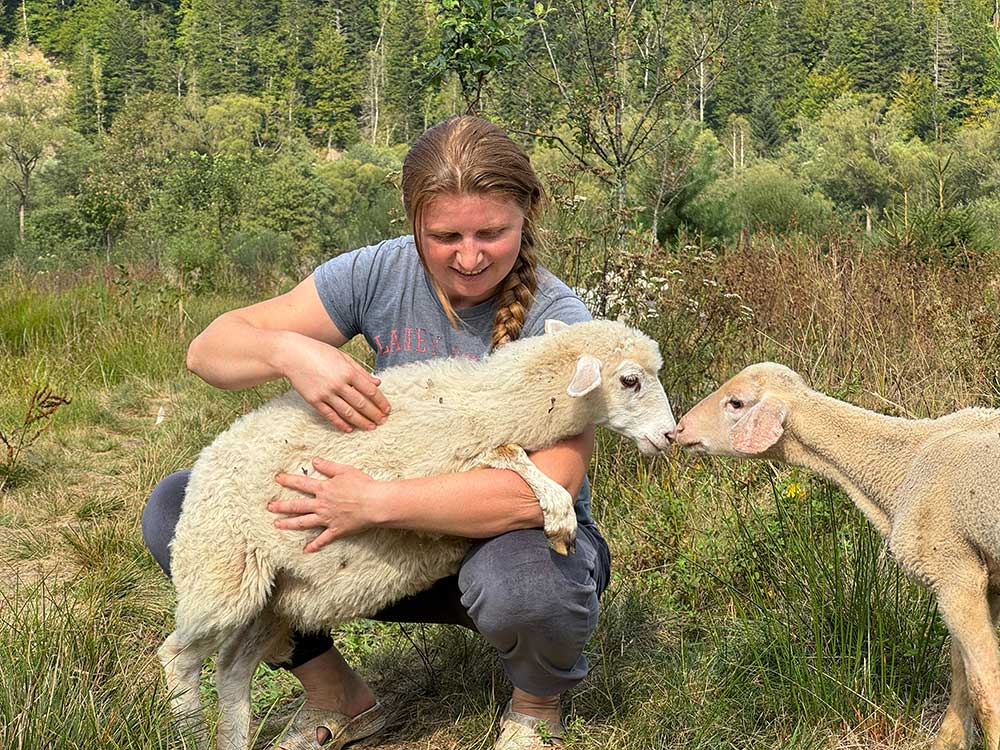
©FAO/ANASTASIIA BORODAIENKO IN LVIVSKA OBLAST, UKRAINE, A YOUNG CHEESEMAKER KEEPS HER SHEEP FARM RUNNING DESPITE WAR-RELATED CHALLENGES, SHOWING STRENGTH AND RESILIENCE IN THE FACE OF ADVERSITY.
Figure 6.4
RURAL YOUNG MEN WORK LONGER HOURS DURING HEAT STRESS, WHILE YOUNG WOMEN WORK MORE DURING FLOODS

Notes: The left panel considers all individuals while the right panel considers only those who work (defined as having worked for at least one hour in the week of reference, including work performed on the household farm or in a family business). The effects of heat stress and floods are measured for one additional day of exposure to the respective shock and plotted on the left-hand axis. The effect of droughts refers to whether a drought occurred in the year before the survey and is plotted on the right-hand axis. Effects are statistically significant if the whisker bars representing 90-percent confidence intervals do not cross the zero line.
Source: Kluth, J. Rossi, J.M. & Sitko, N. Forthcoming. Climate shocks and youth labour: Gender-disaggregated evidence from SSA. ESP working paper series. Rome, FAO
HEAT STRESSES PUSH YOUNG PEOPLE, PARTICULARLY YOUNG WOMEN, OUT OF AGRICULTURE AND INTO EMPLOYMENT OUTSIDE OF AGRICULTURE.
AGE AND GENDER DIFFERENCE IN EMPLOYMENT OPTIONS WHEN EXTREME WEATHER OCCURS
Table 6.1 presents the association between extreme weather events and rural workers’ likelihood of engaging in either the agricultural or the non-agricultural sector. There are very few differences evident between youth and adults, implying that sectoral movements of workers due to weather shocks are unrelated to age. After exposure to extreme heat and floods, rural workers of all ages are less likely to engage in agriculture and are more likely to work in non-agricultural jobs. In contrast, if a drought occurs, rural workers reallocate their labour from non-agricultural sectors to agriculture.
TABLE 6.1
ADULTS ARE MORE LIKELY TO WORK IN AGRIFOOD SYSTEMS IN RESPONSE TO WEATHER SHOCKS THAN YOUNG PEOPLE, WHILE YOUNG WOMEN OFTEN SUSTAIN AGRICULTURAL PRODUCTION

Notes: The table represents the effects of extreme weather events on the likelihood of working individuals (defined as having worked for at least one hour in the week of reference, including work performed on the household farm or in a family business) engaging in the respective sectors. Effects in brackets are not statistically significant. The difference is calculated as young – old and women – men, respectively.
Source: Kluth, J. Rossi, J.M. & Sitko, N. Forthcoming. Climate shocks and youth labour: Gender-disaggregated evidence from SSA. ESP working paper series. Rome, FAO
Conversely, the table reveals numerous differences between young women and men. Heat stress induces a shift of young workers from the agricultural to the nonagricultural sector, which is more pronounced among young women. At the same time, young men who remain in agriculture increase their time spent on the farm by about an hour more per week in an average year, while young women’s working time does not change (results for working times in the different sectors are not shown). Thus, young men who maintain their engagement in agriculture compensate for decreased participation among adults and young women by working more. Moreover, both young women and men who engage in non-agricultural work increase their working times, though the effect is stronger among young men. The welfare implications of this trend depend on the quality of the jobs that are offered outside of agriculture for young people.
In contrast to the findings of this report, a previous cross-country study found that women from rural areas in 29 African countries decreased their working times in agriculture in response to heat stress, but to a smaller extent than men.67 However, the comparability of the results is limited due to differences in the estimation samples and the definition of climate shocks.
When exposed to floods and droughts, working young women are more likely to engage in agriculture and less likely to engage in non-agricultural jobs than working young men. Moreover, in an average year, floods are associated with a larger increase in the weekly agricultural working time by young women relative to young men, while the general trend among youth and adults is to reduce working hours dedicated to agriculture. Decreased participation of women in non-agricultural jobs due to droughts is also found among youth in India68 and among youth and adults in Lesotho.69 According to the Lesotho study, this trend arises because most of women’s non-agricultural jobs are linked to agriculture (e.g. sales of grains or livestock), and therefore are more susceptible to droughts.69 In addition, the finding likely reflects women’s responsibility for procuring food for the household, which becomes more time-consuming as agricultural productivity contracts in times of drought.
YOUTH RESILIENCE IN CONFLICT AND PROTRACTED CRISES
The political discourse on youth and conflicts focuses disproportionately on the role of young people, particularly disenfranchised young men, as instigators of violence.70–72 Moreover, demographic youth bulges are often framed as a factor contributing to the conditions necessary for conflicts to emerge.72–74 Indeed, many armed groups rely on disenfranchised youth as a source of recruitment, and for many young people who join these groups the choice is often driven more by economic necessity than ideology (Spotlight 6.1). Yet, most youth living in conflict-prone regions, regardless of their economic conditions or gender, do not participate actively in armed violence. Instead, they are the direct and indirect victims of violence as well as being potential peace builders.73 As the number of armed conflicts and protracted crises increase globally, it is critical to understand how youth are affected and how their resilience to these events can be enhanced.
Conflicts and crises affect youth along multiple and reinforcing dimensions with important differences between young men and women. The impacts can be personal, particularly for those directly affected by the trauma of violence. Experience of trauma during childhood can have a long-lasting effect on an individual’s emotional and cognitive development, with negative implications for their educational attainment and labour market participation.75 Beyond the direct personal experience of conflicts, these events can restrict economic opportunities for everyone through the destruction of infrastructure and assets, displacement of people from their homes, the closure of schools and the curtailment of private investments.76–78 The contraction and displacement of economic activity caused by conflicts can be particularly damaging for youth, whose transition from education to the labour market is made more difficult by the economic challenges caused by these events, and can have lasting effects on youth’s long-term earnings.73
During conflicts, women and girls often bear the sole or primary responsibility for ensuring the economic wellbeing of the family, regardless of whether or not male members of the family have actively joined the conflict.79,80 This responsibility for care can push women to seek out high-risk income options, including sex work.81 Conflicts are also frequently associated with increases in gender-based violence.82, 83 Moreover, conflicts create conditions of risk and uncertainty that can, on the one hand, limit women’s physical mobility within affected regions and, on the other hand, lead to their forced displacement.84, 85 In some cases, exposure to conflict is found to increase incidences of child marriage.86 The impacts of conflicts on human capital formation also differ by gender. However, these effects are highly context specific and are driven in large part by pre-war gender differences in educational attainment and labour market opportunities.87
Yet, conflicts can also create space for prevailing gendered norms to be disrupted and challenged. The increased economic responsibilities of women in conflicts and crises has been shown to enable women to exercise greater influence over economic and political decisions in their households and, to a lesser extent, their communities.79 For example, in Angola and Somalia, rural people were displaced into urban economies where women’s economic opportunities were greater, leading to greater economic dependence of men on women and increased respect by men for women’s roles as breadwinners.79
Agriculture and agrifood systems have an especially important role to play in building youth resilience to conflict and in supporting peace. Armed conflicts are disproportionately concentrated in countries with relatively larger rural youth populations. Indeed, rural youth account for 60 percent of the total youth population in conflict-affected countries.73 Land conflicts and constraints on agricultural production have been shown to escalate conflict intensity in fragile countries through various pathways, including lowering the opportunity costs of participating in conflicts, increasing opportunities for recruitment into conflicts and intensifying social grievances.88, 89, Moreover, armed conflict can alter the trajectory of agricultural development and agricultural opportunities, effects that can persist even after a conflict has ended. Studies from Colombia and Nigeria show that armed conflicts lowered agricultural production and productivity through reduced labour supply and a contraction of cultivated land.90,91 In Mozambique, high-intensity conflict during the civil war eroded local institutions that protected the land rights of local people, making these areas prone to land expropriation by external actors after the end of the war.92
Yet, agrifood systems can also serve as a foundation for stability. Promoting and sustaining agricultural development has been shown to be critical, not only for the successful reduction of poverty, hunger and environmental degradation, but also for preventing and reducing conflict.88,93,94 Achieving this objective requires understanding and addressing the ways in which young people’s work opportunities in agrifood systems are affected by conflicts and crises, and building on the resilience they possess to promote and sustain positive agrifood system transformations. The next section provides new evidence on the experiences of youth in conflict and protracted crisis contexts, examining how living in such situations forms young people’s subjective and material resilience, and how exposure to conflict shapes youth labour opportunities and choices in agrifood systems.
YOUNG HOUSEHOLD HEADS HAVE A GREATER BELIEF IN THEIR ABILITIES TO ABSORB, ADAPT, AND TRANSFORM IN THE FACE OF SHOCKS AND STRESSES.
MATERIAL AND SUBJECTIVE RESILIENCE OF YOUTH IN PROTRACTED CRISIS CONTEXTS
As mentioned in the Introduction, resilience is shaped by both the physical resources an individual can mobilize to manage the impacts of shocks and stresses, and the psychological attributes they possess to cope with the mental stresses of uncertainty and risks. These different dimensions of resilience are particularly important in the context of protracted crisis, where people’s material assets and their expectations for a better future are eroded by persistent conditions of conflict, uncertainty and weak governance.
Data from 3 106 households in countries with protracted crises (Palestine, Somalia, South Sudan and Yemen) are used to examine how people’s material and subjective resilience capacities differ by age and gender (see Box 6.1).i Subjective resilience is often expected to be strongly correlated with the material resources a person can access, yet this is not always the case. In Uganda, a side-by-side comparison of subjective and objective resilience found only a weak correlation between the two measures.4 The variation in subjective resilience was found to be significantly greater than objective measures, suggesting that in this context people’s self-assessment of their own resilience is considerably more varied than their access to material resources.
Box 6.1
MEASURING MATERIAL AND SUBJECTIVE RESILIENCE
Material resilience is measured through the Resilience Index Measurement and Analysis (RIMA) tool, which consists of four resilience pillars – access to basic services, assets, social safety nets and adaptive capacities, including education levels, income and crop diversification.i This measure provides insights into the resources and services that people can access to manage the impacts of shocks and stresses. Yet, this measure does not take into account the knowledge people have of their own abilities and the contextual information they possess to gauge their own resilience.ii To fill this gap, subjective information on one’s perceived resilience is important. This report measures subjective resilience using the Subjective self-Evaluated Resilience Score (SERS) method, which asks questions related to individuals’ beliefs in their own capacities to deal with shocks and stresses, focusing on their adaptive, transformative, absorptive and anticipatory capacities.
Notes: Refers to the Notes section for full citations.
Differences between material and subjective resilience capacities may be particularly important for youth. On the one hand, youth in agrifood systems control substantially fewer resources and assets, and have more limited access to services than adults, suggesting that in a material sense they will be less resilient to shocks and stresses (Chapter 3). On the other hand, youth may possess important "soft" attributes, such as self-confidence and sense of self-efficacy that can help them to confront and overcome shocks and stresses.95-97 Understanding how youth differ from adults in both their material and subjective resilience in protracted crises can help to identify ways in which youth may be constrained in managing these crises and the attributes they possess that can be leveraged to enhance their well-being outcomes.
The results of the regression analysis for the four countries with protracted crises, presented in Figure 6.5, show surprisingly no difference in the overall RIMA index (material resilience) associated with age and gender (left panel). This finding stands in contrast to the global figures presented in Chapter 3, which demonstrated that youth-headed households tend to have fewer assets and less access to services. Yet, protracted crises are unique, and may lead to the widespread erosion of assets, infrastructure and services that affect everyone in a similar manner.
The overall RIMA score masks some important differences that can be observed when the index is decomposed into its four pillars. As shown in the righthand panel of Figure 6.5, people's adaptive capacity declines significantly as they age, driven by a reduction in the capacities of male-headed households. While having on average less adaptive capacity than male-headed households, female-headed households do not display an observable decline in adaptive capacity associated with age. The adaptive capacity index includes variables such as the average education of the household members, crop diversification and income diversification. Even though the change with age is small, differences in these variables represent important attributes of youth which should be considered when making investments to support their resilience.
The left-hand panel of Figure 6.5 also displays the association of age and gender of the household head with subjective resilience, measured by the SERS. The figure shows that subjective resilience declines with age in protracted crisis countries, suggesting that youth tend to have higher levels of subjective resilience. The gender of the household head is not relevant. This lowering of resilience with increasing age is driven by age-related reductions in several domains of the SERS index: learning, political capital, absorptive and transformative capacities (see Table 6.2). These variables capture differences in people’s belief in their abilities to bounce back from shocks, diversify their income to respond to future challenges and learn from past experiences. Together they point to important attributes of youth resilience associated with greater levels of perceived livelihood flexibility.
Figure 6.5
SUBJECTIVE RESILIENCE IS HIGHER AMONG YOUNG PEOPLE IN PROTRACTED CRISES, WHILE NO DIFFERENCES ARE FOUND FOR MATERIAL RESILIENCE

Notes: The figure presents the impact of age of the household head on six different resilience measures, separated by the sex of the household head (HHH). The upper coefficient group shows the main effect of the age of the HHH on the respective resilience measure. The lower group of coefficients shows the interaction effect for the age of the HHH and female headedness (age of HHH x female). The impact of age in male-headed households is shown by the “age of HHH” coefficient. The impact of age in female-headed households is the sum of the coefficient “age of HHH” and “age of HHH x female”. The left panel shows the regression coefficients for the RIMA Index and the Subjective self-Estimated Resilience Score (SERS). The right panel displays the effect sizes for the subcomponents of the RIMA index: Access to Basic Services (ABS); Assets, Adaptive Capacity (AC); and Social Safety Nets (SSN). Coefficients of the same colour come from the same regression. Effects are statistically significant if the whisker bars representing 90-percent confidence intervals do not cross the zero line.
Source: Authors’ own elaboration based on data from Khan Niazi, K., Pietrelli, R., Laborde, D. forthcoming. Youth resilience in protracted crises dimensions: A dual perspective on material and subjective. Rome, FAO.
TABLE 6.2
AS PEOPLE AGE IN PROTRACTED CRISES THEIR ABSORPTIVE AND TRANSFORMATIVE CAPACITIES DECLINE, ALONG WITH THEIR POLITICAL CAPITAL AND LEARNING

Notes: The table represents the effects of age and sex of the household head on the nine dimensions of the SERS. The plus sign indicates a positive association, the minus sign indicates a negative association. Signs in brackets are not statistically significant.
Source: Authors’ own elaboration based on data from Khan Niazi, K., Pietrelli, R., Laborde, D. forthcoming. Youth resilience in protracted crises dimensions: A dual perspective on material and subjective. Rome, FAO.
HOW CONFLICTS AFFECT THE LABOUR DECISIONS OF YOUNG WOMEN AND MEN
Armed conflicts not only pose physical dangers to people, they also have profound and long-lasting consequences for people’s economic opportunities and well-being.98,99 Formal employment opportunities are often particularly strongly affected by conflicts. Studies from various contexts show that conflicts cause firms to reduce production, sales and employment, with smaller and newer firms being more likely to close entirely.100,101 Conflicts also curtail many forms of productive and forward-looking entrepreneurship, and push people into more necessity-based forms of entrepreneurship.102 This shift in employment opportunities has consequences for the current and future well-being of young people.
Agrifood system work can be both a livelihood refuge and a source of risk and tension for people in conflict contexts, depending on the context. In some cases, agrifood systems, and particularly primary agricultural production, can serve as an important source of livelihood for people in conflict settings, providing food and income when food markets have been disrupted and other economic activities are unavailable.88 However, in many cases, work in agrifood systems in conflict settings is highly risky. Some conflicts revolve around tensions over land and natural resources, where attempts to utilize land can expose people to violence.103 In other cases, a general lack of security increases the risks to people working in agriculture to various forms of violence, including sexual and physical violence.87 As a result, exposure to conflict is often associated with a reduction in agricultural production, agricultural land use and agricultural labour.90,104
New evidence presented here on the relationship between exposure to conflict and labour outcomes of rural people in 29 African countries shows that conflict exposure increases the likelihood of working in agriculture among adults, although their total working hours are reduced (see Figure 6.6). This suggests that adults in general are pulled into agricultural work during conflicts. However, because of general insecurity they work fewer hours, perhaps because some fields are left fallow or other agricultural activities are curtailed due to security risks.90 Important gender differences emerge in terms of agricultural work.
Women of all ages tend to work more in agriculture when conflicts occur, and young women also work longer hours. This is consistent with previous studies that show a general increase in female labour force participation in conflicts, a trend that is often linked to the temporary absence or permanent loss of male breadwinners.79,80,106 Despite the risks associated with agricultural work, young women tend to work more hours in agriculture than older women and men, potentially elevating their risks of exposure to violence. However, regardless of the sector, women’s employment in conflict contexts is typically low-paid, low-skilled and takes the form of informal self- employment or unpaid family labour.107
Addressing the impacts of conflicts on youth work opportunities is critical for building their resilience in the short term and enabling a positive transition into adulthood in the future. Recognizing and supporting the disproportionate burden and risks young women face in sustaining agricultural production is a key step. This includes providing them with the technologies and resources needed for effective agricultural production while also recognizing the opportunity costs and physical risks they incur from this work. At the same time, efforts to support young men’s employment during periods of conflict are critical. The exit of young men from work is both a cause and a symptom of conflict. Addressing the gendered division in agricultural work through gender transformative approaches, where feasible, is a potential first step to help balance the burden of agriculture work when conflicts arise.
DURING ARMED CONFLICTS WOMEN’S EMPLOYMENT IN AGRICULTURE INCREASES COMPARED TO MEN.
Figure 6.6
YOUNG WOMEN SUSTAIN AGRICULTURAL PRODUCTION DURING CONFLICTS

Notes: Effects are statistically significant if the whisker bars representing 90-percent confidence intervals do not cross the zero line.
Source: Authors’ own elaboration using data from Rozani et al. 105
SPOTLIGHT 6.1 YOUTH RADICALIZATION AND PARTICIPATION IN ARMED CONFLICTS
The socioeconomic factors that make some youth susceptible to radicalization and participation in armed conflicts are complex and highly context specific. Yet underlying this complexity are often feelings of resentment that are rooted in persistent socioeconomic vulnerabilities and perceived political, social and economic inequalities between groups. These feelings of resentment can predispose people to radicalization or joining armed groups.i
A lack of viable employment opportunities can be an important driver of youth radicalization and participation in armed conflicts. On the one hand, lack of economic opportunities is a source of grievance leveraged by groups to enrol youth.ii,iii On the other hand, lack of economic alternatives lowers the opportunity costs of joining armed groups.iv,v In Nigeria, for example, the contraction of formal employment opportunities, combined with increased competition for informal and precarious work, contributed to rising frustration about the lack of economic opportunities among youth with lower education.vi Armed groups tapped into these grievances by positioning themselves as a way to fight against the system that contributed to youth’s marginalization.vii–ix In addition to providing an avenue to channel grievances, radical groups in Nigeria also provide needed networks for youth to access employment. For example, there is evidence that radical groups provide youth with needed social networks to engage in seasonal and permanent migration to urban areas.vii–ix
Radical groups also provide marginalized youth with opportunities to increase their social status and political power within their communities. In Haiti, for example, armed gangs recruit children and youth to reinforce their ranks and solidify their role and legitimacy within communities. These groups use youth to distribute food or cash to their communities, which helps the groups to gain validation and legitimacy, and provides youth with income and increased social recognition.x Increased authority and social power are often an important factor contributing to young woman’s support for radical groups. At both the national and local level, women are often underrepresented in decision-making bodies in areas where armed groups are present. Evidence from Liptako-Gourma and Northern Nigeria suggests that the opportunity to gain influence and status incentivizes women to join armed groups.xi,xii Moreover, women may join these groups to avoid risks of sexual violence associated with conflicts.xii
In-group socialization pressure and stigmatization by the broader community can perpetuate youth’s engagement with armed groups. Youth who participate in armed groups often forgo educational opportunities and fail to develop employable skills, which limits their opportunities for economic and social advancement outside of the group.xiii,xiv,xv In the aftermath of conflicts in Algeria, Liberia and Sierra Leone, for example, young demobilized soldiers found themselves similarly marginalized politically, economically and socially, as in the pre-war period.xiv,xv Lacking other opportunities, many returned to combat as mercenaries in regional conflicts.vi
Ultimately, the decision of youth to engage in armed violence is driven by both individual and communitylevel factors that are tied to legacies of perceived marginalization, deep-rooted social and economic grievances, and the need for protection. There is no one single driver of radicalization and no single profile of people most likely to be radicalized. As such, policies, strategies and programmes to counter radicalization must be contextualized, adaptable and engaged at the regional, national and local levels. Moreover, they must be cognizant of differences in economic constraints and opportunities faced by different people – based on factors such as age, gender, wealth, location and ethnicity – and the ways in which these are shaped by policies, norms and institutional factors
Notes: Refers to the Notes section for full citations.
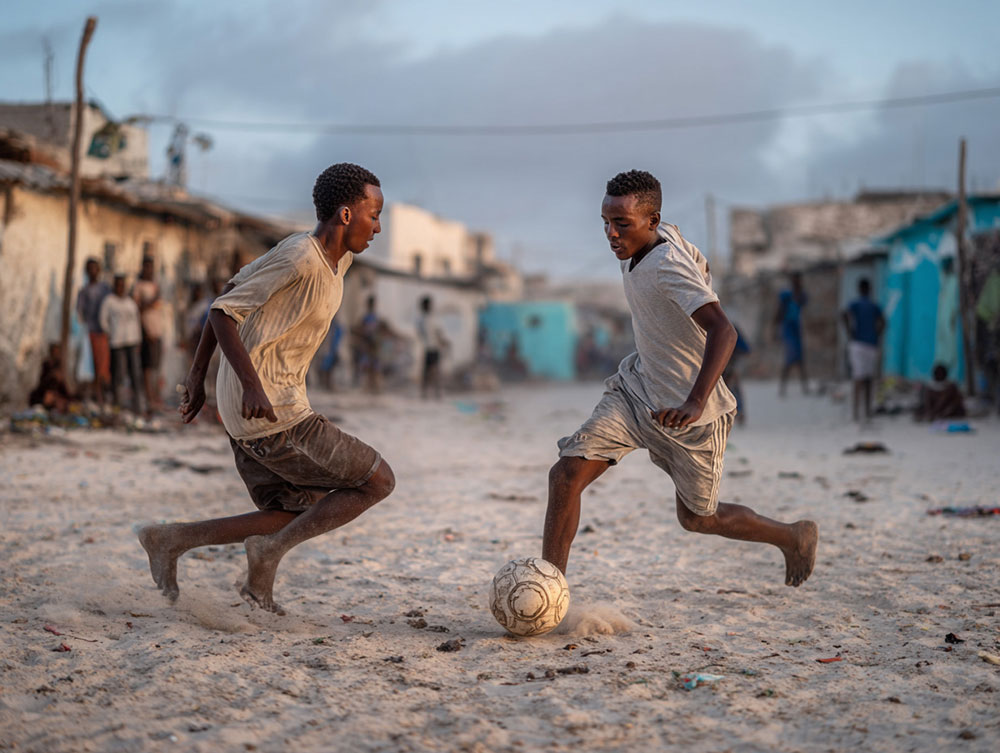
©VISIONTIME/JAVED PATEL IN KISMAYO, SOMALIA, YOUNG MEN PLAY FOOTBALL AT SUNSET – A SIMPLE ACT OF JOY AND CONNECTION IN A COMMUNITY WHERE SAFE SPACES, OPPORTUNITY, AND INCLUSION ARE KEY TO PREVENTING YOUTH MARGINALIZATION AND THE LURE OF RADICALIZATION.


FAO. 2025. The status of youth in agrifood systems. Rome. https://doi.org/10.4060/cd5886en
The designations employed and the presentation of material in this information product do not imply the expression of any opinion whatsoever on the part of the Food and Agriculture Organization of the United Nations (FAO) concerning the legal or development status of any country, territory, city or area or of its authorities, or concerning the delimitation of its frontiers or boundaries. Dashed lines on maps represent approximate border lines for which there may not yet be full agreement. The mention of specific companies or products of manufacturers, whether or not these have been patented, does not imply that these have been endorsed or recommended by FAO in preference to others of a similar nature that are not mentioned.
ISBN 978-92-5-139920-0
© FAO, 2025

Some rights reserved. This work is made available under the Creative Commons Attribution- 4.0 International licence (CC BY 4.0: https://creativecommons.org/licenses/by/4.0/legalcode.en).
Under the terms of this licence, this work may be copied, redistributed and adapted, provided that the work is appropriately cited. In any use of this work, there should be no suggestion that FAO endorses any specific organization, products or services. The use of the FAO logo is not permitted. If a translation or adaptation of this work is created, it must include the following disclaimer along with the required citation: “This translation [or adaptation] was not created by the Food and Agriculture Organization of the United Nations (FAO). FAO is not responsible for the content or accuracy of this translation [or adaptation]. The original [Language] edition shall be the authoritative edition.”
Any dispute arising under this licence that cannot be settled amicably shall be referred to arbitration in accordance with the Arbitration Rules of the United Nations Commission on International Trade Law (UNCITRAL). The parties shall be bound by any arbitration award rendered as a result of such arbitration as the final adjudication of such a dispute.
Third-party materials. This Creative Commons licence CC BY 4.0 does not apply to non-FAO copyright materials included in this publication. Users wishing to reuse material from this work that is attributed to a third party, such as tables, figures or images, are responsible for determining whether permission is needed for that reuse and for obtaining permission from the copyright holder. The risk of claims resulting from infringement of any third-party-owned component in the work rests solely with the user.
FAO photographs. FAO photographs that may appear in this work are not subject to the above-mentioned Creative Commons licence. Queries for the use of any FAO photographs should be submitted to: photo-library@fao.org.
Sales, rights and licensing. FAO information products are available on the FAO website (www.fao.org/publications) and print copies can be purchased through the distributors listed there. For general enquiries about FAO publications please contact: publications@fao.org. Queries regarding rights and licensing of publications should be submitted to: copyright@fao.org.
Cover image: © FAO/Heba Khamis