
OPPORTUNITIES
MOVE FOOD
FORWARD
YOUTH
MOVE FOOD
FORWARD
ENGAGEMENT
MOVE FOOD
FORWARD
SOLUTIONS
MOVE FOOD
FORWARD

Notes
CHAPTER 1
1.
UNDESA (United Nations Department of Economic and Social Affairs). 2023. World Population Prospects – 2022 Revision. United Nations. New York, USA. [Cited 6 December 2023]. https://population.un.org/wpp
2.
UNDESA. 2024. World Population Prospects – 2024 Revision. United Nations. New York, USA. [Cited 7 August 2024]. https://population.un.org/wpp
3.
ILO (International Labour Organization). 2024. World Employment and Social Outlook: Trends 2024. Report. Geneva. www.ilo.org/global/research/global-reports/weso/WCMS_908142/lang--en/index.htm
4.
Béné, C., Bakker, D., Chavarro, M.J., Even, B., Melo, J. & Sonneveld, A. 2021. Global assessment of the impacts of COVID-19 on food security. Global Food Security, 31: 100575. https://doi.org/10.1016/j.gfs.2021.100575
5.
van Dijk, M., Morley, T., Rau, M.L. & Saghai, Y. 2021. A meta-analysis of projected global food demand and population at risk of hunger for the period 2010–2050. Nature Food, 2(7): 494–501. https://doi.org/10.1038/s43016-021-00322-9
6.
UNDRR (United Nations Office for Disaster Risk Reduction). 2020. The human cost of disasters: An overview of the last 20 years (2000–2019). New York, USA. www.preventionweb.net/files/74124_humancostofdisasters20002019reportu.pdf
7.
IFAD (International Fund for Agricultural Development). 2019. 2019 Rural Development Report. Creating opportunities for rural youth. Rome. www.ifad.org/ruraldevelopmentreport
8.
Bousmah, I. & Grenier, G. 2022. Labor shortages and immigration: The case of the Canadian agriculture sector. Agribusiness, 38(1): 220–235. https://doi.org/10.1002/agr.21719
9.
Christiaensen, L., Rutledge, Z. & Taylor, J.E. 2020. The future of work in agriculture: Some reflections. Washington, DC, World Bank. https://doi.org/10.1596/1813-9450-9193
10.
ILO. 2019. Decent work for rural youth. Decent work in the rural economy: Policy guidance notes. Geneva. www.ilo.org/sites/default/files/wcmsp5/groups/public/%40ed_dialogue/%40sector/documents/publication/wcms_729406.pdf
11.
Yeboah, F.K. & Jayne, T.S. 2018. Africa's evolving employment trends. The Journal of Development Studies, 54(5): 803–832. https://doi.org/10.1080/00220388.2018.1430767
12.
Sumberg, J., Fox, L., Flynn, J., Mader, P. & Oosterom, M. 2021. Africa's "youth employment" crisis is actually a "missing jobs" crisis. Development Policy Review, 39(4): 621–643. https://doi.org/10.1111/dpr.12528
13.
Zagata, L. & Sutherland, L-A. 2015. Deconstructing the "young farmer problem in Europe": Towards a research agenda. Journal of Rural Studies, 38: 39–51. https://doi.org/10.1016/j.jrurstud.2015.01.003
14.
FAO. 2022. The future of food and agriculture: Drivers and triggers for transformation. The Future of Food and Agriculture, No. 3. Rome. https://openknowledge.fao.org/items/66a787f4-af91-4f6e-b436-560010ab72d4
15.
Filmer, D. & Fox, L. 2014. Youth employment in sub-Saharan Africa. Washington, DC, World Bank. https://doi.org/10.1596/978-1-4648-0107-5
16.
United Nations. 2015. Transforming our world: The 2030 Agenda for Sustainable Development. New York, USA, United Nations General Assembly. https://sdgs.un.org/2030agenda
17.
Davis, B., Mane, E., Gurbuzer, Y.L., Caivano, G., Piedrahita, N., Schneider, K.R., Azhar, N. et al. 2023. Estimating global and country-level employment in agrifood systems. FAO Statistics Working Paper Series 23–34. Rome, FAO. https://doi.org/10.4060/cc4337en
18.
Nico, G. & Christiaensen, L. 2023. Jobs, food and greening: Exploring implications of the green transition for jobs in the agri-food system. Washington, DC, World Bank. https://doi.org/10.1596/39819
19.
Reardon, T., Liverpool-Tasie, S., Belton, B., Dolislager, M., Minten, B., Popkin, B. & Vos, R. 2023. The rapid rise in domestic value chains of nutrient-dense foods (fruits, vegetables, and animal products) in Sub-Saharan Africa: Policy implications. Initiative Technical Paper 1. Washington, DC, IFPRI, IITA, CGIAR. https://cgspace.cgiar.org/server/api/core/bitstreams/8f885757-9f53-44b4-9c3c-709247fae503/content
20.
Yeboah, T., Chigumira, E., John, I., Anyidoho, N.A., Manyong, V., Flynn, J. & Sumberg, J. 2020. Hard work and hazard: Young people and agricultural commercialisation in Africa. Journal of Rural Studies, 76: 142–151. https://doi.org/10.1016/j.jrurstud.2020.04.027
21.
Flynn, J. & Sumberg, J. 2021. Are Africa's rural youth abandoning agriculture? In: J. Sumberg ed. Youth and the rural economy in Africa: Hard work and hazard. pp. 43–57. Wallingford, UK, CABI. https://doi.org/10.1079/9781789245011.0003
22.
OECD (Organisation for Economic Co-operation and Development). 2021. Jobs for rural youth: The role of local food economies. Development Centre Studies. Paris, OECD Publishing. www.oecd.org/dev/jobs-for-rural-youth-692c0ca1-en.htm
23.
Meemken, E-M., Charlton, D., Christiaensen, L., Maertens, M., Oya, C., Reardon, T. & Stemmler, H. 2024. Better data for decent work in the global food system. Nature Food, 5(6): 454–456. https://doi.org/10.1038/s43016-024-01002-0
24.
Christiaensen, L. & Maertens, M. 2022. Rural employment in Africa: Trends and challenges. Annual Review of Resource Economics, 14(1): 267–289. https://papers.ssrn.com/abstract=4241834
25.
ILO. 2023. Women and men in the informal economy: A statistical update. Geneva. www.ilo.org/sites/default/files/wcmsp5/groups/public/%40ed_protect/%40protrav/%40travail/documents/publication/wcms_869188.pdf
26.
Akar, H. & Şen, D. 2017. Impact of internal migration movements on the schooling process in Turkey: Supervisors' views. Education Policy Analysis Archives, 25: 13. https://doi.org/10.14507/epaa.25.2693
27.
Varea, B.N., Gabaldón, M.P. & Chavez, M. 2020. Using social media to motivate anti-migration sentiments. Political implications in the United States and beyond. Tripodos Communication, 49: 51–69. https://raco.cat/index.php/Tripodos/article/view/385645/478821
28.
Hertz, T. & Zahniser, S. 2013. Is there a farm labor shortage? American Journal of Agricultural Economics, 95(2): 476–481.
29.
Loga, D.E., Kibwika, P. & Kyazze, F.B. 2022. How do youth innovate to make agriculture gainful? Challenges and youth entrepreneurs in mid-western Uganda. International Journal of Agricultural Research, Innovation and Technology (IJARIT), 12(1): 39–44. https://doi.org/10.22004/ag.econ.324168
30.
HLPE (High Level Panel of Experts on Food Security and Nutrition of the Committee on World Food Security). 2021. Promoting youth engagement and employment in agriculture and food systems. Rome. https://openknowledge.fao.org/server/api/core/bitstreams/bf72199b-eb52-4ecd-b9d7-ad329dfa7ede/content
31.
FAO. 2014. Youth and agriculture: Key challenges and concrete solutions. Rome. https://openknowledge.fao.org/server/api/core/bitstreams/408708f0-82dc-418e-b92b-e2d7ec0cd2e6/content
32.
Huambachano, M., Arulingam, I., Bowness, E., Korzenszky, A., Mungai, C., Termine, P. & Wittman, H. 2022. Knowledge networks to support youth engagement in sustainable food systems. Frontiers in Sustainable Food Systems, 6. https://doi.org/10.3389/fsufs.2022.867344
33.
Thew, H. 2018. Youth participation and agency in the United Nations Framework Convention on Climate Change. International Environmental Agreements: Politics, Law and Economics, 18(3): 369–389. https://doi.org/10.1007/s10784-018-9392-2
34.
Ambikapathi, R., Schneider, K.R., Davis, B., Herrero, M., Winters, P. & Fanzo, J.C. 2022. Global food systems transitions have enabled affordable diets but had less favourable outcomes for nutrition, environmental health, inclusion and equity. Nature Food, 3(9): 764–779. https://doi.org/10.1038/s43016-022-00588-7
35.
Sumberg, J. & Okali, C. 2013. Young people, agriculture, and transformation in rural Africa: An "opportunity space" approach. Innovations: Technology, Governance, Globalization, 8(1): 259–269.
36.
Timmer, C.P. 1988. The agricultural transformation. In: H. Chenery & T.N. Srinivasan, eds. Handbook of development economics. Vol. 1. pp. 275–331. Amsterdam, the Netherlands, Elsevier Science Publishers. https://eclass.uoa.gr/modules/document/file.php
/ECON284/4.%20Patterns%20of%20agricultural%20development/Tim
mer%201988%20Handbook%20of%20Development%20Economics%20
The%20Agricultural%20TRansformation.pdf
37.
Barrett, C.B., Carter, M.R. & Timmer, C.P. 2010. A century-long perspective on agricultural development. American Journal of Agricultural Economics, 92(2): 447–468. https://doi.org/10.1093/ajae/aaq005
38.
Marshall, Q., Fanzo, J., Barrett, C.B., Jones, A.D., Herforth, A. & McLaren, R. 2021. Building a global food systems typology: A new tool for reducing complexity in food systems analysis. Frontiers in Sustainable Food Systems, 5. https://doi.org/10.3389/fsufs.2021.746512
39.
Béné, C., Frankenberger, T.R., Nelson, S., Constas, M.A., Collins, G., Langworthy, M. & Fox, K. 2023. Food system resilience measurement: Principles, framework and caveats. Food Security, 15(6): 1437–1458. https://doi.org/10.1007/s12571-023-01407-y
40.
FAO. 2017. The State of Food and Agriculture 2017: Leveraging food systems for inclusive rural transformation. Rome.
41.
Abay, K.A., Asnake, W., Ayalew, H., Chamberlin, J. & Sumberg, J. 2020. Landscapes of opportunity: Patterns of young people's engagement with the rural economy in sub-Saharan Africa. The Journal of Development Studies, 57(4): 594–613. https://doi.org/10.1080/00220388.2020.1808195
42.
Wiggins, S. & Proctor, S. 2001. How special are rural areas? The economic implications of location for rural development. Development Policy Review, 19(4): 427–436. https://doi.org/10.1111/1467-7679.00142
43.
Sumberg, J., Chamberlin, J., Flynn, J., Glover, D. & Johnson, V. 2020. Landscapes of rural youth opportunity. IFAD Research Series 47. SSRN Electronic Journal. https://doi.org/10.2139/ssrn.3521380
44.
FAO. 2024. The State of Food and Agriculture 2024: Value-driven transformation of agrifood systems. Rome. https://doi.org/10.4060/cd2616en
45.
Cooper, E. 2012. Women and inheritance in sub-Saharan Africa: What can change? Development Policy Review, 30(5): 641–657. https://doi.org/10.1111/j.1467-7679.2012.00592.x
46.
Amare, M., Ghebru, H., Mavrotas, G. & Ogunniyi, A. 2024. The role of land inheritance in youth migration and employment choices: Evidence from rural Nigeria. The European Journal of Development Research, 36(1): 135–160. https://doi.org/10.1057/s41287-023-00596-8
48.
Brooks, N. & Begley, A. 2014. Adolescent food literacy programmes: A review of the literature. Nutrition & Dietetics, 71(3): 158–171. https://doi.org/10.1111/1747-0080.12096
49.
Kabeer, N. 1999. Resources, Agency, achievements: Reflections on the measurement of women's empowerment. Development and Change, 30(3): 435–464. https://doi.org/10.1111/1467-7660.00125
50.
Biggeri, M., Ballet, J. & Comim, F. 2011. The capability approach and research on children: Capability approach and children's issues. In: S. Andresen, I. Diehm, U. Sander & H. Ziegler, eds. Children and the good life: New challenges for research on children. pp. 75–89. Dordrecht, the Netherlands, Springer. https://doi.org/10.1007/978-90-481-9219-9_6
CHAPTER 2
1.
De Brauw, A. 2019. Migration out of rural areas and implications for rural livelihoods. Annual Review of Resource Economics, 11(1): 461–481. https://doi.org/10.1146/annurev-resource-100518-093906
2.
Mueller, V., Doss, C. & Quisumbing, A. 2018. Youth migration and labour constraints in African agrarian households. The Journal of Development Studies, 54(5): 875–894. https://doi.org/10.1080/00220388.2018.1430770
3.
Christiaensen, L., Rutledge, Z. & Taylor, J.E. 2021. Viewpoint: The future of work in agri-food. Food Policy, 99: 101963. https://doi.org/10.1016/j.foodpol.2020.101963
4.
Meemken, E-M., Charlton, D., Christiaensen, L., Maertens, M., Oya, C., Reardon, T. & Stemmler, H. 2024. Better data for decent work in the global food system. Nature Food, 5(6): 454–456. https://doi.org/10.1038/s43016-024-01002-0
5.
Charlton, D., Rutledge, Z. & Taylor, J.E. 2021. Evolving agricultural labor markets. In: C.B. Barrett & D.R. Just, eds. Handbook of Agricultural Economics, Vol. 5. pp. 4075–4133. Amsterdam, The Netherlands, Elsevier B.V.
6.
Taylor, J.E. & Martin, P.L. 2001. Human capital: Migration and rural population change. In: Handbook of Agricultural Economics, Vol. 1. pp. 457–511. Amsterdam, The Netherlands, Elsevier B.V. https://doi.org/10.1016/S1574-0072(01)10012-5
7.
Chamberlin, J., Jayne, T.S. & Sitko, N.J. 2020. Rural in-migration and agricultural development: Evidence from Zambia. Agricultural Economics, 51(4): 491–504. https://doi.org/10.1111/agec.12567
8.
Ingelaere, B., Christiaensen, L., De Weerdt, J. & Kanbur, R. 2018. Why secondary towns can be important for poverty reduction – A migrant perspective. World Development, 105: 273–282. https://doi.org/10.1016/j.worlddev.2017.12.025
9.
de Brauw, A., Mueller, V. & Woldehanna, T. 2013. Motives to remit: Evidence from tracked internal migrants in Ethiopia. World Development, 50: 13–23. https://doi.org/10.1016/j.worlddev.2013.04.008
10.
Cattaneo, A., Nelson, A. & McMenomy, T. 2021. Global mapping of urban–rural catchment areas reveals unequal access to services. Proceedings of the National Academy of Sciences, 118(2): e2011990118. https://doi.org/10.1073/pnas.2011990118
11.
Cattaneo, A., Girgin, S., De By, R., McMenomy, T., Nelson, A. & Vaz, S. 2024. Worldwide delineation of multi-tier city–regions. Nature Cities, 1(7): 469–479. https://doi.org/10.1038/s44284-024-00083-z
12.
IFAD. 2019. 2019 Rural Development Report. Creating opportunities for rural youth. Rome. www.ifad.org/ruraldevelopmentreport
13.
UNDESA. 2024. World Population Prospects – Population Division – United Nations. New York, NY. https://population.un.org/wpp
14.
UNDESA. 2024. International migration and sustainable development. UN DESA/POP/2023/TR/NO. 7. New York, USA.
15.
UNDESA. 2019. World urbanization prospects: The 2018 revision. New York, USA. https://population.un.org/wup/Publications/Files/WUP2018-Report.pdf
16.
Potts, D. 2012. Challenging the myths of urban dynamics in Sub-Saharan Africa: The evidence from Nigeria. World Development, 40(7): 1382–1393. https://doi.org/10.1016/j.worlddev.2011.12.004
17.
Lichter, D.T. & Brown, D.L. 2011. Rural America in an urban society: Changing spatial and social boundaries. Annual Review of Sociology, 37(Volume 37, 2011): 565–592. https://doi.org/10.1146/annurev-soc-081309-150208
18.
Li, Y., Westlund, H. & Liu, Y. 2019. Why some rural areas decline while some others not: An overview of rural evolution in the world. Journal of Rural Studies, 68: 135–143. https://doi.org/10.1016/j.jrurstud.2019.03.003
19.
White, B. 2021. Human capital theory and the defectology of aspirations in policy research on rural youth. The European Journal of Development Research, 33(1): 54–70. https://doi.org/10.1057/s41287-020-00300-0
20.
Webster, D. 2011. An overdue agenda: Systematizing East Asian peri-urban research. Pacific Affairs, 84(4): 631–642.
21.
Love, H. & Loh, T.H. 2020. The rural-urban divide furthers myths about race and poverty –concealing effective policy solutions. Brookings, 8 December 2020. www.brookings.edu/articles/the-rural-urban-divide-furthers-myths-about-race-and-poverty-concealing-effective-policy-solutions
22.
Lerner, A.M. & Eakin, H. 2011. An obsolete dichotomy? Rethinking the rural–urban interface in terms of food security and production in the global south. The Geographical Journal, 177(4): 311–320. https://doi.org/10.1111/j.1475-4959.2010.00394.x
23.
Christiaensen, L. & Kanbur, R. 2017. Secondary towns and poverty reduction: Refocusing the urbanization agenda. Annual Review of Resource Economics, 9: 405–419. https://doi.org/10.1146/annurev-resource-100516-053453
24.
Pretty, J., Adams, B., Berkes, F., de Athayde, S.F., Dudley, N., Hunn, E., Maffi, L. et al. 2009. The intersections of biological diversity and cultural diversity: Towards integration. Conservation and Society, 7(2): 100–112.
25.
Jensen, K.O., Denver, S. & Zanoli, R. 2011. Actual and potential development of consumer demand on the organic food market in Europe. NJAS: Wageningen Journal of Life Sciences, 58(3–4): 79–84. https://doi.org/10.1016/j.njas.2011.01.005
26.
Peng, M. 2019. The growing market of organic foods: Impact on the US and global economy. In: D. Biswas & S.A. Micallef, eds. Safety and practice for organic food. pp. 3–22. Cambridge, MA, Academic Press. https://doi.org/10.1016/B978-0-12-812060-6.00001-5
27.
ILO. 2024. ILOSTAT. In: ILOSTAT. [Cited 5 July 2024]. https://ilostat.ilo.org
28.
Marshall, Q., Fanzo, J., Barrett, C.B., Jones, A.D., Herforth, A. & McLaren, R. 2021. Building a global food systems typology: A new tool for reducing complexity in food systems analysis. Frontiers in Sustainable Food Systems, 5. https://doi.org/10.3389/fsufs.2021.746512
29.
FAO. 2023. Building resilience in the Sahel region through job creation for youth: Innovatively supporting youth's access to decent employment and green jobs in agrifood systems. Rome. https://doi.org/10.4060/cc7163en
30.
Chamberlin, J., Jayne, T.S. & Headey, D. 2014. Scarcity amidst abundance? Reassessing the potential for cropland expansion in Africa. Food Policy, 48: 51–65. https://doi.org/10.1016/j.foodpol.2014.05.002
31.
Davis, B., Mane, E., Gurbuzer, Y.L., Caivano, G., Piedrahita, N., Schneider, K.R., Azhar, N. et al. 2023. Estimating global and country-level employment in agrifood systems. FAO Statistics Working Paper Series/23–34. Rome, FAO. https://doi.org/10.4060/cc4337en
32.
Yeboah, F.K. & Jayne, T.S. 2018. Africa's evolving employment trends. The Journal of Development Studies, 54(5): 803–832. https://doi.org/10.1080/00220388.2018.1430767
33.
Abbass, K., Qasim, M.Z., Song, H., Murshed, M., Mahmood, H. & Younis, I. 2022. A review of the global climate change impacts, adaptation, and sustainable mitigation measures. Environmental Science and Pollution Research, 29(28): 42539–42559. https://doi.org/10.1007/s11356-022-19718-6
34.
Kang, Y., Khan, S. & Ma, X. 2009. Climate change impacts on crop yield, crop water productivity and food security – A review. Progress in Natural Science, 19(12): 1665–1674. https://doi.org/10.1016/j.pnsc.2009.08.001
35.
Ramankutty, N., Foley, J.A., Norman, J. & McSweeney, K. 2002. The global distribution of cultivable lands: Current patterns and sensitivity to possible climate change. Global Ecology and Biogeography, 11(5): 377–392. https://doi.org/10.1046/j.1466-822x.2002.00294.x
36.
Fischer, G., Nachtergaele, F.O., van Velthuizen, H.T., Chiozza, F., Franceschini, G., Henry, D., Muchoney, D. & Tramberend, S. 2021. Global Agro-Ecological Zones (GAEZ) V4 – Model documentation. Rome, FAO. [Cited 25 July 2024]. https://iiasa.ac.at/models-tools-data/gaez
37.
FAO. 2024. The State of Food and Agriculture 2024: Value-driven transformation of agrifood systems. Rome. https://doi.org/10.4060/cd2616en
38.
Almulhim, A.I., Alverio, G.N., Sharifi, A., Shaw, R., Huq, S., Mahmud, M.J., Ahmad, S. et al. 2024. Climate-induced migration in the Global South: An in depth analysis. npj Climate Action, 3(1): 1–12. https://doi.org/10.1038/s44168-024-00133-1
39.
De Brauw, A. 2019. Rural youth: Determinants of migration throughout the world. 2019 Rural Development Report Background Papers 55. Rome, IFAD. www.ifad.org/en/web/knowledge/publication/asset/41490060
40.
De Haas, H. 2021. A theory of migration: The aspirations-capabilities framework. Comparative Migration Studies, 9(1): 8. https://doi.org/10.1186/s40878-020-00210-4
41.
Amare, M., Abay, K.A., Arndt, C. & Shiferaw, B. 2021. Youth migration decisions in Sub-Saharan Africa: Satellite-based empirical evidence from Nigeria. Population and Development Review, 47(1): 151–179. https://doi.org/10.1111/padr.12383
42.
Kosec, K., Ghebru, H., Holtemeyer, B., Mueller, V. & Schmidt, E. 2017. The effect of land access on youth employment and migration decisions: Evidence from rural Ethiopia. American Journal of Agricultural Economics, 100(3): 931–954. https://doi.org/10.1093/ajae/aax087
43.
Clark, S., Harper, S. & Weber, B. 2022. Growing up in rural America. RSF: The Russell Sage Foundation Journal of the Social Sciences, 8(4): 1–47.
44.
Cattaneo, A. & Robinson, S. 2020. Multiple moves and return migration within developing countries: A comparative analysis. Population, Space and Place, 26(7): e2335. https://doi.org/10.1002/psp.2335
45.
FAO. 2018. The State of Food and Agriculture 2018. Migration, agriculture and rural development. Rome. https://openknowledge.fao.org/handle/20.500.14283/i9549en
46.
IOM (International Organization for Migration). 2019. International Migration Law No. 34. Glossary on Migration. Grand-Saconnex, Switzerland. https://publications.iom.int/system/files/pdf/IML_34_Glossary.pdf
47.
United Nations. 2024. International Migrant Stock 2024: Key facts and figures. UN DESA/POP/2024/DC/NO. 13. New York, USA.
48.
Ratha, D., Plaza, S. & Kim, E.J. 2024. In 2024, remittance flows to low- and middle-income countries are expected to reach $685 billion, larger than FDI and ODA combined. World Bank Blogs, 18 December 2024. https://blogs.worldbank.org/en/peoplemove
49.
UNDESA. 2020. International Migrant Stock 2020. In: United Nations Population Division. New York, USA. [Cited 12 May 2025]. https://un.org/development/desa/pd/content/international-migrant-stock
50.
Nicolle, H. 2022. Youth, migration and development: A new lens for critical times. KNOMAD paper 41. Washington, DC, World Bank. https://hal.parisnanterre.fr/hal-04392354v1/file/KNOMAD%2520Working%2520Paper%252041-Youth%2520Migration-March%25202022.pdf
51.
Czaika, M. & de Haas, H. 2015. Evaluating migration policy effectiveness. In: Routledge handbook of immigration and refugee studies. pp. 34–40. Abingdon-on-Thames, UK, Routledge. https://api.taylorfrancis.com/content/chapters/edit/download?identifierName=doi&identifierValue=10.4324/9781315759302-4&type=chapterpdf
52.
Belmonte, M., Conte, A., Ghio, D., Kalantaryan, S. & Mcmahon, S. 2020. Youth and migration: An overview. Luxembourg, Publications Office of the European Union. https://publications.jrc.ec.europa.eu/repository/handle/JRC122402
53.
Belloni, M. 2019. Family project or individual choice? Exploring agency in young Eritreans' migration. Journal of Ethnic and Migration Studies, 46(2): 1–18. https://doi.org/10.1080/1369183X.2019.1584698
54.
Black, R. & Collyer, M. 2014. Populations "trapped" at times of crisis. Forced Migration Review, 45. https://ora.ox.ac.uk/objects/uuid:8ccf0d75-deea-487b-b8f6-4ffcebdd87fd
55.
Smith, M.D. & Floro, M.S. 2020. Food insecurity, gender, and international migration in low- and middle-income countries. Food Policy, 91: 101837. https://doi.org/10.1016/j.foodpol.2020.101837
56.
Heckert, J., Pereira, A., Doss, C., Myers, E.C. & Quisumbing, A. 2021. Structural transformation and gendered transitions to adulthood among rural youth: Cross-national evidence from low- and middle-income countries. The Journal of Development Studies, 57(4): 614–634. https://doi.org/10.1080/00220388.2020.1808196
57.
Young, A. 2013. Inequality, the urban-rural gap, and migration. The Quarterly Journal of Economics, 128(4): 1727–1785.
58.
Srinivasan, S., ed. 2024. Becoming a young farmer: Young people's pathways into farming. Canada, China, India and Indonesia. Rethinking Rural. Cham, Switzerland, Springer International Publishing. https://doi.org/10.1007/978-3-031-15233-7
59.
Eckert, E., Turner, E. & Yeager Sallah, J.A. 2019. Youth rural-urban migration in Bungoma, Kenya: Implications for the agricultural workforce. Research Triangle Park, NC, RTI Press. https://doi.org/10.3768/rtipress.2019.op.0062.1908
60.
World Bank. 2025. The World Bank in Gabon. In: World Bank Group. Washington, DC. [Cited 15 April 2025]. www.worldbank.org/en/country/gabon/overview?utm_source
61.
McKenzie, D.J. 2006. A profile of the world's young developing country migrants. Washington, DC, World Bank; Bonn, Germany, Institute for the Study of Labor (IZA). https://docs.iza.org/dp2948.pdf
62.
Stark, O. & Bloom, D.E. 1985. The new economics of labor migration. The American Economic Review, 75(2): 173–178.
63.
Bryceson, D.F. 2019. Transnational families negotiating migration and care life cycles across nation-state borders. Journal of Ethnic and Migration Studies, 45(16): 3042–3064. https://doi.org/10.1080/1369183X.2018.1547017
64.
Boyden, J., Dawes, A., Dornan, P. & Tredoux, C. 2019. Adolescence and youth: A time of responsibility and transformation. In: Tracing the Consequences of Child Poverty: Evidence from the Young Lives Study in Ethiopia, India, Peru and Vietnam. pp. 101–132. Bristol, UK, Policy Press. https://bristoluniversitypressdigital.com/downloadpdf/book/9781447348368/ch006.pdf
65.
Heckert, J. 2015. New perspective on youth migration: Motives and family investment patterns. Demographic Research, 33: 765–800.
66.
Kikon, R. & Huijsmans, R. 2023. Analysing youth migrations through the lens of generation. In: Handbook on Migration and the Family. pp. 170–183. Cheltenham, UK, Edward Elgar Publishing. www.elgaronline.com/edcollchap/book/9781789908732/book-part-9781789908732-17.xml
67.
Rigg, J., Phongsiri, M., Promphakping, B., Salamanca, A. & Sripun, M. 2020. Who will tend the farm? Interrogating the ageing Asian farmer. The Journal of Peasant Studies, 47(2): 306–325. https://doi.org/10.1080/03066150.2019.1572605
68.
Beegle, K. & Poulin, M. 2013. Migration and the transition to adulthood in contemporary Malawi. The ANNALS of the American Academy of Political and Social Science, 648(1): 38–51. https://doi.org/10.1177/0002716213481329
69.
Gavonel, M.F. 2017. Patterns and drivers of internal migration among youth in Ethiopia, India, Peru and Vietnam. Working Paper 169. Oxford, UK, Young Lives. https://repositorio.grade.org.pe/handle/20.500.12820/451
70.
Bernard, A., Bell, M. & Charles‐Edwards, E. 2014. Life‐course transitions and the age profile of internal migration. Population and Development Review, 40(2): 213–239. https://doi.org/10.1111/j.1728-4457.2014.00671.x
71.
Bezu, S. & Holden, S.T. 2014. Rural-urban Youth migration and informal self-employment in Ethiopia. Ås, Norway, Norwegian University of Life Sciences, Center for Land Tenure. http://hdl.handle.net/11250/2475136
72.
Boyden, J. 2018. "We're not going to suffer like this in the mud": Educational aspirations, social mobility and independent child migration among populations living in poverty. In: M. Arnot, C. Schneider & O. Welply, eds. Education, mobilities and migration. pp. 26–46. Abingdon-on-Thames, UK, Routledge. https://doi.org/10.4324/9781315622828
73.
Thorsen, D. 2010. The place of migration in girls' imagination. Journal of Comparative Family Studies, 41(2): 265–280. https://doi.org/10.3138/jcfs.41.2.265
74.
Mashayekhi, M. & Twarog, S. 2014. Remittances, development and youth. In: J. Cortina & P. Taran, P. eds, Migration and youth: Challenges and opportunities. New York, USA, United Nations Children's Fund for the Global Migration Group. https://coilink.org/20.500.12592/q32fxk
75.
Kebu, H., Berisso, O. & Mulugeta, M. 2023. Drivers of migration and determinants of wellbeing among internal youth migrants in Ethiopia: Towns along Addis Ababa–Adama route in focus. Heliyon, 9(3): e13780. https://doi.org/10.1016/j.heliyon.2023.e13780
76.
Elder, S., de Haas, H., Principi, M. & Schewel, K. 2015. Youth and rural development: Evidence from 25 school-to-work transition surveys. Geneva, ILO. https://search.issuelab-dev.org/resources/22479/22479.pdf
77.
Chamberlin, J., Ramos, C. & Abay, K. 2021. Do more vibrant rural areas have lower rates of youth out-migration? Evidence from Zambia. The European Journal of Development Research, 33(4): 951–979. https://doi.org/10.1057/s41287-021-00404-1
78.
Milasi, S. 2020. What drives youth's intention to migrate abroad? Evidence from international survey data. IZA Journal of Development and Migration, 11(1): 20200012. https://doi.org/10.2478/izajodm-2020-0012
79.
Van Mol, C. 2016. Migration aspirations of European youth in times of crisis. Journal of Youth Studies, 19(10): 1303–1320. https://doi.org/10.1080/13676261.2016.1166192
80.
Dibeh, G., Fakih, A. & Marrouch, W. 2018. Decision to emigrate amongst the youth in Lebanon. International Migration, 56(1): 5–22. https://doi.org/10.1111/imig.12347
81.
FAO. 2020. Migrant workers and the COVID-19 pandemic. Rome. https://doi.org/10.4060/ca8559en
82.
De Menezes, M.A., Da Silva, M.S. & Cover, M. 2012. Migrant workers in sugarcane mills: A study of social networks and recruitment intermediaries in Brazil. Agrarian South: Journal of Political Economy: A triannual Journal of Agrarian South Network and CARES, 1(2): 161–180. https://doi.org/10.1177/227797601200100202
83.
Velásquez Pinto, M., Yáñez Betancourt, L. & Molina Castro, F. 2020. Inserción laboral de los trabajadores migrantes en el sector rural en Chile [Job insertion of migrant workers in the rural sector in Chile]. Geneva, FAO, IOM, ILO. www.ilo.org/wcmsp5/groups/public/---americas/---ro-lima/---sro-santiago/documents/publication/wcms_752034.pdf
84.
Floresi, S.M.L. 2010. Movilidad y migración de familias jornaleras: Una mirada a través de genealogías [Mobility and migration of day laborer families: A look through genealogies]. Empiria. Revista de Metodología de las Ciencias Sociales, 19): 183–203.
85.
FAO & WorldFish. 2017. Women's empowerment in aquaculture: Two case studies from Bangladesh. Rome; Penang, Malaysia. https://hdl.handle.net/20.500.12348/270
86.
Bhattacharjee, S.S. & Raaj, V. 2016. Precarious work in the Asian seafood global value chain. Recommendations for the ILO at the International Labour Conference, 2016. www.ituc-csi.org/IMG/pdf/precarious_work_in_the_asian_seafood_global_value_chain.pdf
87.
Fabry, A. & Maertens, M. 2025. Temporary labor mobility to various geographical and sectoral destinations improves rural incomes – Insights from Peru. World Development, 185: 106782. https://doi.org/10.1016/j.worlddev.2024.106782
88.
Mueller, V. & Lee, H.L. 2019. Can migration be a conduit for transformative youth employment. In: V. Mieller and J. Thurlow, eds. Youth and jobs in rural Africa: Beyond stylized facts. pp. 25–46. Oxford, Oxford University Press. https://library.oapen.org/bitstream/handle/20.500.12657/37432/1/9780198848059.pdf#page=48
89.
USDA (United States Department of Agriculture). 2025. Farm labor. In: USDA. Washington, DC. [Cited 2 April 2025]. www.ers.usda.gov/topics/farm-economy/farm-labor?utm_source
90.
Collins, J. 2016. New immigrants improving productivity in Australian agriculture. RIRDC Publication No. 16/027. Canberra, Australian Government. Rural Industries Research and Development Corporation. https://agrifutures.com.au/wp-content/uploads/publications/16-027.pdf
91.
Natale, F., Kalantaryan, S., Scipioni, M., Alessandrini, A. & Pasa, A. 2019. Migration in EU rural areas. EUR 29779 EN. Luxembourg, Publications Office of the European Union. https://publications.jrc.ec.europa.eu/repository/handle/JRC116919
92.
Farinella, D., Nori, M. & Ragkos, A. 2017. Change in Euro-Mediterranean pastoralism: Which opportunities for rural development and generational renewal? Grassland Science in Europe, 22: 23–36.
93.
Nori, M. 2018. Migration, agriculture and rural territories in the Mediterranean. In: CIHEAM, ed. MediTERRA 2018 (English). pp. 79–96. Paris, Presses de Sciences Po. https://shs.cairn.info/article/SCPO_CHEA_2018_02_0079
94.
FAO. 2021. Seasonal migration and child labour in agriculture. Rome. https://doi.org/10.4060/cb7360en
95.
Kou, A. & Van De Glind, H. 2013. Migrant children in child labour: A vulnerable group in need of attention. In: Children on the Move. pp. 27–43. Grand-Saconnex, Switzerland, IOM. https://doi.org/10.18356/091a25aa-en
CHAPTER 3
1.
Geza, W., Ngidi, M., Ojo, T., Adetoro, A.A., Slotow, R. & Mabhaudhi, T. 2021. Youth participation in agriculture: A scoping review. Sustainability, 13(16): 9120. https://doi.org/10.3390/su13169120
2.
Srinivasan, S. & White, B. 2024. Introduction: Young people's pathways into farming. In: S. Srinivasan, ed. Becoming a young farmer. Young people's pathways into farming: Canada, China, India and Indonesia. pp. 1–22. Rethinking Rural. Cham, Switzerland, Springer International Publishing. https://doi.org/10.1007/978-3-031-15233-7_1
3.
AKATIGA & White, B. 2015. Would I like to be a farmer? Bandung, Indonesia, AKATIGA Foundation.
4.
Akram-Lodhi, A.H. & Huijsmans, R. 2024. Conclusion: Youth aspirations, trajectories, and farming futures. In: S. Srinivasan, ed. Becoming a young farmer. Young people's pathways into farming: Canada, China, India and Indonesia. pp. 415–433. Cham, Switzerland, Springer International Publishing. https://doi.org/10.1007/978-3-031-15233-7_15
5.
DeJaeghere, J.G., McCleary, K.S. & Josić, J. 2016. Conceptualizing youth agency. In: J.G. DeJaeghere, J. Josić & K.S. McCleary, eds. Education and youth agency. pp. 1–24. Advancing Responsible Adolescent Development. Cham, Switzerland, Springer International Publishing. https://doi.org/10.1007/978-3-319-33344-1_1
6.
Putnam, R.D. 1995. Bowling alone: America's declining social capital. Journal of Democracy, 6(1): 65–78.
7.
Ploeg, J.D. van der & Marsden, T. 2008. Unfolding webs – the dynamics of regional rural development. Assen, the Netherlands, Van Gorcum. https://research.wur.nl/en/publications/unfolding-webs-the-dynamics-of-regional-rural-development
8.
Von Muenchhausen, S. & Knickel, K. 2010. Rural development dynamics: A comparison of changes in rural web configurations in six European regions. In: P. Miloni & F. Ventura, eds. Networking the rural: The future of green regions in Europe. pp. 167–190. Assen, the Netherlands, Van Gorcum. www.researchgate.net/publication/277177594_Rural_development
_dynamics_A_comparison_of_changes_in_rural_web_configurations_in
_six_European_regions
9.
Rivera, M., Knickel, K., María Díaz‐Puente, J. & Afonso, A. 2019. The role of social capital in agricultural and rural development: Lessons learnt from case studies in seven countries. Sociologia Ruralis, 59(1): 66–91. https://doi.org/10.1111/soru.12218
10.
Snider, A., Afonso Gallegos, A., Gutiérrez, I. & Sibelet, N. 2017. Social capital and sustainable coffee certifications in Costa Rica. Human Ecology, 45(2): 235–249. https://doi.org/10.1007/s10745-017-9896-3
11.
Svendsen, G.T. & Svendsen, G.L.H. 2009. Social capital, migration and the welfare state. In: G. Tripp, M. Payne & D. Diodorus, eds. Social capital. pp. 151–172. New York, USA, Nova Science Publishers.
12.
Koutsou, S., Partalidou, M. & Ragkos, A. 2014. Young farmers' social capital in Greece: Trust levels and collective actions. Journal of Rural Studies, 34: 204–211. https://doi.org/10.1016/j.jrurstud.2014.02.002
13.
Dale, A. & Sparkes, J. 2008. Protecting ecosystems: Network structure and social capital mobilization. Community Development Journal, 43(2): 143–156. https://doi.org/10.1093/cdj/bsm007
14.
Dale, A. & Onyx, J. 2005. A dynamic balance. Vancouver, BC, UBC Press. www.ubcpress.ca/a-dynamic-balance
15.
Cotula, L., Polack, E., Berger, T. & Schwartz, B. 2019. Rural producer agency and agricultural value chains: What role for socio-legal empowerment? London, International Institute for Environment and Development. www.iied.org/12607iied
16.
HLPE. 2021. Promoting youth engagement and employment in agriculture and food systems. Rome. https://openknowledge.fao.org/server/api/core/bitstreams/bf72199b-eb52-4ecd-b9d7-ad329dfa7ede/content
17.
Lowe, C., Ludi, E., Sève, M.D.L. & Tsui, J. 2019. Linking social protection and water security to empower women and girls. London, Overseas Development Institute.
18.
Cassidy, A., Srinivasan, S. & White, B. 2019. Generational transmission of smallholder farms in late capitalism. Canadian Journal of Development Studies / Revue canadienne d'études du développement, 40(2): 220–237. https://doi.org/10.1080/02255189.2019.1592744
19.
Stockbridge, M., Dorward, A. & Kydd, J. 2003. Farmer organizations for market access. Briefing paper presented at Stakeholders Meeting on Farmer Organizations in Malawi, Kalikuti Hotel, Lilongwe, Malawi, 18–19 June 2003. https://assets.publishing.service.gov.uk/media/57a08ce540f0b652dd001634/R8275
_040516_Bfg_Paper_FO_for_market_access.pdf
20.
Trivelli, C. & Morel, J. 2021. Rural youth inclusion, empowerment, and participation. The Journal of Development Studies, 57(4): 635–649. https://doi.org/10.1080/00220388.2020.1808194
21.
Botrić, V. 2023. Urban–rural differences in youth engagement in Croatia. Regional Science Policy & Practice, 15(4): 909–927. https://doi.org/10.1111/rsp3.12585
22.
United Nations. 2023. Our Common Agenda Policy Brief 3: Meaningful youth engagement in policymaking and decision-making processes. New York, USA. www.un.org/sites/un2.un.org/files/our-common-agenda-policy-brief-youth-engagement-en.pdf
23.
UNICEF (United Nations Children's Fund). 2024. Meaningful youth engagement in the multilateral system. New York, USA, Innocenti Global Office of Research and Foresight. www.unicef.org/innocenti/media/9701/file/UNICEF-Innocenti-Meaningful-Youth-Engagement-2024.pdf
24.
Phillips, L. & Perzenieto, P. 2019. Unlocking the potential of rural youth: The role of policies and institutions. Rome, IFAD. https://coilink.org/20.500.12592/30922n
25.
Ruzzante, S., Labarta, R. & Bilton, A. 2021. Adoption of agricultural technology in the developing world: A meta-analysis of the empirical literature. World Development, 146: 105599. https://doi.org/10.1016/j.worlddev.2021.105599
26.
World Bank. 2025. Gender Data Portal. Washington, DC. [Cited 11 March 2025]. https://genderdata.worldbank.org/en/home
27.
AfDB (African Development Bank). 2020. African Economic Outlook 2020: Developing Africa’s workforce for the future. Abidjan, Côte d'Ivoire. https://www.afdb.org/en/knowledge/publications/african-economic-outlook
28.
UNICEF. 2022. Learning and skills. New York, USA. [Cited 5 December 2024]. https://data.unicef.org/resources/dataset/learning-and-skills
29.
Leavy, J. & Hossain, N. 2014. Who wants to farm? Youth Aspirations, opportunities and rising food prices. IDS Working Papers, 2014(439): 1–44. https://doi.org/10.1111/j.2040-0209.2014.00439.x
30.
Ansell, N., Froerer, P., Huijsmans, R., Dungey, C., Dost, A. & Piti. 2020. Educating “surplus population”: Uses and abuses of aspiration in the rural peripheries of a globalising world. Fennia – International Journal of Geography, 198(1–2). https://doi.org/10.11143/fennia.90756
31.
White, B. 2012. Agriculture and the generation problem: Rural youth, employment and the future of farming. IDS Bulletin, 43(6): 9–19. https://doi.org/10.1111/j.1759-5436.2012.00375.x
32.
White, B. 2021. Human capital theory and the defectology of aspirations in policy research on rural youth. The European Journal of Development Research, 33(1): 54–70. https://doi.org/10.1057/s41287-020-00300-0
33.
Archambault, C. 2014. Young perspectives on pastoral rangeland privatization: Intimate exclusions at the intersection of youth identities. The European Journal of Development Research, 26(2): 204–218. https://doi.org/10.1057/ejdr.2013.59
34.
Stoevska, V. 2024. Insights into youth participation in work-based learning. ILO. Geneva. [Cited 29 December 2024]. https://ilostat.ilo.org/blog/insights-into-youth-participation-in-work-based-learning/
35.
Biswal, P., Sahoo, C.K. & Mishra, N. 2025. Participation among tribal youths of India in vocational training measures: A systematic review of literature. Evaluation and Program Planning, 109: 102530. https://doi.org/10.1016/j.evalprogplan.2024.102530
36.
Filmer, D. & Fox, L. 2014. Youth employment in sub-Saharan Africa. Africa Development Series. Washington, DC, World Bank. doi:10.1596/978-1-4648-0107-5
37.
Fox, L. & Kaul, U. 2018. The evidence is in: How should youth employment programs in low-income countries be designed? World Bank Policy Research Working Paper 8500. Washington, DC, World Bank. https://papers.ssrn.com/sol3/papers.cfm?abstract_id=3238339
38.
World Bank. 2018. World Development Report 2018: Learning to realize education’s promise. Washington, DC. https://openknowledge.worldbank.org/bitstream/handle/10986/28340/9781464810961.pdf
39.
Fox, L. & Gandhi, D. 2021. Youth employment in sub-Saharan Africa. Progress and prospects. AGI Working Paper 28. Washington, DC, Brookings.
40.
World Bank. 2019. World Development Report 2019: The Changing Nature of Work. Washington, DC. https://documents1.worldbank.org/curated/en/816281518818814423/pdf/2019-WDR-Report.pdf
41.
Bandara, A. 2019. Youth labor market expectations and job matching in sub-Saharan Africa: Evidence from school-to-work transition surveys. Applied Economics, 51(8): 762–780. https://doi.org/10.1080/00036846.2018.1512742
42.
IFAD. 2019. 2019 Rural Development Report: Creating opportunities for rural youth. Rome. www.ifad.org/ruraldevelopmentreport
43.
Daum, T. 2019. Of bulls and bulbs: Aspirations, opinions and perceptions of rural adolescents and youth in Zambia. Development in Practice, 29(7): 882–897. https://doi.org/10.1080/09614524.2019.1646209
44.
Elias, M., Mudege, N.N., Lopez, D.E., Najjar, D., Kandiwa, V., Luis, J.S., Yila, J. et al. 2018. Gendered aspirations and occupations among rural youth, in agriculture and beyond: A cross-regional perspective. Journal of Gender, Agriculture and Food Security, 3(1): 82–107. https://cgspace.cgiar.org/bitstream/10568/99065/1/Gendered_Elias_2018.pdf
45.
Yang, P. & Ou, Y. 2022. Transforming public agricultural extension and advisory service systems in smallholder farming. FAO, Rome. https://openknowledge.fao.org/server/api/core/bitstreams/233088b3-baca-487b-9c26-ecc2acd3dd1d/content
46.
Ullah, A., Adams, F. & Bavorova, M. 2024. Empowering young farmers' voices in climate change extension programs: An in-depth analysis of decision-making dynamics and social media engagement. International Journal of Disaster Risk Reduction, 111: 104713.
47.
Ayi, N. 2022. Farmer field school extension approach: A knowledge booster in Calabar Agricultural Zone, Cross River State, Nigeria. Journal of Agricultural Extension and Rural Development. https://papers.ssrn.com/sol3/Delivery.cfm?abstractid=4240081
48.
Wordofa, M.G., Endris, G.S., Aweke, C.S., Hassen, J.Y. & Wolyie, J. 2023. Status and determinants of youth participation in selected development interventions in agro-pastoral areas. Policy Brief. West Lafayette, IN, Long-term Assistance and Services for Research – Partners for University-Led Solutions Engine (LASER PULSE). https://laserpulse.org/wp-content/uploads/2023/10/Status-and-Determinants-of-Youth-Participation.pdf
49.
Franzel, S., Lowicki-Zucca, J., Miiro, R. & Uwitonze, N. 2020. Demand-driven extension and advisory services – catalysing opportunities for youth in agriculture. Rural 21: International Journal for Rural Development, 54(2): 23–25.
50.
ILO (International Labour Organization). 2024. Global Employment Trends for Youth 2024: Technology and the future of jobs. Geneva. www.ilo.org/sites/default/files/2024-11/GET_2024_EN_web4.pdf
51.
Das, M., Guedes, A., Moletsane, R. & Svanemyr, J. 2022. Singularity and diversity in child, early, and forced marriage and unions. Journal of Adolescent Health, 70(3): S1–S4. https://doi.org/10.1016/j.jadohealth.2021.12.008
52.
UNICEF. 2024. Child marriage. New York, USA. [Cited 11 March 2025]. https://data.unicef.org/topic/child-protection/child-marriage
53.
Björkman-Nyqvist, M. 2013. Income shocks and gender gaps in education: Evidence from Uganda. Journal of Development Economics, 105: 237–253. https://doi.org/10.1016/j.jdeveco.2013.07.013
54.
Carrico, A.R., Donato, K.M., Best, K.B. & Gilligan, J. 2020. Extreme weather and marriage among girls and women in Bangladesh. Global Environmental Change, 65: 102160. https://doi.org/10.1016/j.gloenvcha.2020.102160
55.
FAO. 2014. Youth and agriculture: Key challenges and concrete solutions. Rome. https://openknowledge.fao.org/server/api/core/bitstreams/408708f0-82dc-418e-b92b-e2d7ec0cd2e6/content
56.
Flor, L.S., Friedman, J., Spencer, C.N., Cagney, J., Arrieta, A., Herbert, M.E., Stein, C. et al. 2022. Quantifying the effects of the COVID-19 pandemic on gender equality on health, social, and economic indicators: A comprehensive review of data from March, 2020, to September, 2021. The Lancet, 399(10344): 2381–2397. https://doi.org/10.1016/S0140-6736(22)00008-3
57.
Bezu, S. & Holden, S. 2014. Are rural youth in Ethiopia abandoning agriculture? World Development, 64: 259–272. https://doi.org/10.1016/j.worlddev.2014.06.013
58.
Sumberg, J., Anyidoho, N.A., Leavy, J., te Lintelo, D.J.H. & Wellard, K. 2012. Introduction: The young people and agriculture "problem" in Africa. IDS Bulletin, 43(6): 1–8. https://doi.org/10.1111/j.1759-5436.2012.00374.x
59.
Griffin, C., Sirimorok, N., Dressler, W.H., Sahide, M.A.K., Fisher, M.R., Faturachmat, F., Muin, A.V.F. et al. 2024. The persistence of precarity: Youth livelihood struggles and aspirations in the context of truncated agrarian change, South Sulawesi, Indonesia. Agriculture and Human Values, 41(1): 293–311. https://doi.org/10.1007/s10460-023-10489-5
60.
Kosec, K., Ghebru, H., Holtemeyer, B., Mueller, V. & Schmidt, E. 2017. The effect of land access on youth employment and migration decisions: Evidence from rural Ethiopia. American Journal of Agricultural Economics, 100(3): 931–954. https://doi.org/10.1093/ajae/aax087
61.
Amare, M., Ghebru, H., Mavrotas, G. & Ogunniyi, A. 2024. The role of land inheritance in youth migration and employment choices: Evidence from rural Nigeria. The European Journal of Development Research, 36(1): 135–160. https://doi.org/10.1057/s41287-023-00596-8
62.
Banda, A., Chapoto, A. & Zulu-Mbata, O. 2018. Emergent Farmer Survey (EFS) Survey Report. Lusaka, Zambia, Indaba Agricultural Policy Research Institute (IAPRI). www.researchgate.net/profile/Olipa-Zulu/publication/331675034_Emergent_Farmer_Survey_EFS_Survey_Report/links/
5c879932a6fdcc88c39c356c/Emergent-Farmer-Survey-EFS-Survey-Report.pdf
63.
Pedersen, M.F. 2017. Dynamics of farmland ownership, aging landowners and aging farmers. Department of Food and Resource Economics, University of Copenhagen. https://pacioli.org/PacioliImages/documents/25Session3paper2.pdf
64.
Widmar, D.A. & Gloy, B.A. 2015. Aging American farmers and their farmland. Agricultural Economic Insights. West Lafayette, IN. [Cited 25 March 2025]. https://aei.ag/overview/article/aging-american-farmers-and-their-farmland
65.
Yeboah, F.K., Jayne, T.S., Muyanga, M. & Chamberlin, J. 2019. Youth access to land, migration and employment opportunities: Evidence from sub-Saharan Africa. IFAD Research Series 53. Rome, IFAD. https://catalogue.unccd.int/1390_13_Yeboah%20et%20al._2019%20RDR%20BACKGROUND%20PAPER(1).pdf
66.
Moreda, T. 2023. The social dynamics of access to land, livelihoods and the rural youth in an era of rapid rural change: Evidence from Ethiopia. Land Use Policy, 128: 106616. https://doi.org/10.1016/j.landusepol.2023.106616
67.
Berckmoes, L.H. & White, B. 2016. Youth, farming, and precarity in rural Burundi. In: R. Huijsmans, ed. Generationing development: A relational approach to children, youth and development. pp. 291–312. London, Palgrave Macmillan UK. https://doi.org/10.1057/978-1-137-55623-3_13
68.
White, B. 2019. Rural youth, today and tomorrow. IFAD research series 48. Rome, IFAD. www.ifad.org/documents/d/new-ifad.org/08_white_2019-rdr-background-paper-pdf
69.
White, B. 2020. Agriculture and the generation problem. Rugby, UK, Practical Action Publishing. https://practicalactionpublishing.com/book/45/download%3Ftype%3Ddownload.pdf
70.
Liu, J., Fang, Y., Wang, G., Liu, B. & Wang, R. 2023. The aging of farmers and its challenges for labor-intensive agriculture in China: A perspective on farmland transfer plans for farmers' retirement. Journal of Rural Studies, 100: 103013. https://doi.org/10.1016/j.jrurstud.2023.103013
71.
Amanor, K.S. 2010. Family values, land sales and agricultural commodification in South-Eastern Ghana. Africa, 80(1): 104–125. https://doi.org/10.3366/E0001972009001284
72.
Kidido, J.K., Bugri, J.T. & Kasanga, R.K. 2017. Dynamics of youth access to agricultural land under the customary tenure regime in the Techiman traditional area of Ghana. Land Use Policy, 60: 254–266. https://doi.org/10.1016/j.landusepol.2016.10.040
73.
Whyte, S.R. & Acio, E. 2017. Generations and access to land in postconflict Northern Uganda: "Youth have no voice in land matters". African Studies Review, 60(3): 17–36. https://doi.org/10.1017/asr.2017.120
74.
Hunsberger, C., Corbera, E., Borras, S.M., Franco, J.C., Woods, K., Work, C., De La Rosa, R. et al. 2017. Climate change mitigation, land grabbing and conflict: Towards a landscape-based and collaborative action research agenda. Canadian Journal of Development Studies / Revue canadienne d'études du développement, 38(3): 305–324. https://doi.org/10.1080/02255189.2016.1250617
75.
Schoenberger, L., Hall, D. & Vandergeest, P. 2019. What happened when the land grab came to Southeast Asia? In: P. Vandergeest & L. Schoenberger, eds. De-centring land grabbing. pp. 1–29. London, Routledge. https://doi.org/10.4324/978135113487
76.
Li, T.M. 2017. Intergenerational displacement in Indonesia's oil palm plantation zone. The Journal of Peasant Studies, 44(6): 1158–1176. https://doi.org/10.1080/03066150.2017.1308353
77.
Holden, S.T. & Tilahun, M. 2021. Are land-poor youth accessing rented land? Evidence from Northern Ethiopia. Land Use Policy, 108: 105516. https://doi.org/10.1016/j.landusepol.2021.105516
78.
Peterman, A. 2012. Widowhood and asset inheritance in sub-Saharan Africa: Empirical evidence from 15 countries. Development Policy Review, 30(5): 543–571. https://doi.org/10.1111/j.1467-7679.2012.00588.x
79.
Narayanan, S. 2023. "I had to bear this burden": Youth transcending constraints to become farmers in Madhya Pradesh, India. In: S. Srinivasan, ed. Becoming a young farmer: Young people's pathways into farming: Canada, China, India and Indonesia. pp. 277–301. Cham, Switzerland, Springer International Publishing. https://doi.org/10.1007/978-3-031-15233-7_10
80.
Rao, N. 2017. "Good women do not inherit land": Politics of land and gender in India. London, Routledge. https://doi.org/10.4324/978131514461
81.
Harrington, A. & Chopra, T. 2010. Arguing traditions: Denying Kenya's women access to land rights. Justice for the Poor Research Report No. 2. Washington, DC, World Bank. https://openknowledge.worldbank.org/server/api/core/bitstreams/02fc18a1-a04c-5b9f-b6cf-a5b026321cf8/content
82.
Heckert, J., Pereira, A., Doss, C., Myers, E.C. & Quisumbing, A. 2020. Structural transformation and gendered transitions to adulthood among rural youth: Cross-national evidence from low- and middle-income countries. The Journal of Development Studies, 57(4): 1–21. https://doi.org/10.1080/00220388.2020.1808196
83.
Chazali, C., Ambarwati, A., Huijsmans, R. & White, B. 2024. Young farmers' access to land: Gendered pathways into and out of farming in Nigara and Langkap (West Manggarai, Indonesia). In: S. Srinivasan, ed. Becoming a young farmer: Young people's pathways into farming: Canada, China, India and Indonesia. pp. 337–359. Cham, Switzerland, Springer International Publishing. https://doi.org/10.1007/978-3-031-15233-7_12
84.
Chinsinga, B. & Chasukwa, M. 2012. Youth, agriculture and land grabs in Malawi. IDS Bulletin, 43(6): 67–77. https://doi.org/10.1111/j.1759-5436.2012.00380.x
85.
Elmhirst, R., Siscawati, M., Basnett, B.S. & Ekowati, D. 2017. Gender and generation in engagements with oil palm in East Kalimantan, Indonesia: Insights from feminist political ecology. The Journal of Peasant Studies, 44(6): 1135–1157. https://doi.org/10.1080/03066150.2017.1337002
86.
Kobusingye, D.N. 2020. African youths; the forgotten category in land governance. A case study of post-conflict Acholi Region, Northern Uganda. Geoforum, 109: 135–142. https://doi.org/10.1016/j.geoforum.2018.06.008
87.
Miller, D.C., Cheek, J.Z., Mansourian, S. & Wildburger, C. 2022. Forests, trees and the eradication of poverty. Forest Policy and Economics, 140: 102753. https://doi.org/10.1016/j.forpol.2022.102753
88.
Sunderlin, W.D., Angelsen, A., Belcher, B., Burgers, P., Nasi, R., Santoso, L. & Wunder, S. 2005. Livelihoods, forests, and conservation in developing countries: An overview. World Development, 33(9): 1383–1402. https://doi.org/10.1016/j.worlddev.2004.10.004
89.
Pritchard, R., Grundy, I.M., Van Der Horst, D., Dzobo, N. & Ryan, C.M. 2020. Environmental resources as "last resort" coping strategies following harvest failures in Zimbabwe. World Development, 127: 104741. https://doi.org/10.1016/j.worlddev.2019.104741
90.
Wunder, S., Angelsen, A. & Belcher, B. 2014. Forests, Livelihoods, and conservation: Broadening the empirical base. World Development, 64: S1–S11. https://doi.org/10.1016/j.worlddev.2014.03.007
91.
FAO. 2020. Global Forest Resources Assessment 2020: Main report. Rome. https://doi.org/10.4060/ca9825en
92.
FAO. 2022. The State of the World’s Forests 2022. Forest pathways for green recovery and building inclusive, resilient and sustainable economies. Rome. https://doi.org/10.4060/cb9360en
93.
Brown, H.C.P. 2021. Youth, migration and community forestry in the Global South. Forests, Trees and Livelihoods, 30(3): 213–225. https://doi.org/10.1080/14728028.2021.1958065
94.
MacNeil, C., Brown, H.C.P. & Sonwa, D.J. 2017. Investigations of the livelihood strategies of young men and women in forested landscapes of eastern Cameroon. The International Forestry Review, 19(4): 437–448. www.jstor.org/stable/44709344
95.
Park, C.M.Y. 2021. Gender and generation in rural politics in Myanmar: A missed space for (re)negotiation? The Journal of Peasant Studies, 48(3): 560–585. https://doi.org/10.1080/03066150.2020.1837778
96.
Robson, J.P., Sosa Pérez, F. & Sanchez Luja, M. 2019. Exploring youth-community-forest linkages in rural Mexico. World Development Perspectives, 16: 100140. https://doi.org/10.1016/j.wdp.2019.100140
97.
Sarigumba, M.P., Soriano, M., Robson, J.P., Quiviquivi, I. & Cabrera, O.L. 2023. Understanding the role of youth in Indigenous territorial governance. Frontiers in Environmental Science, 11: 1200434. https://doi.org/10.3389/fenvs.2023.1200434
98.
Han, H. & Ahn, S.W. 2020. Youth mobilization to stop global climate change: Narratives and impact. Sustainability, 12(10): 4127. https://doi.org/10.3390/su12104127
99.
Sithole, S.S., Walters, G.M., Mbatha, P. & Matose, F. 2024. Youth engagement in global conservation governance. Conservation Biology, 38(6): e14387. https://doi.org/10.1111/cobi.14387
100.
Yona, L., Dixon, M.D., Howarth, R.B., Kapuscinski, A.R. & Virginia, R.A. 2020. Applying a leverage points framework to the United Nations climate negotiations: The (dis)empowerment of youth participants. Elementa: Science of the Anthropocene, 8: 36. https://doi.org/10.1525/elementa.433
101.
Agarwal, B. 2009. Gender and forest conservation: The impact of women's participation in community forest governance. Ecological Economics, 68(11): 2785–2799. https://doi.org/10.1016/j.ecolecon.2009.04.025
102.
Agarwal, B. 2010. Does women's proportional strength affect their participation? Governing local forests in South Asia. World Development, 38(1): 98–112. https://doi.org/10.1016/j.worlddev.2009.04.001
103.
Coleman, E.A. & Mwangi, E. 2013. Women's participation in forest management: A cross-country analysis. Global Environmental Change, 23(1): 193–205. https://doi.org/10.1016/j.gloenvcha.2012.10.005
104.
Robson, J.P., Wilson, S.J., Sanchez, C.M. & Bhatt, A. 2020. Youth and the future of community forestry. Land, 9(11): 406. https://doi.org/10.3390/land9110406
105.
Piabuo, S.M., Foundjem-Tita, D. & Minang, P.A. 2018. Community forest governance in Cameroon: A review. Ecology and Society, 23(3): art34. https://doi.org/10.5751/ES-10330-230334
106.
Barreau, A., Ibarra, J.T., Wyndham, F.S., Rojas, A. & Kozak, R.A. 2016. How can we teach our children if we cannot access the forest? Generational change in Mapuche knowledge of wild edible plants in Andean temperate ecosystems of Chile. Journal of Ethnobiology, 36(2): 412–432. https://doi.org/10.2993/0278-0771-36.2.412
107.
FAO. 2024. The State of the World's Forests 2024. Forest-sector innovations towards a more sustainable future. Rome. https://doi.org/10.4060/cd1211en
108.
Nchanji, E.B., Kamunye, K. & Ageyo, C. 2023. Thematic evidencing of youth-empowering interventions in livestock production systems in sub-Sahara Africa: A systematic review. Frontiers in Sustainable Food Systems, 7. https://doi.org/10.3389/fsufs.2023.1176652
109.
Sulo, T., Chumo, C., Tuitoek, D. & Iagat, J. 2012. Assessment of youth opportunities in the dairy sector in Uasin Gishu county, Kenya. Journal of Emerging Trends in Economics and Management Sciences, 3(4): 332–338. https://doi.org/10.10520/EJC126576
110.
Mutua, E., Bukachi, S., Bett, B., Estambale, B. & Nyamongo, I. 2017. Youth participation in smallholder livestock production and marketing. IDS Bulletin, 48(3). https://doi.org/10.19088/1968-2017.129
111.
Galiè, A., Teufel, N., Girard, A.W., Baltenweck, I., Dominguez-Salas, P., Price, M.J., Jones, R. et al. 2019. Women's empowerment, food security and nutrition of pastoral communities in Tanzania. Global Food Security, 23: 125–134. https://doi.org/10.1016/j.gfs.2019.04.005
112.
Njiru, N., Galiè, A., Omondi, I., Omia, D., Loriba, A. & Awin, P. 2024. Gender transformative innovation: Women's inclusion in livestock vaccine systems in Northern Ghana. Agricultural Systems, 219: 104023. https://doi.org/10.1016/j.agsy.2024.104023
113.
Omondi, I., Galiè, A., Teufel, N., Loriba, A., Kariuki, E. & Baltenweck, I. 2022. Women's empowerment and livestock vaccination: Evidence from Peste des Petits ruminants vaccination interventions in Northern Ghana. Animals, 12(6): 717. https://doi.org/10.3390/ani12060717
114.
Kinati, W. & Mulema, A.A. 2019. Gender issues in livestock production systems in Ethiopia: A literature review. Journal of Livestock Science, 10(2). https://doi.org/10.33259/JLivestSci.2019.66-80
115.
Kinati, W. & Mulema, A.A. 2018. Gender issues in livestock production in Ethiopia: A review of literature to identify potential entry points for gender responsive research and development. Nairobi, ILRI. https://cgspace.cgiar.org/bitstream/10568/100208/1/livestockCRP_gender.pdf
116.
Mueller, B., Acero, F. & Estruch, E. 2017. Creating employment potential in small-ruminant value chains in the Ethiopian Highlands. FAO Animal Production and Health Working Paper 16. Rome, FAO. https://openknowledge.fao.org/server/api/core/bitstreams/ef4b2936-10aa-43f3-b009-a22d9201cf83/content
117.
Endris, G.S., Wordofa, M.G., Aweke, C.S., Hassen, J.Y., Hussien, J.W., Moges, D.K., Sileshi, M. et al. 2022. A review of the socio-ecological and institutional contexts for youth livelihood transformation in Miesso Woreda, Eastern Ethiopia. Cogent Social Sciences, 8(1): 2152210. https://doi.org/10.1080/23311886.2022.2152210
118.
Arulingam, I., Nigussie, L., Senaratna Sellamuttu, S. & Debevec, L. 2019. Youth participation in small-scale fisheries, aquaculture and value chains in Africa and the Asia-Pacific. Penang, Malaysia, CGIAR Research Program on Fish Agri-Food Systems. https://hdl.handle.net/10568/108010
119.
Hishamunda, N., Bueno, P., Menezes, A.M., Ridler, N., Wattage, P., Martone, E. & Fisheries and Aquaculture Management Division. 2014. Improving governance of aquaculture employment: A global assessment. FAO Fisheries and Aquaculture Technical Papers. Rome, FAO. https://openknowledge.fao.org/handle/20.500.14283/i3128e
120.
Nuruzzaman, M., Selim, S.U.M. & Miah, M.H. 2014. Rights, benefits and social justice: Status of women workers engaged in the shrimp processing industries of Bangladesh. Asian Fisheries Science, 27(Special Gender in Aquaculture and Fisheries: Navigating Change): 151–163.
121.
Rai, S., Thilsted, S.H., Shrestha, M.K., Wahab, M.A. & Gupta, M.C. 2014. Carp-SIS Polyculture: A new intervention to improve women's livelihoods, income and nutrition in Terai, Nepal. Asian Fisheries Science, 27(Special Gender in Aquaculture and Fisheries: Navigating Change): 165–174.
122.
Al Rashdi, K.M. & Mclean, E. 2014. Contribution of small-scale fisheries to the livelihoods of Omani Women: A case study of the Al Wusta Governorate. Asian Fisheries Science, 27(Special Gender in Aquaculture and Fisheries: Navigating Change): 135–149.
123.
Fry, C., Arulingam, I., Nigussie, L., Senaratna Sellamuttu, S., Beveridge, M. & Marwaha, N. 2021. Youth in small-scale fisheries and aquaculture. Programme Brief: FISH-2021-05. Penang, Malaysia, CGIAR Research Program on Fish Agri-Food Systems. https://digitalarchive.worldfishcenter.org/server/api/core/bitstreams/069f50f5-f91d-4f17-ac5c-dee937d86eb8/content
124.
Munene, B. & Wanjiku, A. 2020. Contribution of fisheries to job creation among the youth in Kenya. KIPPRA Discussion Paper No. 233. Nairobi, Kenya Institute for Public Policy Research and Analysis.
125.
Kobusingye, L. 2024. Gender specific analysis and mapping of the African catfish value chain in Uganda: A focus on women's roles and opportunities. Presentation at the 2024 AFRAQ conference.
126.
Espinoza-Tenorio, A., Ehuan-Noh, R.G., Cuevas-Gómez, G.A., Narchi, N.E., Ramos-Muñoz, D.E., Fernández-Rivera Melo, F.J., Saldívar-Moreno, A. et al. 2022. Between uncertainty and hope: Young leaders as agents of change in sustainable small-scale fisheries. Ambio, 51(5): 1287–1301. https://doi.org/10.1007/s13280-021-01639-2
127.
Suh, N.N., Efed, B.T. & Nyiawung, R.A. 2023. Youth recruitment and retainment in small‐scale fisheries: Factors influencing succession and participation decisions in Cameroon. Aquaculture, Fish and Fisheries, 3(5): 424–434. https://doi.org/10.1002/aff2.129
128.
Suh, N.N. & Nyiawung, R.A. 2023. Climate change dynamics and youth participation decisions in aquatic food systems: Case of the oyster sector in The Gambia, West Africa. Marine Policy, 156: 105804. https://doi.org/10.1016/j.marpol.2023.105804
129.
Murar, H.K. 2024. Deep dive. Chenna and Geneva, International Collective in Support of Fishworkers. https://icsf.net/wp-content/uploads/2025/01/Yemaya-70_Deep-dive.pdf
130.
UNESCO (The United Nations Educational, Scientific and Cultural Organization). undated. UNESCO – Culture of Jeju Haenyeo (women divers). UNESCO. Paris. [Cited 13 March 2025]. https://ich.unesco.org/en/RL/culture-of-jeju-haenyeo-women-divers-01068
131.
Henderson, E. 2024. A new generation of Haenyeo. In: Erin Henderson Media. [Cited 13 March 2025]. www.erinhendersonmedia.com/blog/a-new-generation-of-haenyeo
132.
Demirgüç-Kunt, A., Klapper, L., Singer, D. & Ansar, S. 2021. Global Findex Database 2021: Financial inclusion, digital payments, and resilience in the age of COVID-19. Washington, DC, World Bank. https://openknowledge.worldbank.org/bitstream/handle/10986/37578/9781464818974.pdf
133.
Buchenau, J., Benni, N. & Cungu, A. 2024. Enabling markets of financial services for the rural youth. Rome, FAO; Bonn, Germany, GIZ. https://doi.org/10.4060/cd3509en
134.
Pecorari, N., Deshpande, R. & Koning, A. 2024. Decoding financial inclusion gaps between young men and women. CGAP. Washington, DC. [Cited 9 December 2024]. www.cgap.org/blog/decoding-financial-inclusion-gaps-between-young-men-and-women
135.
Deshpande, R., Koning, A. & Tan, L. 2024. Financially including young women: Gains for a generation. CGAP. Washington, DC. [Cited 3 March 2025]. www.cgap.org/blog/financially-including-young-women-gains-for-generation
136.
Ebuoma, I., Gravesteijn, R. & Rutherford, S. 2018. Mobile money behaviour in Bangladesh: Taking the national and local perspectives. New York, USA, United Nations Capital Development Fund (UNCDF). https://express.adobe.com/page/EXU0ivlUb1eJQ/?red=a
137.
Trendov, N.M., Varas, S. & Zeng, M. 2019. Digital technologies in agriculture and rural areas. Rome, FAO. https://openknowledge.fao.org/server/api/core/bitstreams/885161de-dccf-4589-8376-07fe37b68799/content
138.
FAO. 2024. The State of the World’s Forests 2024. Forest-sector innovations towards a more sustainable future. Rome. https://doi.org/10.4060/cd1211en
139.
Kansiime, M.K., Alawy, A., Allen, C., Subharwal, M., Jadhav, A. & Parr, M. 2019. Effectiveness of mobile agri-advisory service extension model: Evidence from Direct2Farm program in India. World Development Perspectives, 13: 25–33. https://doi.org/10.1016/j.wdp.2019.02.007
140.
Alhassan, Y.J., Muhammad, A.M. & Chari, A.D. 2023. Social media usage and agricultural extension service delivery. Implications for effectiveness in Northwest Nigeria. IOSR Journal of Humanities and Social Science (IOSR-JHSS), 28(1): 53–60. https://doi.org/10.14738/dafs.105.13870
141.
Gow, G.A., Dissanayeke, U., Chowdhury, A. & Ramjattan, J. 2024. Digital literacy and agricultural extension in the Global South. In: D. Radovanović, ed. Digital literacy and inclusion. pp. 129–144. Cham, Switzerland, Springer International Publishing. https://doi.org/10.1007/978-3-031-30808-6_9
142.
Saravanan, R. & Suchiradipta, B. 2016. Social media policy guidelines for agricultural extension and advisory services. GRFRAS Interest Group on ICT4RAS. Lindau, Switzerland, Global Forum for Rural Advisory Services: 9–11. www.g-fras.org/en/knowledge/gfras-publications.html?download=414:social-media-shaping-the-future-of-agricultural-extension-and-advisory-services
143.
Davis, K. & Franzel, S. 2019. Engaging youth in agricultural extension and advisory services. CGIAR/Research Program on Policies, Institutions, and Markets. [Cited 9 December 2024]. https://pim.cgiar.org/2019/09/20/engaging-youth-in-agricultural-extension-and-advisory-services
144.
Irungu, K.R.G., Mbugua, D. & Muia, J. 2015. Information and communication technologies (ICTs) attract youth into profitable agriculture in Kenya. East African Agricultural and Forestry Journal, 81(1): 24–33. https://doi.org/10.1080/00128325.2015.1040645
145.
OECD (Organisation for Economic Co-operation and Development). 2018. The future of rural youth in developing countries: Tapping the potential of local value chains. Paris, OECD Publishing. http://dx.doi.org/10.1787/9789264298521-en
146.
Aker, J.C. 2019. Information and communication technologies and rural youth. Papers of the 2019 Rural Development Report. Rome, IFAD. www.ifad.org/documents/d/new-ifad.org/12_aker_2019_rdr-background-paper-pdf
147.
UNICEF & ITU (International Telecommunication Union). 2020. How many children and young people have internet access at home? Estimating digital connectivity during the COVID-19 pandemic. New York, USA; Geneva. https://data.unicef.org/resources/children-and-young-people-internet-access-at-home-during-covid19
148.
GSMA. 2024. The State of Mobile Internet Connectivity Report 2024. London. www.gsma.com/r/wp-content/uploads/2024/10/The-State-of-Mobile-Internet-Connectivity-Report-2024.pdf?utm_source=website&utm_medium=button&utm_campaign=somic24
149.
Mabiso, A. & Benfica, R. 2019. The narrative on rural youth and economic opportunities in Africa: Facts, myths and gaps. IFAD Research Series, 61: 78. http://dx.doi.org/10.2139/ssrn.3567001
150.
Geng, L., Hui, H., Liang, X., Yan, S. & Xue, Y. 2023. Factors affecting intention toward ICT adoption in rural entrepreneurship: Understanding the differences between business types of organizations and previous experience of entrepreneurs. Sage Open, 13(3): 21582440231197112. https://doi.org/10.1177/21582440231197112
151.
Hernandez, K., Flynn, J., He, J. & Alsahi, H. 2024. Towards digital inclusion in rural transformation. Rome, FAO. https://doi.org/10.4060/cc9816en
152.
UNICEF. 2023. Bridging the gender digital divide: Challenges and an urgent call for action for equitable digital skills development. New York, USA. https://data.unicef.org/resources/ictgenderdivide
153.
Livingstone, S., Nandi, A., Banaji, S. & Stoilova, M. 2017. Young adolescents and digital media: Uses, risks and opportunities in low-and middle-income countries: A rapid evidence review. London, Gage. https://eprints.lse.ac.uk/83753
154.
Rehman Khan, S.A., Yu, Z., Sarwat, S., Godil, D.I., Amin, S. & Shujaat, S. 2022. The role of block chain technology in circular economy practices to improve organisational performance. International Journal of Logistics Research and Applications, 25(4–5): 605–622. https://doi.org/10.1080/13675567.2021.1872512
155.
Richardson, F., Kolade, O. & Omotizi, M. 2024. Value chain analysis of social agriculture in Nigeria. Farnham, UK, Caribou Digital Publishing. www.platformlivelihoods.com/wp-content/uploads/2024/04/Social-Ag-Nigeria-DIGITAL-1.pdf
156.
Chuang, J-H., Wang, J-H. & Liang, C. 2020. Implementation of Internet of Things depends on intention: Young farmers' willingness to accept innovative technology. International Food and Agribusiness Management Review, 23(2): 253–266. https://doi.org/10.22434/IFAMR2019.0121
157.
Tauzie, M., Hermans, T.D.G. & Whitfield, S. 2024. The new achikumbe elite: Food systems transformation in the context of digital platforms use in agriculture in Malawi. Agriculture and Human Values, 41(2): 475–489. https://doi.org/10.1007/s10460-023-10494-8
158.
Heifer International. 2021. Africa Agriculture Tech 2021. https://media.heifer.org/About_Us/Africa-Agriculture-Tech-2021.pdf
159.
Boateng, R., Budu, J., Marfo, J.S., Penu, O.K.A. & Asamoah, P. 2024. Social agriculture: How social media is reshaping agriculture value chains in Ghana. Farnham, UK, Caribou Digital Publishing. www.platformlivelihoods.com/social-agriculture-in-ghana
160.
Kumar, A., Yadav, R., Saikanth, D.R.K., Tripathi, G., Sharma, A., Meinam, M. & Shukla, A. 2023. The impact of social media on agricultural youth: Empowering the next generation in India. Asian Journal of Agricultural Extension, Economics & Sociology, 41(10): 260–267. https://doi.org/10.9734/ajaees/2023/v41i102167
161.
Lohento, K. & Ajilore, O. 2015. ICT and youth in agriculture. In: Africa Agriculture Status Report 2015: Youth in agriculture in sub-Saharan Africa. pp. 118–142. Nairobi, AGRA.
162.
Kaumbutho, P. & Takeshima, H. 2023. Mechanization of agricultural production in Kenya: Current state and future outlook. In: C. Breisinger, M. Keenan, J. Mbuthia and J. Njuki, eds. Food systems transformation in Kenya: Lessons from the past and policy options for the future. Washington, DC. International Food Policy Research Institute. https://cgspace.cgiar.org/items/40f27b96-8be9-459d-bfde-6bb606400d5c
163.
TAAT (Technologies for African Agricultural Transformation) 2022. Small scale farm mechanization catalogue: Clearinghouse technical report series 015. Benin, Technologies for African Agricultural Transformation. https://hdl.handle.net/10568/135272
164.
Kaumbutho, P.G. 2016. Elements contributing to the framework for sustainable agricultural mechanization strategies for the East Africa Sub-region. Addis Ababa, FAO Sub-regional Office for Eastern Africa.
165.
FAO. 2022. The State of Food and Agriculture 2022. Leveraging automation in agriculture for transforming agrifood systems. Rome. https://openknowledge.fao.org/server/api/core/bitstreams/1c329966-521a-4277-83d7-07283273b64b/content/cb9479en.html
166.
Meng, Y.U.E., Li, W.J., Shan, J.I.N., Jing, C., Chang, Q., Glyn, J., Cao, Y.Y. et al. 2023. Farmers' precision pesticide technology adoption and its influencing factors: Evidence from apple production areas in China. Journal of Integrative Agriculture, 22(1): 292–305.
167.
Kassie, M., Jaleta, M., Shiferaw, B., Mmbando, F. & Mekuria, M. 2013. Adoption of interrelated sustainable agricultural practices in smallholder systems: Evidence from rural Tanzania. Technological Forecasting and Social Change, 80(3): 525–540. https://doi.org/10.1016/j.techfore.2012.08.007
168.
Nyondo, C.J., Nyirenda, Z.B., Munthali, B.D. & Puerto, S. 2023. Measuring the heterogeneous effects of input subsidies on household outcomes: Evidence from Malawi. Food Security Policy Research, Capacity, and Influence (PRCI) Research Paper 14. East Lansing, MI, Michigan State University. www.canr.msu.edu/prci/publications/MwAPATA_TEAM_STAAARS+%20PAPER_02_07_2023.pdf
169.
Kiprono, P. & Matsumoto, T. 2018. Roads and farming: The effect of infrastructure improvement on agricultural intensification in South-Western Kenya. Agrekon, 57(3–4): 198–220. https://doi.org/10.1080/03031853.2018.1518149
170.
Lucas, K., Mattioli, G., Verlinghieri, E. & Guzman, A. 2016. Transport poverty and its adverse social consequences. Proceedings of the Institution of Civil Engineers – Transport, 169(6): 353–365. https://doi.org/10.1680/jtran.15.00073
171.
Porter, G. & Turner, J. 2019. Meeting young people's mobility and transport needs: Review and prospect. Sustainability, 11(22): 6193. https://doi.org/10.3390/su11226193
172.
Lei, L., Desai, S. & Vanneman, R. 2019. The impact of transportation infrastructure on women's employment in India. Feminist Economics, 25(4): 94–125. https://doi.org/10.1080/13545701.2019.1655162
173.
Mordi, C., Simpson, R., Singh, S. & Okafor, C. 2010. The role of cultural values in understanding the challenges faced by female entrepreneurs in Nigeria. Gender in Management: An International Journal, 25(1): 5–21. https://doi.org/10.1108/17542411011019904
174.
Sobti Rajpal, P., Ghosh, A., Zaidi, M. & Sekharan, A. 2024. A safety audit of rural public spaces in Gujarat: Negotiating safe spaces for women and girls. New Delhi, Institute of Social Studies Trust. https://utthangujarat.org/pdf_file/Final-%20Safety%20of%20women%20in%20rural%20public%20spaces%20_Final_Sept_09.pdf
175.
Porter, G. 2011. "I think a woman who travels a lot is befriending other men and that's why she travels": Mobility constraints and their implications for rural women and girls in sub-Saharan Africa. Gender, Place & Culture, 18(1): 65–81. https://doi.org/10.1080/0966369X.2011.535304
CHAPTER 4
1.
Davis, B., Mane, E., Gurbuzer, Y.L., Caivano, G., Piedrahita, N., Schneider, K.R., Azhar, N. et al. 2023. Estimating global and country-level employment in agrifood systems. FAO Statistics Working Paper Series 23–34. Rome, FAO. www.fao.org/documents/card/en/c/cc4337en
2.
Schneider, K.R., Fanzo, J., Haddad, L., Herrero, M., Moncayo, J.R., Herforth, A., Remans, R. et al. 2023. The state of food systems worldwide in the countdown to 2030. Nature Food, 4(12): 1090–1110. https://doi.org/10.1038/s43016-023-00885-9
3.
Davis, B., Lipper, L. & Winters, P. 2022. Do not transform food systems on the backs of the rural poor. Food Security. https://doi.org/10.1007/s12571-021-01214-3
4.
Glover, D. & Sumberg, J. 2020. Youth and food systems transformation. Frontiers in Sustainable Food Systems, 4. https://doi.org/10.3389/fsufs.2020.00101
5.
Christiaensen, L., Rutledge, Z. & Taylor, J.E. 2021. Viewpoint: The future of work in agri-food. Food Policy, 99: 101963. https://doi.org/10.1016/j.foodpol.2020.101963
6.
Townsend, R., Benfica, R., Prasann, A. & Lee, M. 2017. Future of food: Shaping the food system to deliver jobs. Washington, DC, World Bank Group.
7.
Berdegué, J.A., Trivelli, C. & Vos, R. 2025. Employment impacts of agrifood system innovations and policies: A review of the evidence. Global Food Security, 44: 100832. https://doi.org/10.1016/j.gfs.2025.100832
8.
Meemken, E-M., Charlton, D., Christiaensen, L., Maertens, M., Oya, C., Reardon, T. & Stemmler, H. 2024. Better data for decent work in the global food system. Nature Food, 5(6): 454–456. https://doi.org/10.1038/s43016-024-01002-0
9.
Zorn, A. 2025. The structure of ageing in Swiss agriculture. Journal of Rural Studies, 115: 103574. https://doi.org/10.1016/j.jrurstud.2025.103574
10.
Rigg, J., Phongsiri, M., Promphakping, B., Salamanca, A. & Sripun, M. 2020. Who will tend the farm? Interrogating the ageing Asian farmer. The Journal of Peasant Studies, 47(2): 306–325. https://doi.org/10.1080/03066150.2019.1572605
11.
Ryan, M. 2023. Labour and skills shortages in the agro-food sector. OECD Food, Agriculture and Fisheries Paper 189. Paris, OECD Publishing.
12.
Ren, C., Zhou, X., Wang, C., Guo, Y., Diao, Y., Shen, S., Reis, S. et al. 2023. Ageing threatens sustainability of smallholder farming in China. Nature, 616(7955): 96–103. https://doi.org/10.1038/s41586-023-05738-w
13.
Coopmans, I., Dessein, J., Accatino, F., Antonioli, F., Gavrilescu, C., Gradziuk, P., Manevska-Tasevska, G. et al. 2020. Policy directions to support generational renewal in European farming systems. EuroChoices, 19(2): 30–36. https://doi.org/10.1111/1746-692X.12282
14.
McMillan, M. & Headey, D. 2014. Introduction: Understanding structural transformation in Africa. World Development, 63: 1–10. https://doi.org/10.1016/j.worlddev.2014.02.007
15.
Leavy, J. & Hossain, N. 2014. Who wants to farm? Youth aspirations, opportunities and rising food prices. IDS Working Papers, 2014(439): 1–44. https://doi.org/10.1111/j.2040-0209.2014.00439.x
16.
LaRue, K., Daum, T., Mausch, K. & Harris, D. 2021. Who wants to farm? Answers depend on how you ask: A case study on youth aspirations in Kenya. The European Journal of Development Research. https://doi.org/10.1057/s41287-020-00352-2
17.
Sumberg, J., Yeboah, T., Flynn, J. & Anyidoho, N.A. 2017. Young people's perspectives on farming in Ghana: A Q study. Food Security, 9(1): 151–161. https://doi.org/10.1007/s12571-016-0646-y
18.
White, B. 2012. Agriculture and the generation problem: Rural youth, employment and the future of farming. IDS Bulletin, 43(6): 9–19. https://doi.org/10.1111/j.1759-5436.2012.00375.x
19.
White, B. 2019. Rural youth, today and tomorrow. IFAD Research Series 48. Rome, IFAD. www.ifad.org/documents/d/new-ifad.org/08_white_2019-rdr-background-paper-pdf
20.
Kosec, K., Ghebru, H., Holtemeyer, B., Mueller, V. & Schmidt, E. 2018. The effect of land access on youth employment and migration decisions: Evidence from rural Ethiopia. American Journal of Agricultural Economics, 100(3): 931–954. https://doi.org/10.1093/ajae/aax087
21.
Kidido, J.K., Bugri, J.T. & Kasanga, R.K. 2017. Dynamics of youth access to agricultural land under the customary tenure regime in the Techiman traditional area of Ghana. Land Use Policy, 60: 254–266. https://doi.org/10.1016/j.landusepol.2016.10.040
22.
ILO. 2024. ILOSTAT. In: ILOSTAT. [Cited 5 July 2024]. https://ilostat.ilo.org
23.
Zhang, Q.F. & Wu, M. 2024. The decline and transformation of smallholders in Chinese agriculture: National trends. The Journal of Peasant Studies: 1–28. https://doi.org/10.1080/03066150.2024.2392688
24.
Debonne, N., Bürgi, M., Diogo, V., Helfenstein, J., Herzog, F., Levers, C., Mohr, F. et al. 2022. The geography of megatrends affecting European agriculture. Global Environmental Change, 75: 102551. https://doi.org/10.1016/j.gloenvcha.2022.102551
25.
Maiga, E., Christiaensen, L. & Palacios-Lopez, A. 2005. Are the Youth Exiting Agriculture en Mass? www.youthpower.org/sites/default/files/YouthPower/resources/
Are%20the%20Youth%20Exiting%20Agriculture%20en%20Masse.pdf
26.
Brunckhorst, B., Cojocaru, A., Kim, Y.S. & Kugler, M. 2024. Long COVID: The evolution of household welfare in developing countries during the pandemic. World Development, 175: 106485. https://doi.org/10.1016/j.worlddev.2023.106485
27.
Msangi, H.A., Waized, B., Ndyetabula, D.W. & Manyong, V.M. 2024. Promoting youth engagement in agriculture through land titling programs: Evidence from Tanzania. Heliyon, 10(7): e29074. https://doi.org/10.1016/j.heliyon.2024.e29074
28.
Yeboah, T. & Flynn, J. 2021. Rural youth employment in Africa: An evidence review. Evidence Synthesis Paper Series 10/2021. INCLUDE Knowledge Platform.
29.
Haws, A., Just, D.R. & Price, J. undated. Who (actually) gets the farm? Intergenerational farm succession in the United States. American Journal of Agricultural Economics, 107(1): 3–26. https://doi.org/10.1111/ajae.12493
30.
Zagata, L. & Sutherland, L-A. 2015. Deconstructing the "young farmer problem in Europe": Towards a research agenda. Journal of Rural Studies, 38: 39–51. https://doi.org/10.1016/j.jrurstud.2015.01.003
31.
Jayachandran, S. 2021. Social norms as a barrier to women's employment in developing countries. IMF Economic Review, 69: 576–595. https://doi.org/10.1057/s41308-021-00140-w
32.
FAO. 2023. The status of women in agrifood systems. Rome. https://doi.org/10.4060/cc5343en
33.
Dolislager, M., Reardon, T., Arslan, A., Fox, L., Liverpool-Tasie, S., Sauer, C. & Tschirley, D.L. 2020. Youth and adult agrifood system employment in developing regions: Rural (peri-urban to hinterland) vs. urban. The Journal of Development Studies: 1–23. https://doi.org/10.1080/00220388.2020.1808198
34.
IFAD. 2019. 2019 Rural Development Report. Creating opportunities for rural youth. Rome. www.ifad.org/ruraldevelopmentreport
35.
Srinivasan, S. & White, B. 2024. Introduction: Young people's pathways into farming. In: S. Srinivasan, ed. Becoming a young farmer: Young people's pathways into farming: Canada, China, India and Indonesia. pp. 1–22. Cham, Switzerland, Springer International Publishing. https://doi.org/10.1007/978-3-031-15233-7_1
36.
FAO & ILO. 2021. Tackling child labour through decent youth employment in agri-food systems. Rome; Geneva. https://doi.org/10.4060/cb7441en
37.
Reardon, T., Liverpool-Tasie, L.S.O. & Minten, B. 2021. Quiet revolution by SMEs in the midstream of value chains in developing regions: Wholesale markets, wholesalers, logistics, and processing. Food Security, 13(6): 1577–1594. https://doi.org/10.1007/s12571-021-01224-1
38.
Liverpool-Tasie, L.S.O., Wineman, A., Young, S., Tambo, J., Vargas, C., Reardon, T., Adjognon, G.S. et al. 2020. A scoping review of market links between value chain actors and small-scale producers in developing regions. Nature Sustainability, 3(10): 799–808. https://doi.org/10.1038/s41893-020-00621-2
39.
Vos, R. & Cattaneo, A. 2020. Smallholders and rural people: Making food system value chains inclusive. In: 2020 Global Food Policy Report. Chapter 2. pp. 14–27. Washington, DC, International Food Policy Research Institute (IFPRI). https://doi.org/10.2499/9780896293670_02
40.
Reardon, T., Echeverria, R., Berdegué, J., Minten, B., Liverpool-Tasie, S., Tschirley, D. & Zilberman, D. 2019. Rapid transformation of food systems in developing regions: Highlighting the role of agricultural research & innovations. Agricultural Systems, 172: 47–59. https://doi.org/10.1016/j.agsy.2018.01.022
41.
Charlton, D., Rutledge, Z. & Taylor, J.E. 2021. Evolving agricultural labor markets. In: C.B. Barrett & D.R. Just, eds. Handbook of Agricultural Economics. pp. 4075–4133. Vol. 5. Amsterdam, Netherlands, Elsevier. https://doi.org/10.1016/bs.hesagr.2021.10.003
42.
FAO. 2022. The State of Food and Agriculture 2022. Rome. https://doi.org/10.4060/cb9479en
43.
Yami, M., Feleke, S., Abdoulaye, T., Alene, A.D., Bamba, Z. & Manyong, V. 2019. African rural youth engagement in agribusiness: Achievements, limitations, and lessons. Sustainability, 11(1): 185. https://doi.org/10.3390/su11010185
44.
ILO. 2019. Small matters. Global evidence on the contribution to employment by the self-employed, micro-enterprises and SMEs. Geneva. www.ilo.org/wcmsp5/groups/public/---dgreports/---dcomm/---publ/documents/publication/wcms_723282.pdf
45.
Nagler, P. & Naudé, W. 2017. Non-farm entrepreneurship in rural sub-Saharan Africa: New empirical evidence. Food Policy, 67: 175–191. https://doi.org/10.1016/j.foodpol.2016.09.019
46.
Nagler, P. & Naudé, W. 2014. Non-farm entrepreneurship in rural Africa: Patterns and determinants. SSRN Electronic Journal. https://doi.org/10.2139/ssrn.2406330
47.
Bruhn, M. & McKenzie, D. 2014. Entry regulation and the formalization of microenterprises in developing countries. The World Bank Research Observer, 29(2): 186–201. https://doi.org/10.1093/wbro/lku002
48.
Gukurume, S. 2018. Navigating precarious livelihoods: Youth in the SME sector in Zimbabwe. IDS Bulletin, 49(5). https://doi.org/10.19088/1968-2018.176
49.
Sumberg, J., Fox, L., Flynn, J., Mader, P. & Oosterom, M. 2021. Africa's "youth employment" crisis is actually a "missing jobs" crisis. Development Policy Review, 39(4): 621–643. https://doi.org/10.1111/dpr.12528
50.
OECD. 2021. Jobs for rural youth: The role of local food economies. Development Centre Studies. Paris. https://doi.org/10.1787/692c0ca1-en
51.
Franzel, S., Miiro, R., Uwitonze, N., Davis, K., Luzobe, B. & Rurangwa, R. 2020. Engaging young agripreneurs: Options to include youth in private sector extension and advisory services in Rwanda and Uganda: Executive summary. Washington, DC, USAID. https://cgspace.cgiar.org/items/74606e88-b92c-4f6d-9cdb-dd32ca066c5e
52.
Maertens, M. & Swinnen, J.F.M. 2012. Gender and modern supply chains in developing countries. Journal of Development Studies, 48(10): 1412–1430. https://doi.org/10.1080/00220388.2012.663902
53.
Cattaneo, A., Girgin, S., de By, R., McMenomy, T., Nelson, A. & Vaz, S. 2024. Worldwide delineation of multi-tier city–regions. Nature Cities, 1(7): 469–479. https://doi.org/10.1038/s44284-024-00083-z
54.
Cattaneo, A., Nelson, A. & McMenomy, T. 2021. Global mapping of urban–rural catchment areas reveals unequal access to services. Proceedings of the National Academy of Sciences, 118(2): e2011990118. https://doi.org/10.1073/pnas.2011990118
55.
Williams, A., Stuart, C., Perrin, N., Heise, L., Anglewicz, P. & Decker, M.R. 2025. Who are the "vanguard" women? Strategies for identifying women going against economic participation norms across 49 low- and middle-income countries. World Development, 186: 106846. https://doi.org/10.1016/j.worlddev.2024.106846
56.
Heckert, J., Pereira, A., Doss, C., Myers, E.C. & Quisumbing, A. 2020. Structural transformation and gendered transitions to adulthood among rural youth: Cross-national evidence from low- and middle-income countries. The Journal of Development Studies, 57(4): 614–634. https://doi.org/10.1080/00220388.2020.1808196
57.
Ellis, F. 2008. The determinants of rural livelihood diversification in developing countries. Journal of Agricultural Economics, 51(2): 289–302. https://doi.org/10.1111/j.1477-9552.2000.tb01229.x
58.
Reardon, T. 1997. Using evidence of household income diversification to inform study of the rural nonfarm labor market in Africa. World Development, 25(5): 735–747. https://doi.org/10.1016/S0305-750X(96)00137-4
59.
Alobo Loison, S. 2015. Rural livelihood diversification in sub-Saharan Africa: A literature review. The Journal of Development Studies, 51(9): 1125–1138. https://doi.org/10.1080/00220388.2015.1046445
60.
Ellis, F. 1998. Household strategies and rural livelihood diversification. The Journal of Development Studies, 35(1): 1–38. https://doi.org/10.1080/00220389808422553
61.
Davis, B., Di Giuseppe, S. & Zezza, A. 2017. Are African households (not) leaving agriculture? Patterns of households' income sources in rural Sub-Saharan Africa. Food Policy, 67: 153–174. https://doi.org/10.1016/j.foodpol.2016.09.018
62.
Barrett, C.B., Reardon, T. & Webb, P. 2001. Nonfarm income diversification and household livelihood strategies in rural Africa: concepts, dynamics, and policy implications. Food Policy, 26(4): 315–331. https://doi.org/10.1016/S0306-9192(01)00014-8
63.
Davis, B., Winters, P., Carletto, G., Covarrubias, K., Quiñones, E.J., Zezza, A., Stamoulis, K. et al. 2010. A cross-country comparison of rural income generating activities. World Development, 38(1): 48–63. https://doi.org/10.1016/j.worlddev.2009.01.003
64.
Winters, P., Essam, T., Zezza, A., Davis, B. & Carletto, C. 2010. Patterns of rural development: A cross-country comparison using microeconomic data. Journal of Agricultural Economics, 61(3): 628–651. https://doi.org/10.1111/j.1477-9552.2010.00265.x
65.
Ellis, F. 2000. The determinants of rural livelihood diversification in developing countries. Journal of Agricultural Economics, 51(2): 289–302. https://doi.org/10.1111/j.1477-9552.2000.tb01229.x
66.
Dickey, H. & Theodossiou, I. 2006. Who has two jobs and why? Evidence from rural coastal communities in west Scotland. Agricultural Economics, 34(3): 291–301. https://doi.org/10.1111/j.1574-0864.2006.00126.x
67.
van der Ploeg, J.D. & and Jingzhong, Y. 2010. Multiple job holding in rural villages and the Chinese road to development. The Journal of Peasant Studies, 37(3): 513–530. https://doi.org/10.1080/03066150.2010.494373
68.
Ames, B.D., Brosi, W.A. & Damiano-Teixeira, K.M. 2006. "I'm just glad my three jobs could be during the day": Women and work in a rural community. Family Relations, 55(1): 119–131. https://doi.org/10.1111/j.1741-3729.2006.00361.x
69.
Sharma, A. & Bhaduri, A. 2009. The "tipping point" in Indian agriculture: Understanding the withdrawal of the Indian rural youth. Asian Journal of Agriculture and Development, 6(1): 83–97. https://doi.org/10.37801/ajad2009.6.1.5
70.
Yeboah, T., Chigumira, E., John, I., Anyidoho, N.A., Manyong, V., Flynn, J. & Sumberg, J. 2020. Hard work and hazard: Young people and agricultural commercialisation in Africa. Journal of Rural Studies, 76: 142–151. https://doi.org/10.1016/j.jrurstud.2020.04.027
71.
FAO. 2023. RuLIS – Rural Livelihoods Information System. [Cited 5 December 2023]. www.fao.org/in-action/rural-livelihoodsdataset-rulis/en
72.
Van Der Weide, R., Lakner, C., Mahler, D.G., Narayan, A. & Gupta, R. 2024. Intergenerational mobility around the world: A new database. Journal of Development Economics, 166: 103167. https://doi.org/10.1016/j.jdeveco.2023.103167
73.
Ebeke, C.H. 2023. Intergenerational mobility and the Growth–Inequality–Poverty Nexus in Africa. Journal of African Economies, 32(Supplement_2): ii99–ii112. https://doi.org/10.1093/jae/ejac044
74.
Losch, B. 2022. Decent employment and the future of agriculture. How dominant narratives prevent addressing structural issues. Frontiers in Sustainable Food Systems, 6:862249. www.frontiersin.org/articles/10.3389/fsufs.2022.862249
75.
ILO. 2013. Guide to the Millennium Development Goals employment indicators. Second edition. Geneva.
76.
ILO. 2024. Global Employment Trends for Youth 2024: Decent work, brighter futures. Geneva.
77.
Lo Bue, M.C., Le, T.T.N., Santos Silva, M. & Sen, K. 2022. Gender and vulnerable employment in the developing world: Evidence from global microdata. World Development, 159: 106010. https://doi.org/10.1016/j.worlddev.2022.106010
78.
Holmes, R. & Jones, N. 2011. Gender inequality, risk and vulnerability in the rural economy: Refocusing the public works agenda to take account of economic and social risks. ESA Working Paper No. 11–13. Rome, FAO. https://www.fao.org/4/am318e/am318e00.pdf
79.
Nolte, K. & Ostermeier, M. 2017. Labour market effects of large-scale agricultural investment: Conceptual considerations and estimated employment effects. World Development, 98: 430–446. https://doi.org/10.1016/j.worlddev.2017.05.012
80.
Van den Broeck, G., Swinnen, J. & Maertens, M. 2017. Global value chains, large-scale farming, and poverty: Long-term effects in Senegal. Food Policy, 66: 97–107. https://doi.org/10.1016/j.foodpol.2016.12.003
81.
Guloba, M.M., Kakura, M., Ssewanyana, S.N. & Rauschendorfer, D. 2021. Employment creation potential, labor skills requirements and skill gaps for young people: A Uganda case study. AGI Working Paper No. 37. Washington, DC, Brookings Institute. www.brookings.edu/wp-content/uploads/2021/07/21.08.02-Uganda-IWOSS.pdf
82.
de Janvry, A., Duquennois, C. & Sadoulet, E. 2022. Labor calendars and rural poverty: A case study for Malawi. Food Policy, 109: 102255. https://doi.org/10.1016/j.foodpol.2022.102255
83.
McCullough, E.B. 2017. Labor productivity and employment gaps in Sub-Saharan Africa. Food Policy, 67: 133–152. https://doi.org/10/f94xsm
84.
Sumberg, J., Anyidoho, N.A., Leavy, J., te Lintelo, D.J.H. & Wellard, K. 2012. Introduction: The young people and agriculture "problem" in Africa. IDS Bulletin, 43(6): 1–8. https://doi.org/10.1111/j.1759-5436.2012.00374.x
85.
Sumberg, J., Holland-Szyp, C., Yeboah, T., Oosterom, M., Crossouard, B. & Chamberlin, J. 2024. Young people, livelihood building and the transformation of African agriculture: A reality check. Global Food Security, 41: 100759. https://doi.org/10.1016/j.gfs.2024.100759
86.
Palacios-Lopez, A., Christiaensen, L. & Kilic, T. 2017. How much of the labor in African agriculture is provided by women? Food Policy, 67: 52–63. https://doi.org/10.1016/j.foodpol.2016.09.017
87.
Palacios-López, A. & López, R. 2015. The gender gap in agricultural productivity: The role of market imperfections. The Journal of Development Studies, 51(9): 1175–1192. https://doi.org/10.1080/00220388.2015.1028539
88.
Quisumbing, A.R. & Pandolfelli, L. 2010. Promising approaches to address the needs of poor female farmers: Resources, constraints, and interventions. World Development, 38(4): 581–592. https://doi.org/10.1016/j.worlddev.2009.10.006
89.
Sinha, A., Kumar Sedai, A., Bahadur Rahut, D. & Sonobe, T. 2024. Well-being costs of unpaid care: Gendered evidence from a contextualized time-use survey in India. World Development, 173: 106419. https://doi.org/10.1016/j.worlddev.2023.106419
90.
UNDESA. 2025. Unpaid work. New York, USA. [Cited 1 January 2025]. https://tinyurl.com/2zyeopx4
CHAPTER 5
1.
Alaimo, K., Chilton, M. & Jones, S.J. 2020. Food insecurity, hunger, and malnutrition. In: B.P. Marriott, D.F. Birt, V.A. Stallings & A.A. Yates, eds. Present knowledge in nutrition (11th edition). pp. 311–326. New York, USA, Academic Press. https://doi.org/10.1016/B978-0-12-818460-8.00017-4
2.
Swinburn, B.A., Kraak, V.I., Allender, S., Atkins, V.J., Baker, P.I., Bogard, J.R., Brinsden, H. et al. 2019. The global syndemic of obesity, undernutrition, and climate change: The Lancet Commission report. The Lancet, 393(10173): 791–846. https://doi.org/10.1016/S0140-6736(18)32822-8
3.
Kerr, J.A., Patton, G.C., Cini, K.I., Abate, Y.H., Abbas, N., Magied, A.H.A.A.A., ElHafeez, S.A. et al. 2025. Global, regional, and national prevalence of child and adolescent overweight and obesity, 1990–2021, with forecasts to 2050: A forecasting study for the Global Burden of Disease Study 2021. The Lancet, 405(10481): 785–812. https://doi.org/10.1016/S0140-6736(25)00397-6
4.
FAO. 2023. The State of Food and Agriculture 2023: Revealing the true cost of food to transform agrifood systems. Rome. https://openknowledge.fao.org/items/d8b6b6d9-4fe3-4589-8b88-cac3f9ccdf0f
5.
UNDESA (United Nations Department of Economic and Social Affairs). 2024. World Population Prospects – Population Division. United Nations. New York, USA. [Cited 22 April 2025]. https://population.un.org/wpp
6.
Arndt, C., Diao, X., Dorosh, P., Pauw, K. & Thurlow, J. 2023. The Ukraine war and rising commodity prices: Implications for developing countries. Global Food Security, 36: 100680. https://doi.org/10.1016/j.gfs.2023.100680
7.
Hasegawa, T., Sakurai, G., Fujimori, S., Takahashi, K., Hijioka, Y. & Masui, T. 2021. Extreme climate events increase risk of global food insecurity and adaptation needs. Nature Food, 2(8): 587–595. https://doi.org/10.1038/s43016-021-00335-4
8.
Nagata, J.M., Palar, K., Gooding, H.C., Garber, A.K., Whittle, H.J., Bibbins-Domingo, K. & Weiser, S.D. 2019. Food insecurity is associated with poorer mental health and sleep outcomes in young adults. Journal of Adolescent Health, 65(6): 805–811. https://doi.org/10.1016/j.jadohealth.2019.08.010
9.
Baiden, P., Boateng, G.O., Dako-Gyeke, M., Acolatse, C.K. & Peters, K.E. 2020. Examining the effects of household food insecurity on school absenteeism among Junior High School students: Findings from the 2012 Ghana global school-based student health survey. African Geographical Review, 39(2): 107–119. https://doi.org/10.1080/19376812.2019.1627667
10.
Patton-López, M.M., López-Cevallos, D.F., Cancel-Tirado, D.I. & Vazquez, L. 2014. Prevalence and correlates of food insecurity among students attending a midsize rural university in Oregon. Journal of Nutrition Education and Behavior, 46(3): 209–214. https://doi.org/10.1016/j.jneb.2013.10.007
11.
Behrman, J.R. 2008. Early life nutrition and subsequent education, health, wage, and intergenerational effects. Commission on Growth and Development Working Paper No. 33. Washington, DC, World Bank. http://documents.worldbank.org/curated/en/848441468176953803
12.
Nandi, A., Behrman, J.R., Kinra, S. & Laxminarayan, R. 2018. Early-life nutrition is associated positively with schooling and labor market outcomes and negatively with marriage rates at age 20–25 years: Evidence from the Andhra Pradesh Children and Parents Study (APCAPS) in India. Journal of Nutrition, 148(1): 140–146. https://doi.org/10.1093/jn/nxx012
13.
Nouman, M., Khan, D., Ul Haq, I., Naz, N., Zahra, B.T.E. & Ullah, A. 2022. Assessing the implication of green revolution for food security in Pakistan: A multivariate cointegration decomposition analysis. Journal of Public Affairs, 22(S1): e2758. https://doi.org/10.1002/pa.2758
14.
Reardon, T. & Timmer, C. 2012. The economics of the food system revolution. Annual Review of Resource Economics, 4(1): 225–264.
15.
Masters, W.A., Finaret, A.B. & Block, S.A. 2022. The economics of malnutrition: Dietary transition and food system transformation. In: C.B. Barrett & D.R. Just, eds. Handbook of agricultural economics. Vol. 6. pp. 4997–5083. Amsterdam, Netherlands, Elsevier. https://doi.org/10.1016/bs.hesagr.2022.03.006
16.
Neufeld, L.M., Andrade, E.B., Ballonoff Suleiman, A., Barker, M., Beal, T., Blum, L.S., Demmler, K.M. et al. 2022. Food choice in transition: Adolescent autonomy, agency, and the food environment. The Lancet, 399(10320): 185–197. https://doi.org/10.1016/S0140-6736(21)01687-1
17.
Kruger, M.J. & Nell, T.A. 2017. Bone mineral density in people living with HIV: A narrative review of the literature. AIDS Research and Therapy, 14(1): 35. https://doi.org/10.1186/s12981-017-0162-y
18.
Neufeld, L., Pelletier, D.L. & Haas, J.D. 1999. The timing of maternal weight gain during pregnancy and fetal growth. American Journal of Human Biology, 11(5): 627–637. https://doi.org/10.1002/(SICI)1520-6300(199909/10)11:5<627:AID-AJHB6>3.0.CO;2-X
19.
Norris, S.A., Frongillo, E.A., Black, M.M., Dong, Y., Fall, C., Lampl, M., Liese, A.D. et al. 2022. Nutrition in adolescent growth and development. The Lancet, 399(10320): 172–184. https://doi.org/10.1016/S0140-6736(21)01590-7
20.
Kim, K.M., Jang, H.C. & Lim, S. 2016. Differences among skeletal muscle mass indices derived from height-, weight-, and body mass index-adjusted models in assessing sarcopenia. The Korean Journal of Internal Medicine, 31(4): 643–650. https://doi.org/10.3904/kjim.2016.015
21.
Gee, D.G. & Casey, B.J. 2015. The impact of developmental timing for stress and recovery. Neurobiology of Stress, 1: 184–194. https://doi.org/10.1016/j.ynstr.2015.02.001
22.
FAO, IFAD, UNICEF, WFP (World Food Programme) & WHO (World Health Organization). 2020. The State of Food Security and Nutrition in the World 2020. Rome. https://doi.org/10.4060/ca9692en
23.
Beal, T., Manohar, S., Miachon, L. & Fanzo, J. 2024. Nutrient-dense foods and diverse diets are important for ensuring adequate nutrition across the life course. Proceedings of the National Academy of Sciences, 121(50): e2319007121. https://doi.org/10.1073/pnas.2319007121
24.
Institute of Medicine (US) Panel on Micronutrients. 2001. Dietary reference intakes for Vitamin A, Vitamin K, Arsenic, Boron, Chromium, Copper, Iodine, Iron, Manganese, Molybdenum, Nickel, Silicon, Vanadium, and Zinc. Washington, DC, National Academies Press. www.ncbi.nlm.nih.gov/books/NBK222310
25.
WHO & FAO. 2003. Diet, nutrition and the prevention of chronic diseases: Report of a joint WHO/FAO expert consultation. WHO Technical Report Series 916. Geneva, WHO. https://iris.who.int/bitstream/handle/10665/42665/WHO_TRS_916.pdf?sequence=1
26.
Bhaskaram, P. 2002. Micronutrient malnutrition, infection, and immunity: An overview. Nutrition Reviews, 60(52). https://doi.org/10.1301/00296640260130722
27.
Calder, P. & Jackson, A. 2000. Undernutrition, infection and immune function. Nutrition Research Reviews, 13(1): 3–29. https://doi.org/10.1079/095442200108728981
28.
Smith, T.J. & McClung, J.P. 2021. Nutrition, immune function, and infectious disease. Medical Journal: 133–136.
29.
Bonjour, J-P. & Chevalley, T. 2014. Pubertal timing, bone acquisition, and risk of fracture throughout life. Endocrine Reviews, 35(5): 820–847. https://doi.org/10.1210/er.2014-1007
30.
Gilsanz, V., Chalfant, J., Kalkwarf, H., Zemel, B., Lappe, J., Oberfield, S., Shepherd, J., Wren, T. & Winer, K. 2011. Age at onset of puberty predicts bone mass in young adulthood. The Journal of Pediatrics, 158(1): 100–105, 105.e1–2. https://doi.org/10.1016/j.jpeds.2010.06.054
31.
Lowe, C.J., Morton, J.B. & Reichelt, A.C. 2020. Adolescent obesity and dietary decision making: A brain-health perspective. The Lancet. Child & Adolescent Health, 4(5): 388–396. https://doi.org/10.1016/S2352-4642(19)30404-3
32.
Jacka, F.N. 2021. Nutritional psychiatry: Implications for public health. European Journal of Public Health, 31. https://doi.org/10.1093/eurpub/ckab164.019
33.
Dash, S., O'Neil, A. & Jacka, F.N. 2016. Diet and common mental disorders: The imperative to translate evidence into action. Frontiers in Public Health, 4(4): 81–81.
34.
Catalano, P. & Ehrenberg, H. 2006. Review article: The short- and long-term implications of maternal obesity on the mother and her offspring. BJOG: An International Journal of Obstetrics & Gynaecology, 113(10): 1126–1133. https://doi.org/10.1111/j.1471-0528.2006.00989.x
35.
Dodd, J.M., Grivell, R.M., Nguyen, A-M., Chan, A. & Robinson, J.S. 2011. Maternal and perinatal health outcomes by body mass index category. Australian and New Zealand Journal of Obstetrics and Gynaecology, 51(2): 136–140. https://doi.org/10.1111/j.1479-828X.2010.01272.x
36.
Nandi, A., Ashok, A., Kinra, S., Behrman, J.R. & Laxminarayan, R. 2015. Early childhood nutrition is positively associated with adolescent educational outcomes: Evidence from the Andhra Pradesh Child and Parents Study (APCAPS). Journal of Nutrition, 146(4): 806–813. https://doi.org/10.3945/jn.115.223198
37.
Maluccio, J.A., Hoddinott, J., Behrman, J.R., Martorell, R., Quisumbing, A.R. & Stein, A.D. 2009. The impact of improving nutrition during early childhood on education among Guatemalan adults. The Economic Journal, 119(537): 734–763. https://doi.org/10.1111/j.1468-0297.2009.02220.x
38.
O'Neill, T. & March, R.A. 2022. The economic costs of poor nutrition. American Action Forum, 9 March 2022. www.americanactionforum.org/research/the-economic-costs-of-poor-nutrition
39.
Galler, J.R., Koethe, J.R. & Yolken, R.H. 2017. Neurodevelopment: The Impact of Nutrition and Inflammation During Adolescence in Low-Resource Settings. Pediatrics, 139. https://doi.org/10.1542/peds.2016-2828i
40.
Nandi, A., Bhalotra, S.R., Deolalikar, A.B. & Laxminarayan, R. 2017. The human capital and productivity benefits of early childhood nutritional interventions. In: N. de Silva, D.A. Bundy, S. Horton, D.T. Jamison & G.C. Patton, eds. Disease Control Priorities, Third Edition: Volume 8. Child and Adolescent Health and Development. Chapter 27. Washington, DC, World Bank. https://doi.org/10.1596/978-1-4648-0423-6
41.
Cowan-Pyle, A.E., Bailey, R.L., Gao, J., Hess, J.M., Ademu, L.O., Smith, J.L., Mitchell, D.C. & Racine, E.F. 2024. Dietary quality and diet-related factors among emerging adults (18–23 y) in the United States are a cause for concern: National Health and Nutrition Examination Survey 2015–2018. The Journal of Nutrition, 154(8): 2524–2533. https://doi.org/10.1016/j.tjnut.2024.06.015
42.
Beal, T., Morris, S.S. & Tumilowicz, A. 2019. Global patterns of adolescent fruit, vegetable, carbonated soft drink, and fast-food consumption: A meta-analysis of global school-based student health surveys. Food and Nutrition Bulletin, 40(4): 444–459. https://doi.org/10.1177/0379572119848287
43.
Li, L., Sun, N., Zhang, L., Xu, G., Liu, J., Hu, J., Zhang, Z. et al. 2020. Fast food consumption among young adolescents aged 12–15 years in 54 low- and middle-income countries. Global Health Action, 13(1): 1795438. https://doi.org/10.1080/16549716.2020.1795438
44.
Vereecken, C., Pedersen, T.P., Ojala, K., Krølner, R., Dzielska, A., Ahluwalia, N., Giacchi, M. & Kelly, C. 2015. Fruit and vegetable consumption trends among adolescents from 2002 to 2010 in 33 countries. European Journal of Public Health, 25(suppl_2): 16–19. https://doi.org/10.1093/eurpub/ckv012
45.
Passarelli, S., Free, C.M., Shepon, A., Beal, T., Batis, C. & Golden, C.D. 2024. Global estimation of dietary micronutrient inadequacies: A modelling analysis. The Lancet Global Health, 12(10): e1590–e1599. https://doi.org/10.1016/S2214-109X(24)00276-6
46.
Filgueiras, M.S., Rocha, N.P., Novaes, J.F. & Bressan, J. 2020. Vitamin D status, oxidative stress, and inflammation in children and adolescents: A systematic review. Critical Reviews in Food Science and Nutrition, 60(4): 660–669. https://doi.org/10.1080/10408398.2018.1546671
47.
Liao, S., Omage, S.O., Börmel, L., Kluge, S., Schubert, M., Wallert, M. & Lorkowski, S. 2022. Vitamin E and metabolic health: Relevance of interactions with other micronutrients. Antioxidants, 11(9): 1785. https://doi.org/10.3390/antiox11091785
48.
Singh, U., Devaraj, S. & Jialal, I. 2005. Vitamin E, oxidative stress, an inflammation. Annual Review of Nutrition, 25(1): 151–174. https://doi.org/10.1146/annurev.nutr.24.012003.132446
49.
Akseer, N., Al-Gashm, S., Mehta, S., Mokdad, A. & Bhutta, Z.A. 2017. Global and regional trends in the nutritional status of young people: A critical and neglected age group. Annals of the New York Academy of Sciences, 1393(1): 3–20. https://doi.org/10.1111/nyas.13336
50.
Spear, B.A. 2002. Adolescent growth and development. Journal of the American Dietetic Association, 102(3 Suppl): S23-29. https://doi.org/10.1016/s0002-8223(02)90418-9
51.
Lenders, C.M., McElrath, T.F. & Scholl, T.O. 2000. Nutrition in adolescent pregnancy. Current Opinion in Pediatrics, 12(3): 291–296. https://doi.org/10.1097/00008480-200006000-00021
52.
Morán, V.H. 2007. Nutritional status in pregnant adolescents: A systematic review of biochemical markers. Maternal and Child Nutrition, 3(2): 74–93. https://doi.org/10.1111/j.1740-8709.2007.00081.x
53.
World Obesity Federation. 2023. World Obesity Atlas 2023. London. https://data.worldobesity.org/publications/?cat=19
54.
James, W.P.T., Nelson, M., Ralph, A. & Leather, S. 1997. Socioeconomic determinants of health: The contribution of nutrition to inequalities in health. BMJ, 314(7093): 1545. https://doi.org/10.1136/bmj.314.7093.1545
55.
Dowd, C., Polzin, S.S., Gleason, K., Yang, R., Narang, P. & Patel, R. 2024. Conflict's impacts on food systems: Mapping available evidence of interactions. Journal of International Development, 36(4): 2152–2171. https://doi.org/10.1002/jid.3899
56.
Brück, T. & d'Errico, M. 2019. Reprint of: Food security and violent conflict: Introduction to the special issue. World Development, 119: 145–149. https://doi.org/10.1016/j.worlddev.2019.04.006
57.
van Weezel, S. 2018. Food security and armed conflict: A cross-country analysis. FAO Agricultural Development Economics Working Paper 18-03. Rome, FAO. https://openknowledge.fao.org/server/api/core/bitstreams/a0e95600-a50f-4618-9f9c-16e4733be822/content
58.
Agarwal, S., Jones, E. & Verma, S. 2016. Migrant adolescent girls in urban slums India: Aspirations, opportunities and challenges. Indian Journal of Youth and Adolescent Health, 3(4): 8–21. https://doi.org/10.24321/2349.2880/201601
59.
Kavian, F., Mehta, K., Willis, E., Mwanri, L., Ward, P. & Booth, S. 2020. Migration, stress and the challenges of accessing food: An exploratory study of the experience of recent Afghan women refugees in Adelaide, Australia. International Journal of Environmental Research and Public Health, 17(4): 1379. https://doi.org/10.3390/ijerph17041379
60.
Sithole, S. & Dinbabo, M.F. 2016. Exploring youth migration and the food security nexus: Zimbabwean youths in Cape Town, South Africa. African Human Mobility Review, 2(2). https://doi.org/10.14426/ahmr.v2i2.768
61.
Mane, E., Giaquinto, A.M., Cafiero, C., Viviani, S. & Anriquez, G. 2025. Closing the gender gap in global food insecurity: Socioeconomic determinants and economic gains in the aftermath of COVID-19. Global Food Security, 45(100850). https://doi.org/10.1016/j.gfs.2025.100850
62.
Giaquinto, A.M., Mane, E., Cafiero, C. & Viviani, S. 2024. Does age matter for food security? A focus on rural youth. Presentation at FAO Youth Report review meeting, Rome, 2 October 2024.
63.
Neely, E., Walton, M. & Stephens, C. 2014. Young people's food practices and social relationships. A thematic synthesis. Appetite, 82: 50–60. https://doi.org/10.1016/j.appet.2014.07.005
64.
Kansky, J., Ruzek, E. & Allen, J. 2017. Observing adolescent relationships. In: B. Soenens, M. Vansteenkiste & S. Van Petegem, eds. Autonomy in adolescent development. First edition, pp. 33–52. Abingdon, Oxon; New York, USA: Routledge/Psychology Press. https://doi.org/10.4324/9781315636511-2
65.
Allen, J.P. & Loeb, E.L. 2015. The autonomy-connection challenge in adolescent–peer relationships. Child Development Perspectives, 9(2): 101–105. https://doi.org/10.1111/cdep.12111
66.
Poole, M.E. & Gelder, A.J. 1984. Family cohesiveness and adolescent autonomy in decision-making. Australian Journal of Sex, Marriage and Family, 5(2): 65–75. https://doi.org/10.1080/01591487.1984.11004277
67.
Lindell, A.K. & Campione-Barr, N. 2017. Continuity and change in the family system across the transition from adolescence to emerging adulthood. Marriage & Family Review, 53(4): 388–416. https://doi.org/10.1080/01494929.2016.1184212
68.
Oudekerk, B.A., Allen, J.P., Hessel, E.T. & Molloy, L.E. 2015. The cascading development of autonomy and relatedness from adolescence to adulthood. Child Development, 86(2): 472–485. https://doi.org/10.1111/cdev.12313
69.
Blake, C.E., Frongillo, E.A., Warren, A.M., Constantinides, S.V., Rampalli, K.K. & Bhandari, S. 2021. Elaborating the science of food choice for rapidly changing food systems in low-and middle-income countries. Global Food Security, 28: 100503. https://doi.org/10.1016/j.gfs.2021.100503
70.
Bruner, M.W., McLaren, C.D., Sutcliffe, J.T., Gardner, L.A. & Vella, S.A. 2022. Conceptualizing and measuring positive youth development in sport: A scoping review. International Review of Sport and Exercise Psychology, 17(2): 1704–752. https://doi.org/10.1080/1750984X.2022.2070861
71.
Lerner, R.M., Almerigi, J.B., Theokas, C. & Lerner, J.V. 2005. Positive youth development. A view of the issues. The Journal of Early Adolescence, 25(1): 10–16. https://doi.org/10.1177/0272431604273211
72.
Robinson, E., Blissett, J. & Higgs, S. 2013. Social influences on eating: Implications for nutritional interventions. Nutrition Research Reviews, 26(2): 166–176. https://doi.org/10.1017/S0954422413000127
73.
Chung, S.J., Ersig, A.L. & McCarthy, A.M. 2017. The influence of peers on diet and exercise among adolescents: A systematic review. Journal of Pediatric Nursing, 36: 44–56. https://doi.org/10.1016/j.pedn.2017.04.010
74.
Herr, R.S. 2010. Agency without autonomy: Valuational agency. Journal of Global Ethics, 6(3): 239–254. www.tandfonline.com/doi/full/10.1080/17449626.2010.524797
75.
Fultner, B. 2011. Jürgen Habermas: Key concepts. Durham, UK, Acumen.
76.
Reiter, A.M.F., Moutoussis, M., Vanes, L., Kievit, R., Bullmore, E.T., Goodyer, I.M., Fonagy, P. et al. 2021. Preference uncertainty accounts for developmental effects on susceptibility to peer influence in adolescence. Nature Communications, 12(1): 3823. https://doi.org/10.1038/s41467-021-23671-2
77.
De Goede, I.H.A., Branje, S.J.T. & Meeus, W.H.J. 2009. Developmental changes in adolescents' perceptions of relationships with their parents. Journal of Youth and Adolescence, 38(1): 75–88. https://doi.org/10.1007/s10964-008-9286-7
78.
Wray-Lake, L., Crouter, A.C. & McHale, S.M. 2010. Developmental patterns in decision-making autonomy across middle childhood and adolescence: European American parents' perspectives. Child Development, 81(2): 636–651. https://doi.org/10.1111/j.1467-8624.2009.01420.x
79.
Evans, K. 2007. Concepts of bounded agency in education, work, and the personal lives of young adults. International Journal of Psychology, 42(2): 85–93. https://doi.org/10.1080/00207590600991237
80.
Glover, D. & Sumberg, J. 2020. Youth and food systems transformation. Frontiers in Sustainable Food Systems, 4: 101. https://doi.org/10.3389/fsufs.2020.00101
81.
ILO. 2020. Global Employment Trends for Youth 2020: Technology and the future of jobs. Geneva. www.ilo.org/sites/default/files/wcmsp5/groups/public/%40dgreports
/%40dcomm/%40publ/documents/publication/wcms_737648.pdf
82.
Frech, A. 2012. Healthy behavior trajectories between adolescence and young adulthood. Advances in Life Course Research, 17(2): 59–68. https://doi.org/10.1016/j.alcr.2012.01.003
83.
Marquis, M. 2005. Exploring convenience orientation as a food motivation for college students living in residence halls. International Journal of Consumer Studies, 29(1): 55–63. https://doi.org/10.1111/j.1470-6431.2005.00375.x
84.
UNESCO. 2020. Global Education Monitoring Report 2020: Inclusion and education: All means all. Paris, UNESCO Publishing. https://doi.org/10.54676/JJNK6989
85.
Patton, G.C., Sawyer, S.M., Santelli, J.S., Ross, D.A., Afifi, R., Allen, N.B., Arora, M. et al. 2016. Our future: a Lancet commission on adolescent health and wellbeing. The Lancet, 387(10036): 2423–2478. https://doi.org/10.1016/S0140-6736(16)00579-1
86.
D'Andrade, R. 1991. The identification of schemas in naturalistic data. In: M.J. Horowitz, ed. Person schemas and maladaptive interpersonal patterns. John D. and Catherine T. MacArthur Foundation series on mental health and development. pp. 279–301. Chicago, IL, The University of Chicago Press.
87.
Rumelhart, D.E. 1984. Schemata and the cognitive system. In: D.E. Carlston, ed. Handbook of social cognition, Vol 1. pp. 161–188. Mahwah, NJ, US, Lawrence Erlbaum Associates Publishers.
88.
Schank, R.C. & Abelson, R.P. 1977. Scripts, plans, goals, and understanding: An inquiry into human knowledge structures. New York, USA, Psychology Press. https://doi.org/10.4324/9780203781036
89.
Blake, C. & Bisogni, C.A. 2003. Personal and family food choice schemas of rural women in upstate New York. Journal of Nutrition Education and Behavior, 35(6): 282–293. https://doi.org/10.1016/S1499-4046(06)60342-4
90.
Blake, C.E., Bisogni, C.A., Sobal, J., Jastran, M. & Devine, C.M. 2008. How adults construct evening meals. Scripts for food choice. Appetite, 51(3): 654–662. https://doi.org/10.1016/j.appet.2008.05.062
91.
Morrison, S.A., Dashiff, C.J. & Vance, D.E. 2013. Role of parental autonomy support on self-determination in influencing diet and exercise motivation in older adolescents. Nursing: Research and Reviews, 3: 77–85. https://doi.org/10.2147/NRR.S43795
92.
Deslippe, A.L., O'Connor, T.M., Brussoni, M. & Mâsse, L.C. 2022. The association of food parenting practices with adolescents' dietary behaviors differ by youth gender, but not by parent gender. Appetite, 169: 105846. https://doi.org/10.1016/j.appet.2021.105846
93.
Blake, C.E., Bell, B.A., Freedman, D.A., Colabianchi, N. & Liese, A.D. 2013. The Eating Identity Type Inventory (EITI). Development and associations with diet. Appetite, 69: 15–22. https://doi.org/10.1016/j.appet.2013.05.008
94.
Bogueva, D. & Marinova, D. 2022. Australian Generation Z and the nexus between climate change and alternative proteins. Animals, 12(19): 2512. https://doi.org/10.3390/ani12192512
95.
Ziegler, A.M., Kasprzak, C.M., Mansouri, T.H., Gregory, A.M., Barich, R.A., Hatzinger, L.A., Leone, L.A. & Temple, J.L. 2021. An ecological perspective of food choice and eating autonomy among adolescents. Frontiers in Psychology, 12. https://doi.org/10.3389/fpsyg.2021.654139
96.
Smetana, J.G., Campione-Barr, N. & Daddis, C. 2004. Longitudinal development of family decision making: Defining healthy behavioral autonomy for middle-class African American adolescents. Child Development, 75(5): 1418–1434. https://doi.org/10.1111/j.1467-8624.2004.00749.x
97.
Bassett, R., Chapman, G.E. & Beagan, B.L. 2008. Autonomy and control: The co-construction of adolescent food choice. Appetite, 50(2–3): 325–332. https://doi.org/10.1016/j.appet.2007.08.009
98.
Bissonnette, M.M. & Contento, I.R. 2001. Adolescents' perspectives and food choice behaviors in terms of the environmental impacts of food production practices: Application of a psychosocial model. Journal of Nutrition Education, 33(2): 72–82. https://doi.org/10.1016/S1499-4046(06)60170-X
99.
Dang, H-M., Ho, H. & Weiss, B. 2022. The "big four" health risk behaviors among Vietnamese adolescents: Co-occurrence and socio-cultural risk factors. Health Psychology and Behavioral Medicine, 10(1): 379–398. https://doi.org/10.1080/21642850.2022.2057314
100.
Farley, J.P. & Kim‐Spoon, J. 2014. The development of adolescent self‐regulation: Reviewing the role of parent, peer, friend, and romantic relationships. Journal of Adolescence, 37(4): 433–440. https://doi.org/10.1016/j.adolescence.2014.03.009
101.
Banna, J.C., Buchthal, O.V., Delormier, T., Creed-Kanashiro, H.M. & Penny, M.E. 2015. Influences on eating: A qualitative study of adolescents in a periurban area in Lima, Peru. BMC Public Health, 16(1): 40–40. https://doi.org/10.1186/s12889-016-2724-7
102.
Islam, M.R., Trenholm, J.E., Rahman, A., Pervin, J., Ekström, E-C. & Rahman, S.M. 2019. Sociocultural influences on dietary practices and physical activity behaviors of rural adolescents: A qualitative exploration. Nutrients, 11(12): 2916. https://doi.org/10.3390/nu11122916
103.
De Vet, E., De Wit, J.B.F., Luszczynska, A., Stok, F.M., Gaspar, T., Pratt, M., Wardle, J. et al. 2013. Access to excess: How do adolescents deal with unhealthy foods in their environment? The European Journal of Public Health, 23(5): 752–756. https://doi.org/10.1093/eurpub/cks185
104.
Isasi, C.R. & Wills, T.A. 2011. Behavioral self-regulation and weight-related behaviors in inner-city adolescents: A model of direct and indirect effects. Childhood Obesity, 7(4): 306–315. https://doi.org/10.1089/chi.2011.0011
105.
Delormier, T., Frohlich, K.L. & Potvin, L. 2009. Food and eating as social practice – understanding eating patterns as social phenomena and implications for public health. Sociology of Health & Illness, 31(2): 215–228. https://doi.org/10.1111/j.1467-9566.2008.01128.x
106.
Boncyk, M., Shemdoe, A., Ambikapathi, R., Mosha, D., Froese, S.L., Verissimo, C.K., Mwanyika-Sando, M. et al. 2022. Exploring drivers of food choice among PLHIV and their families in a peri-urban Dar es Salaam, Tanzania. BMC Public Health, 22(1): 1068. https://doi.org/10.1186/s12889-022-13430-3
107.
Skoyen, J.A., Blank, E., Corkery, S.A. & Butler, E.A. 2013. The interplay of partner influence and individual values predicts daily fluctuations in eating and physical activity. Journal of Social and Personal Relationships, 30(8): 1000–1019. https://doi.org/10.1177/0265407513479214
108.
The, N.S. & Gordon‐Larsen, P. 2009. Entry Into romantic partnership is associated with obesity. Obesity, 17(7): 1441–1447. https://doi.org/10.1038/oby.2009.97
109.
Dennis, M.R. 2006. Compliance and intimacy: Young adults' attempts to motivate health-promoting behaviors by romantic partners. Health Communication, 19(3): 259–267. https://doi.org/10.1207/s15327027hc1903_8
110.
Hasford, J., Kidwell, B. & Lopez-Kidwell, V. 2018. Happy wife, happy life: Food choices in romantic relationships. Journal of Consumer Research, 44(6): 1238–1256. https://doi.org/10.1093/jcr/ucx093
111.
Kibr, G. 2021. A narrative review of nutritional malpractices, motivational drivers, and consequences in pregnant women: Evidence from recent literature and program implications in Ethiopia. The Scientific World Journal, 2021: 5580039. https://doi.org/10.1155/2021/5580039
112.
Chakona, G. & Shackleton, C. 2019. Food taboos and cultural beliefs influence food choice and dietary preferences among pregnant women in the Eastern Cape, South Africa. Nutrients, 11(11): 2668. https://doi.org/10.3390/nu11112668
113.
Levey, E.J., Morfín Rodriguez, A.E., Chang, A.R., Rondon, M.B., Jimenez Sanchez, M.L., Harrison, A.M., Gelaye, B. et al. 2024. A qualitative analysis of adolescent motherhood within the broader family context in Peru. Family Relations, 73(2): 1046–1066. https://doi.org/10.1111/fare.12904
114.
Boncyk, M., Ambikapathi, R., Mosha, D., Matangi, E., Galvin, L., Jeong, J., Sultan, R. et al. 2019. Big sister, big brother: A mixed methods study on older siblings' role in infant and young child feeding and care in rural Tanzania (P10-020-19). Current Developments in Nutrition, 3: nzz034.P10-020-19. https://doi.org/10.1093/cdn/nzz034.P10-020-19
115.
Connors, M., Bisogni, C.A., Sobal, J. & Devine, C.M. 2001. Managing values in personal food systems. Appetite, 36(3): 189–200. https://doi.org/10.1006/appe.2001.0400
116.
Wiig Dammann, K. & Smith, C. 2009. Factors affecting low-income women's food choices and the perceived impact of dietary intake and socioeconomic status on their health and weight. Journal of Nutrition Education and Behavior, 41(4): 242–253. https://doi.org/10.1016/j.jneb.2008.07.003
117.
Inglis, V., Ball, K. & Crawford, D. 2009. Does modifying the household food budget predict changes in the healthfulness of purchasing choices among low- and high-income women? Appetite, 52(2): 273–279. https://doi.org/10.1016/j.appet.2008.10.005
118.
Lawrence, W., Skinner, C., Haslam, C., Robinson, S., Inskip, H., Barker, D., Cooper, C. et al. 2009. Why women of lower educational attainment struggle to make healthier food choices: The importance of psychological and social factors. Psychology & Health, 24(9): 1003–1020. https://doi.org/10.1080/08870440802460426
119.
Berti, P.R. 2012. Intrahousehold distribution of food: A review of the literature and discussion of the implications for food fortification programs. Food and Nutrition Bulletin, 33(3_suppl2): S163–S169. https://doi.org/10.1177/15648265120333S204
120.
Harris-Fry, H., Shrestha, N., Costello, A. & Saville, N.M. 2017. Determinants of intra-household food allocation between adults in South Asia – a systematic review. International Journal for Equity in Health, 16(1): 107. https://doi.org/10.1186/s12939-017-0603-1
121.
Boncyk, M., Blake, C.E., Lepine, A., Prieto-Merino, D., Bukachi, S.A., Ngutu, M., Kadiyala, S. et al. 2024. Associations of intrahousehold allocation of animal source food with mother and child nutrition outcomes in low-income informal settlements of Nairobi, Kenya. Current Developments in Nutrition, 8(2): 103138. https://doi.org/10.1016/j.cdnut.2024.103138
122.
Monge-Rojas, R., Fuster-Baraona, T., Garita, C., Sánchez, M.G., Smith-Castro, V., Valverde-Cerros, O. & Colón-Ramos, U. 2015. The influence of gender stereotypes on eating habits among Costa Rican adolescents. American Journal of Health Promotion, 29(5): 303–310. https://doi.org/10.4278/ajhp.130904-qual-462
123.
Esnaola, I., Rodríguez, A. & Goñi, A. 2010. Body dissatisfaction and perceived sociocultural pressures: Gender and age differences. Salud Mental, 33(1): 21–29.
124.
Helfert, S. & Warschburger, P. 2013. The face of appearance-related social pressure: Gender, age and body mass variations in peer and parental pressure during adolescence. Child and Adolescent Psychiatry and Mental Health, 7(1): 16–16. https://doi.org/10.1186/1753-2000-7-16
125.
Meyer, T.A. & Gast, J. 2008. The effects of peer influence on disordered eating behavior. Journal of School Nursing, 24(1): 36–42. https://doi.org/10.1177/10598405080240010601
126.
Gaspar De Matos, M., Palmeira, A.L., Gaspar, T., De Wit, J.B.F. & Luszczynska, A. 2016. Social support influences on eating awareness in children and adolescents: The mediating effect of self-regulatory strategies. Global Public Health, 11(4): 437–448. https://doi.org/10.1080/17441692.2015.1094106
127.
Ganson, K.T., Testa, A., Rodgers, R.F., Murray, S.B. & Nagata, J.M. 2025. Exploring body ideal internalization, sociocultural pressures, and probable muscle dysmorphia in Canadian and American boys and men. Eating Behaviors, 56: 101944. https://doi.org/10.1016/j.eatbeh.2025.101944
128.
Bava, S. & Tapert, S.F. 2010. Adolescent brain development and the risk for alcohol and other drug problems. Neuropsychology Review, 20(4): 398–413. https://doi.org/10.1007/s11065-010-9146-6
129.
Steinberg, L. 2004. Risk taking in adolescence: What changes, and why? Annals of the New York Academy of Sciences, 1021(1): 51–58. https://doi.org/10.1196/annals.1308.005
130.
Bowers, E.P., Gestsdottir, S., Geldhof, G.J., Nikitin, J., von Eye, A. & Lerner, R.M. 2011. Developmental trajectories of intentional self regulation in adolescence: The role of parenting and implications for positive and problematic outcomes among diverse youth. Journal of Adolescence, 34(6): 1193–1206. https://doi.org/10.1016/j.adolescence.2011.07.006
131.
Fielding-Singh, P. 2017. A taste of inequality: Food's symbolic value across the socioeconomic spectrum. Sociological Science, 4: 424–448. https://doi.org/10.15195/v4.a17
132.
Joshi, N. & Raghuvanshi, R.S. 2021. Determinants of household food insecurity in rural areas of the hilly region of Kumaun, Uttarakhand, India: A pilot study. Ecology of Food and Nutrition, 60(3): 351–376. https://doi.org/10.1080/03670244.2020.1852228
133.
Bourdieu, P. & Bennett, T. 2010. Distinction: A social critique of the judgement of taste. London & New York, Routledge.
134.
Blake, C.E., Monterrosa, E.C., Rampalli, K.K., Khan, A.N.S., Reyes, L.I., Drew, S.D., Dominguez-Salas, P. et al. 2023. Basic human values drive food choice decision-making in different food environments of Kenya and Tanzania. Appetite, 188: 106620. https://doi.org/10.1016/j.appet.2023.106620
135.
Bargiota, Α., Delizona, M., Pelekanou, M., Tsitouras, A. & Koukoulis, G.N. 2013. Eating habits and factors affecting food choice of adolescents living in rural areas. Hormones (Greece), 12(2): 246–253. https://doi.org/10.14310/horm.2002.1408
136.
Michikyan, M. & Suárez-Orozco, C. 2016. Adolescent media and social media use implications for development. Journal of Adolescent Research, 31(4): 411–414. https://doi.org/10.1177/0743558416643801
137.
Chung, A., Vieira, D., Donley, T., Tan, N., Jean-Louis, G., Kiely Gouley, K. & Seixas, A. 2021. Adolescent peer influence on eating behaviors via social media: Scoping review. Journal of Medical Internet Research, 23(6): e19697. https://doi.org/10.2196/19697
138.
Elliott, C.D. & Truman, E. 2024. Food marketing on digital platforms: What do teens see? Public Health Nutrition, 27(1): e48. https://doi.org/10.1017/S1368980024000235
139.
Tsochantaridou, A., Sergentanis, T.N., Grammatikopoulou, M.G., Merakou, K., Vassilakou, T. & Kornarou, E. 2023. Food advertisement and dietary choices in adolescents: An overview of recent studies. Children, 10(3): 442. https://doi.org/10.3390/children10030442
140.
Love, B., M. Thompson, C., Crook, B. & Donovan-Kicken, E. 2013. Work and "mass personal" communication as means of navigating nutrition and exercise concerns in an online cancer community. Journal of Medical Internet Research, 15(5): e102. https://doi.org/10.2196/jmir.2594
141.
Friedman, V.J., Wright, C.J.C., Molenaar, A., McCaffrey, T., Brennan, L. & Lim, M.S.C. 2022. The use of social media as a persuasive platform to facilitate nutrition and health behavior change in young adults: Web-based conversation study. Journal of Medical Internet Research, 24(5): e28063. https://doi.org/10.2196/28063
142.
Klassen, K.M., Douglass, C.H., Brennan, L., Truby, H. & Lim, M.S.C. 2018. Social media use for nutrition outcomes in young adults: A mixed-methods systematic review. International Journal of Behavioral Nutrition and Physical Activity, 15(1): 70. https://doi.org/10.1186/s12966-018-0696-y
143.
Cairns, G. 2013. Evolutions in food marketing, quantifying the impact, and policy implications. Appetite, 62: 194–197. https://doi.org/10.1016/j.appet.2012.07.016
144.
Sidani, J.E., Shensa, A., Hoffman, B., Hanmer, J. & Primack, B.A. 2016. The association between social media use and eating concerns among US young adults. Journal of the Academy of Nutrition and Dietetics, 116(9): 1465–1472. https://doi.org/10.1016/j.jand.2016.03.021
145.
Nawaz, F.A., Riaz, M.M.A., Banday, N.U.A., Singh, A., Arshad, Z., Derby, H. & Sultan, M.A. 2024. Social media use among adolescents with eating disorders: A double-edged sword. Frontiers in Psychiatry, 15: 1300182. https://doi.org/10.3389/fpsyt.2024.1300182
146.
Fretes, G., Veliz, P., Narvaez, A.M., Williams, D., Sibille, R., Arts, M. & Leroy, J.L. 2025. Digital marketing of unhealthy foods and non-alcoholic beverages to children and adolescents: A narrative review. Current Developments in Nutrition, 9(2): 104545. https://doi.org/10.1016/j.cdnut.2025.104545
147.
Freeman, B., Kelly, B., Vandevijvere, S. & Baur, L. 2015. Young adults: Beloved by food and drink marketers and forgotten by public health? Health Promotion International, 31(4): 954–961. https://doi.org/10.1093/heapro/dav081
148.
Harris, J.L., Brownell, K.D. & Bargh, J.A. 2009. The food marketing defense model: Integrating psychological research to protect youth and inform public policy. Social Issues and Policy Review, 3(1): 211–271. https://doi.org/10.1111/j.1751-2409.2009.01015.x
149.
Grier, S.A. & Kumanyika, S. 2010. Targeted marketing and public health. Annual Review of Public Health, 31(1): 349–369. https://doi.org/10.1146/annurev.publhealth.012809.103607
150.
Lattimore, P. & Mead, B.R. 2015. See it, grab it, or STOP! Relationships between trait impulsivity, attentional bias for pictorial food cues and associated response inhibition following in-vivo food cue exposure. Appetite, 90: 248–253. https://doi.org/10.1016/j.appet.2015.02.020
151.
Poobalan, A.S., Aucott, L.S., Clarke, A. & Smith, W.C.S. 2014. Diet behaviour among young people in transition to adulthood (18–25 year olds): A mixed method study. Health Psychology and Behavioral Medicine, 2(1): 909–928. https://doi.org/10.1080/21642850.2014.931232
152.
Patil, A. & Singh, N. 2023. From the plate to the mind: How children's eating habits affect their physical and mental health. Journal of Neurological, Psychiatric and Mental Health Nursing, 5(2): 40–53. https://doi.org/10.46610/jnpmhn.2023.v05i02.005
153.
van der Horst, K., Oenema, A., Ferreira, I., Wendel-Vos, W., Giskes, K., van Lenthe, F.J. & Brug, J. 2006. A systematic review of environmental correlates of obesity-related dietary behaviors in youth. Health Education Research, 22(2): 203–226. https://doi.org/10.1093/her/cyl069
154.
Sacks, G. & Looi, E.S.Y. 2020. The advertising policies of major social media platforms overlook the imperative to restrict the exposure of children and adolescents to the promotion of unhealthy foods and beverages. International Journal of Environmental Research and Public Health, 17(11): 4172. https://doi.org/10.3390/ijerph17114172
155.
Fretes, G., Corvalán, C., Reyes, M., Taillie, L.S., Economos, C.D., Wilson, N.L.W. & Cash, S.B. 2023. Changes in children's and adolescents' dietary intake after the implementation of Chile's law of food labeling, advertising and sales in schools: A longitudinal study. International Journal of Behavioral Nutrition and Physical Activity, 20(1): 40. https://doi.org/10.1186/s12966-023-01445-x
156.
Carpentier, F.R.D., Correa, T., Reyes, M. & Taillie, L.S. 2020. Evaluating the impact of Chile's marketing regulation of unhealthy foods and beverages: Pre-school and adolescent children's changes in exposure to food advertising on television. Public Health Nutrition, 23(4): 747–755. https://doi.org/10.1017/S1368980019003355
157.
El-Far, D. 2023. The impact of nutrition on the mental and physical health of young adults. WRIT: Journal of First-Year Writing, 5(1). https://doi.org/10.25035/writ.05.01.01
158.
Koehn, S., Gillison, F., Standage, M. & Bailey, J. 2016. Life transitions and relevance of healthy living in late adolescence. Journal of Health Psychology, 21(6): 1085–1095. https://doi.org/10.1177/1359105314546340
159.
Crookston, B.T., Forste, R., McClellan, C.L., Georgiadis, A. & Heaton, T.B. 2014. Factors associated with cognitive achievement in late childhood and adolescence: The Young Lives cohort study of children in Ethiopia, India, Peru, and Vietnam. BMC Pediatrics, 14(1): 253–253. https://doi.org/10.1186/1471-2431-14-253
160.
Schoeni, R.F. & Ross, K.E. 2004. Family support during the transition to adulthood. Policy Brief, 3 August 2004. Ann Arbor, MI, National Poverty Center. https://files.eric.ed.gov/fulltext/ED520735.pdf
161.
Amarnani, E.D., Nandi, A. & Melgar-Quiñonez, H. 2018. Food Insecurity in the global youth: An analysis of income-related inequalities. The FASEB Journal, 31(S1). https://doi.org/10.1096/fasebj.31.1_supplement.312.5
162.
Strauss, J. & Thomas, D. 1998. Health nutrition and economic development. Journal of Economic Literature, 36(2): 766–817.
163.
Masters, M.A., Krogstrand, K.S., Eskridge, K.M. & Albrecht, J.A. 2014. Race/ethnicity and income in relation to the home food environment in US youth aged 6 to 19 years. Journal of the Academy of Nutrition and Dietetics, 114(10): 1533–1543. https://doi.org/10.1016/j.jand.2014.04.023
164.
Banerji, A., Pelletier, V.A., Haring, R., Irvine, J., Bresnahan, A. & Lavallee, B. 2023. Food insecurity and its consequences in indigenous children and youth in Canada. PLOS Global Public Health, 3(9): e0002406. https://doi.org/10.1371/journal.pgph.0002406
165.
OECD. 2020. Linking indigenous communities with regional development in Canada. OECD Rural Policy Reviews. Paris, OECD Publishing. https://doi.org/10.1787/fa0f60c6-en
166.
OACAS (Ontario Association of Children's Aid Societies). undated. Poverty and child welfare: Poverty in Indigenous and racialized communities. OACAS. Toronto, ON. [Cited 14 January 2025]. https://oacas.libguides.com/c.php?g=702168&p=4993507
167.
Ambikapathi, R., Schneider, K.R., Davis, B., Herrero, M., Winters, P. & Fanzo, J.C. 2022. Global food systems transitions have enabled affordable diets but had less favourable outcomes for nutrition, environmental health, inclusion and equity. Nature Food, 3(9): 764–779. https://doi.org/10.1038/s43016-022-00588-7
168.
Marshall, Q., Fanzo, J., Barrett, C.B., Jones, A.D., Herforth, A. & McLaren, R. 2021. Building a global food systems typology: A new tool for reducing complexity in food systems analysis. Frontiers in Sustainable Food Systems, 5. https://doi.org/10.3389/fsufs.2021.746512
169.
FAO. 2024. The State of Food and Agriculture 2024. Rome. https://doi.org/10.4060/cd2616en
170.
HLPE (High Level Panel of Experts on Food Security and Nutrition of the Committee on World Food Security). 2020. Food security and nutrition: Building a global narrative towards 2030. Rome. https://openknowledge.fao.org/server/api/core/bitstreams/8357b6eb-8010-4254-814a-1493faaf4a93/content
171.
Ferdinand, K.C., Indrajeet Mahata & Mahata, I. 2017. Food deserts: Limited healthy foods in the land of plenty. Circulation-cardiovascular Quality and Outcomes, 10(9). https://doi.org/10.1161/circoutcomes.117.004131
172.
Thomsen, M.R., Nayga, R.M., Alviola, P.A. & Rouse, H.L. 2016. The effect of food deserts on the body mass index of elementary schoolchildren. American Journal of Agricultural Economics, 98(1): 1–18. https://doi.org/10.1093/ajae/aav039
173.
Smith, L.C. & Haddad, L. 2015. Reducing child undernutrition: Past drivers and priorities for the post-MDG era. World Development, 68: 180–204. https://doi.org/10.1016/j.worlddev.2014.11.014
174.
Popkin, B.M. 2017. Relationship between shifts in food system dynamics and acceleration of the global nutrition transition. Nutrition Reviews, 75(2): 73–82. https://doi.org/10.1093/nutrit/nuw064
175.
Development Initiatives. 2021. 2021 Global Nutrition Report: The state of global nutrition. Bristol, UK. https://media.globalnutritionreport.org/documents/2021_Global_Nutrition_Report_aUfTRv0.pdf
176.
Kadiyala, S. 2019. Rural transformation and the double burden of malnutrition among rural youth in developing countries. IFAD research series 50. Rome, International Fund for Agricultural Development.
177.
Pinard, C.A., Shanks, C.B., Harden, S.M. & Yaroch, A.L. 2016. An integrative literature review of small food store research across urban and rural communities in the U.S. Preventive Medicine Reports, 3: 324–332. https://doi.org/10.1016/j.pmedr.2016.03.008
178.
Paul, D., Chakraborti, C. & Mishra, P. 2023. Factors affecting malnutrition of rural adolescent girls: Evidences from selected districts of West Bengal. Children and youth services review, 152: 107065–107065. https://doi.org/10.1016/j.childyouth.2023.107065
179.
Uthman, O.A. & Aremu, O. 2008. Malnutrition among women in sub-Saharan Africa: Rural-urban disparity. Rural and Remote Health, 8(2): 931–931. https://doi.org/10.22605/rrh931
180.
Losada-Rojas, L.L., Ke, Y., Pyrialakou, V.D. & Gkritza, K. 2021. Access to healthy food in urban and rural areas: An empirical analysis. Journal of Transport and Health, 23: 101245. https://doi.org/10.1016/j.jth.2021.101245
181.
Jones, N., Pincock, K., Baird, S., Yadete, W. & Hamory Hicks, J. 2020. Intersecting inequalities, gender and adolescent health in Ethiopia. International Journal for Equity in Health, 19: 97. https://doi.org/10.1186/s12939-020-01214-3
CHAPTER 6
1.
Barrett, C.B., Ghezzi-Kopel, K., Hoddinott, J., Homami, N., Tennant, E., Upton, J. & Wu, T. 2021. A scoping review of the development resilience literature: Theory, methods and evidence. World Development, 146: 105612. https://doi.org/10.1016/j.worlddev.2021.105612
2.
Béné, C., Frankenberger, T.R., Nelson, S., Constas, M.A., Collins, G., Langworthy, M. & Fox, K. 2023. Food system resilience measurement: Principles, framework and caveats. Food Security, 15(6): 1437–1458. https://doi.org/10.1007/s12571-023-01407-y
3.
Béné, C. & Haque, M.A.B.M. 2022. Strengthening the resilience of vulnerable communities: Results from a quasi-experimental impact evaluation in coastal Bangladesh. The European Journal of Development Research, 34(2): 843–868. https://doi.org/10.1057/s41287-021-00399-9
4.
Jones, L. & d'Errico, M. 2019. Whose resilience matters? Like-for-like comparison of objective and subjective evaluations of resilience. World Development, 124: 104632. https://doi.org/10.1016/j.worlddev.2019.104632
5.
IFAD. 2019. 2019 Rural Development Report: Creating opportunities for rural youth. Rome. www.ifad.org/ruraldevelopmentreport
6.
Ullah, A., Adams, F. & Bavorova, M. 2024. Empowering young farmers' voices in climate change extension programs: An in-depth analysis of decision-making dynamics and social media engagement. International Journal of Disaster Risk Reduction, 111: 104713.
7.
Yeung, W-J.J. & Yang, Y. 2020. Labor market uncertainties for youth and young adults: An international perspective. The ANNALS of the American Academy of Political and Social Science, 688(1): 7–19. https://doi.org/10.1177/0002716220913487
8.
Bell, D.N.F. & Blanchflower, D.G. 2011. Young people and the Great Recession. Oxford Review of Economic Policy, 27(2): 241–267. https://doi.org/10.1093/oxrep/grr011
9.
ILO. 2022. Global Employment Trends for Youth 2022: Investing in transforming futures for young people. Geneva. www.ilo.org/sites/default/files/wcmsp5/groups/public/%40dgreports/
%40dcomm/%40publ/documents/publication/wcms_853321.pdf
10.
Mills, M., Blossfeld, H-P. & Klijzing, E. 2005. Becoming an adult in uncertain times: A 14-country comparison of the losers of globalization. In: H.P. Blossfeld, E. Klijzing, M. Mills & K. Kurz, eds. Globalization, uncertainty and youth in society. Chapter 17. Abingdon-on Thames, UK, Routledge.
11.
Kalleberg, A.L. 2018. Job insecurity and well-being in rich democracies. The Economic and Social Review, 49(3, Autumn): 241–258.
12.
ILO. 2016. World Employment Social Outlook 2016: Trends for youth. Geneva. www.ilo.org/sites/default/files/wcmsp5/groups/public/%40dgreports/
%40dcomm/%40publ/documents/publication/wcms_443480.pdf
13.
ILO. 2024. Global Employment Trends for Youth 2024: Decent work, brighter futures. Geneva. www.ilo.org/sites/default/files/2024-11/GET_2024_EN_web4.pdf
14.
Belfield, C.R., Levin, H.M. & Rosen, R. 2012. The economic value of opportunity youth. Washington, DC. Corporation for National and Community Service. https://files.eric.ed.gov/fulltext/ED528650.pdf
15.
Banati, P., Jones, N. & Youssef, S. 2020. Intersecting vulnerabilities: The impacts of COVID-19 on the Psycho-emotional lives of young people in low- and middle-income countries. The European Journal of Development Research, 32(5): 1613–1638. https://doi.org/10.1057/s41287-020-00325-5
16.
Kugler, M., Viollaz, M., Duque, D., Gaddis, I., Newhouse, D., Palacios-Lopez, A. & Weber, M. 2023. How did the COVID-19 crisis affect different types of workers in the developing world? World Development: 106331. https://doi.org/10.1016/j.worlddev.2023.106331
17.
Xenos, P., Achmad, S., Sheng Lin, H., Keung Luis, P., Podhisita, C., Raymundo, C. & Thapa, S. 2006. Delayed Asian transitions to adulthood: A perspective from national youth surveys. Asian Population Studies, 2(2): 149–185. https://doi.org/10.1080/17441730600923117
18.
Yeung, W-J.J. & Alipio, C. 2013. Transitioning to adulthood in Asia: School, work, and family life. The ANNALS of the American Academy of Political and Social Science, 646(1): 6–27. https://doi.org/10.1177/0002716212470794
19.
Antoniou, K.M., Vasarmidi, E., Russell, A-M., Andrejak, C., Crestani, B., Delcroix, M., Dinh-Xuan, A.T. et al. 2022. European Respiratory Society statement on long COVID follow-up. European Respiratory Journal, 60(2). https://doi.org/10.1183/13993003.02174-2021
20.
Furstenberg, F.F. 2010. On a new schedule: Transitions to adulthood and family change. The Future of Children, 20(1): 67–87.
21.
Thomas, D., Beegle, K. & Frankenberg, E. 2000. Labor market transitions of men and women during an economic crisis: Evidence from Indonesia. Labor and Population Program Working Paper Series 00–11. Santa Monica, CA, RAND. www.rand.org/content/dam/rand/pubs/drafts/2008/DRU2344.pdf
22.
Potts, D. 2005. Counter-urbanisation on the Zambian Copperbelt? Interpretations and Implications. Urban Studies, 42(4): 583–609. https://doi.org/10.1080/00420980500060137
23.
Margulis, M. & Claeys, P. 2015. Peasants, smallholders and post-global food crisis agriculture investment programs. HAL Open Science. halshs-01316870. https://shs.hal.science/halshs-01316870v1/file/FMSH-WP-2016-110%20Claes.pdf
24.
Headey, D. & Fan, S. 2008. Anatomy of a crisis: the causes and consequences of surging food prices. Agricultural Economics, 39(s1): 375–391. https://doi.org/10.1111/j.1574-0862.2008.00345.x
25.
Sdrolias, L., Semos, A., Mattas, K., Tsakiridou, E., Michailides, A., Partalidou, M. & Tsiotas, D. 2022. Assessing the agricultural sector's resilience to the 2008 economic crisis: The case of Greece. Agriculture, 12(2): 174. https://doi.org/10.3390/agriculture12020174
26.
Béné, C., Bakker, D., Chavarro, M.J., Even, B., Melo, J. & Sonneveld, A. 2021. Global assessment of the impacts of COVID-19 on food security. Global Food Security, 31: 100575. https://doi.org/10.1016/j.gfs.2021.100575
27.
Bochtis, D., Benos, L., Lampridi, M., Marinoudi, V., Pearson, S. & Sørensen, C.G. 2020. Agricultural workforce crisis in light of the COVID-19 pandemic. Sustainability, 12(19): 8212. https://doi.org/10.3390/su12198212
28.
Davis, B., Mane, E., Gurbuzer, L.Y., Caivano, G., Piedrahita, N., Schneider, K., Azhar, N. et al. 2023. Estimating global and country-level employment in agrifood systems. FAO Statistics Working Paper Series No. 23–34. Rome, FAO. www.fao.org/documents/card/en/c/cc4337en
29.
FAO. 2023. The status of women in agrifood systems. Rome. https://doi.org/10.4060/cc5343en
30.
Fana, M., Torrejón Pérez, S. & Fernández-Macías, E. 2020. Employment impact of Covid-19 crisis: From short term effects to long terms prospects. Journal of Industrial and Business Economics, 47(3): 391–410. https://doi.org/10.1007/s40812-020-00168-5
31.
Egger, D., Miguel, E., Warren, S.S., Shenoy, A., Collins, E., Karlan, D., Parkerson, D. et al. 2021. Falling living standards during the COVID-19 crisis: Quantitative evidence from nine developing countries. Science Advances, 7(6): eabe0997. https://doi.org/10.1126/sciadv.abe0997
32.
Hamid, S. & Mir, M.Y. 2021. Global agri-food sector: Challenges and opportunities in COVID-19 pandemic. Frontiers in Sociology, 6. https://doi.org/10.3389/fsoc.2021.647337
33.
Flor, L.S., Friedman, J., Spencer, C.N., Cagney, J., Arrieta, A., Herbert, M.E., Stein, C. et al. 2022. Quantifying the effects of the COVID-19 pandemic on gender equality on health, social, and economic indicators: A comprehensive review of data from March, 2020, to September, 2021. The Lancet, 399(10344): 2381–2397. https://doi.org/10.1016/S0140-6736(22)00008-3
34.
Bezner Kerr, R., Hasegawa, T., Lasco, R., Bhatt, I., Deryng, D., Farrell, A., Gurney-Smith, H. et al. 2023. Food, fibre, and other ecosystem products. In: H-O. Pörtner, D.C. Roberts, M. Tignor, E.S. Poloczanska, K. Mintenbeck, A. Alegría, M. Craig et al., eds. Climate Change 2022 – Impacts, adaptation and vulnerability: Working Group II Contribution to the Sixth Assessment Report of the Intergovernmental Panel on Climate Change. First edition, pp. 713–906. Cambridge, UK and New York, USA, Cambridge University Press. https://doi.org/10.1017/9781009325844
35.
Cattaneo, C. & Peri, G. 2016. The migration response to increasing temperatures. Journal of Development Economics, 122: 127–146. https://doi.org/10.1016/j.jdeveco.2016.05.004
36.
Connolly-Boutin, L. & Smit, B. 2016. Climate change, food security, and livelihoods in sub-Saharan Africa. Regional Environmental Change, 16(2): 385–399. https://doi.org/10.1007/s10113-015-0761-x
37.
FAO. 2024. The unjust climate: Measuring the impacts of climate change on rural poor, women and youth. Rome. https://openknowledge.fao.org/server/api/core/bitstreams/62b46527-6ddc-4b8b-9078-bc32c14978f5/content
38.
Kogo, B.K., Kumar, L., Koech, R. & Hasan, M.K. 2022. Response to climate change in a rain-fed crop production system: Insights from maize farmers of western Kenya. Mitigation and Adaptation Strategies for Global Change, 27(8): 50. https://doi.org/10.1007/s11027-022-10023-8
39.
Keshavarz, M. & Moqadas, R.S. 2021. Assessing rural households' resilience and adaptation strategies to climate variability and change. Journal of Arid Environments, 184: 104323. https://doi.org/10.1016/j.jaridenv.2020.104323
40.
Bryan, E., Alvi, M., Huyer, S. & Ringler, C. 2023. Addressing gender inequalities and strengthening women's agency for climate-resilient and sustainable food systems. CGIAR GENDER Impact Platform Working Paper No. 013. Nairobi, CGIAR GENDER Impact Platform. https://hdl.handle.net/10568/129709
41.
Deere, C.D. & Doss, C.R. 2006. The gender asset gap: What do we know and why does it matter? Feminist Economics, 12(1–2): 1–50. https://doi.org/10.1080/13545700500508056
42.
Eastin, J. 2018. Climate change and gender equality in developing states. World Development, 107: 289–305. https://doi.org/10.1016/j.worlddev.2018.02.021
43.
Elias, M., Zaremba, H., Tavenner, K., Ragasa, C., Paez Valencia, A.M., Choudhury, A. & de Haan, N. 2024. Towards gender equality in forestry, livestock, fisheries and aquaculture. Global Food Security, 41: 100761. https://doi.org/10.1016/j.gfs.2024.100761
44.
Chakravarty, S., Das, S. & Vaillant, J. 2017. Gender and youth employment in sub-Saharan Africa: A review of constraints and effective interventions. Policy Research working paper WPS 8245. Washington, DC, World Bank. https://doi.org/10.1596/1813-9450-8245
45.
ILO. 2024. Heat at work: Implications for safety and health: A global review of the science, policy and practice. Geneva. www.ilo.org/sites/default/files/2024-07/ILO_OSH_Heatstress-R16.pdf
46.
Park, R.J., Behrer, A.P. & Goodman, J. 2021. Learning is inhibited by heat exposure, both internationally and within the United States. Nature Human Behaviour, 5(1): 19–27. https://doi.org/10.1038/s41562-020-00959-9
47.
Venegas Marin, S., Schwarz, L. & Sabarwal, S. 2024. Impacts of extreme weather events on education outcomes: A review of evidence. The World Bank Research Observer, 39(2): 177–226. https://doi.org/10.1093/wbro/lkae001
48.
Vu, T.M. 2022. Effects of heat on mathematics test performance in Vietnam. Asian Economic Journal, 36(1): 72–94. https://doi.org/10.1111/asej.12259
49.
Valencia Amaya, M.G. 2020. Climate shocks and human capital: The impact of the natural disasters of 2010 in Colombia on student achievement. Cuadernos de Economía, 39(79): 303–328. https://doi.org/10.15446/cuad.econ.v39n79.56830
50.
Thamtanajit, K. 2020. The impacts of natural disaster on student achievement: Evidence from severe floods in Thailand. The Journal of Developing Areas, 54(4): 129–143.
51.
Marchetta, F., Sahn, D.E. & Tiberti, L. 2019. The role of weather on schooling and work of young adults in Madagascar. American Journal of Agricultural Economics, 101(4): 1203–1227. https://doi.org/10.1093/ajae/aaz015
52.
de Janvry, A., Finan, F., Sadoulet, E. & Vakis, R. 2006. Can conditional cash transfer programs serve as safety nets in keeping children at school and from working when exposed to shocks? Journal of Development Economics, 79(2): 349–373. https://doi.org/10.1016/j.jdeveco.2006.01.013
53.
Dasgupta, A. & Karandikar, A. 2021. Gender-gap in learning outcomes under rainfall shocks: The role of gender norms. Asoka University Economics Discussion Paper 70, Sonipat, India, Ashoka University, Department of Economics. https://dp.ashoka.edu.in/ash/wpaper/paper70_0.pdf
54.
Andriano, L. & Behrman, J. 2020. The effects of growing-season drought on young women's life course transitions in a sub-Saharan context. Population Studies, 74(3): 331–350. https://doi.org/10.1080/00324728.2020.1819551
55.
Corno, L., Hildebrandt, N. & Voena, A. 2020. Age of marriage, weather shocks, and the direction of marriage payments. Econometrica, 88(3): 879–915. https://doi.org/10.3982/ECTA15505
56.
Corno, L. & Voena, A. 2016. Selling daughters: Age of marriage, income shocks and the bride price tradition. Working Paper. W16/08. IFS Working Papers. https://doi.org/10.1920/wp.ifs.2016.1608
57.
Jensen, R. & Thornton, R. 2003. Early female marriage in the developing world. Gender & Development, 11(2): 9–19. https://doi.org/10.1080/741954311
58.
Shayegh, S. & Dasgupta, S. 2024. Climate change, labour availability and the future of gender inequality in South Africa. Climate and Development, 16(3): 209–226. https://doi.org/10.1080/17565529.2022.2074349
59.
Foster, J., Hodder, S.G., Lloyd, A.B. & Havenith, G. 2020. Individual responses to heat stress: implications for hyperthermia and physical work capacity. Frontiers in Physiology, 11. https://doi.org/10.3389/fphys.2020.541483
60.
Helldén, D., Andersson, C., Nilsson, M., Ebi, K.L., Friberg, P. & Alfvén, T. 2021. Climate change and child health: A scoping review and an expanded conceptual framework. The Lancet Planetary Health, 5(3): e164–e175. https://doi.org/10.1016/S2542-5196(20)30274-6
61.
Larose, J., Boulay, P., Sigal, R.J., Wright, H.E. & Kenny, G.P. 2013. Age-related decrements in heat dissipation during physical activity occur as early as the age of 40. PLOS ONE, 8(12): e83148. https://doi.org/10.1371/journal.pone.0083148
62.
Agamile, P. & Lawson, D. 2021. Rainfall shocks and children's school attendance: Evidence from Uganda. Oxford Development Studies, 49(3): 291–309. https://doi.org/10.1080/13600818.2021.1895979
63.
Acevedo, M. 2016. The effect of extreme hydro-meteorological events on labor market outcomes: Evidence from the Colombian Caribbean. Unpublished paper. Washington, DC, World Bank. https://scholar.harvard.edu/files/maria_acevedo/files/labormarkets10dec2015.pdf
64.
Baez, J.E., Lucchetti, L., Genoni, M.E. & Salazar, M. 2017. Gone with the storm: Rainfall shocks and household wellbeing in Guatemala. The Journal of Development Studies, 53(8): 1253–1271. https://doi.org/10.1080/00220388.2016.1224853
65.
Shah, M. & Steinberg, B.M. 2017. Drought of opportunities: Contemporaneous and long-term impacts of rainfall shocks on human capital. Journal of Political Economy, 125(2): 527–561.
66.
World Bank Data. 2022. Female labor force participation. In: World Bank Gender Data Portal. Washington, DC. [Cited 24 October 2024]. https://genderdata.worldbank.org/en/data-stories/flfp-data-story
67.
Nico, G. & Azzarri, C. 2024. Climate change and sex-specific labor intensity: An empirical analysis in Africa. Global Food Security, 42: 100799. https://doi.org/10.1016/j.gfs.2024.100799
68.
Afridi, F., Mahajan, K. & Sangwan, N. 2022. The gendered effects of droughts: Production shocks and labor response in agriculture. Labour Economics, 78: 102227. https://doi.org/10.1016/j.labeco.2022.102227
69.
Moshoeshoe, R., Nchake, M.A. & Tiberti, L. 2021. The effect of weather shocks on women's labor supply and the income of women-headed households in Lesotho. Partnership for Economic Policy Working Paper 2021–15. https://conference.iza.org/conference_files/ClimateChange_2021/nchake_m31284.pdf
70.
Goldstone, J.A. 2002. Population and security: How demographic change can lead to violent conflict. Journal of International Affairs, 56(1): 3–21.
71.
LaGraffe, D. 2012. The youth bulge in Egypt: An Intersection of demographics, security, and the Arab Spring. Journal of Strategic Security, 5(2): 65–80.
72.
Urdal, H. 2006. A clash of generations? Youth bulges and political violence. International Studies Quarterly, 50(3): 607–629. https://doi.org/10.1111/j.1468-2478.2006.00416.x
73.
Baliki, G., Brück, T., Ferguson, N.T.N. & Stojetz, W. 2019. Rural youth in the context of fragility and conflict. IFAD Research Series. Rome, IFAD.
74.
Bricker, N.Q. & Foley, M.C. 2013. The effect of youth demographics on violence: The importance of the labor market. International Journal of Conflict and Violence (IJCV), 7(1): 179–194. https://doi.org/10.4119/ijcv-2974
75.
Lund, T., Andersen, J.H., Winding, T.N., Biering, K. & Labriola, M. 2013. Negative life events in childhood as risk indicators of labour market participation in young adulthood: A prospective birth cohort study. PLOS ONE, 8(9): e75860. https://doi.org/10.1371/journal.pone.0075860
76.
Ali, R., Barra, A.F., Berg, C.N., Damania, R., Nash, J.D. & Russ, J. 2015. infrastructure in conflict-prone and fragile environments: Evidence from the Democratic Republic of Congo. SSRN Scholarly Paper. 2607773. Rochester, NY, Social Science Research Network. https://papers.ssrn.com/abstract=2607773
77.
Blattman, C., Fiala, N. & Martinez, S. 2014. Generating skilled self-employment in developing countries: Experimental evidence from Uganda. The Quarterly Journal of Economics, 129(2): 697–752. https://doi.org/10.1093/qje/qjt057
78.
Brück, T. & De Groot, O.J. 2013. The economic impact of violent conflict. Defence and Peace Economics, 24(6): 497–501. https://doi.org/10.1080/10242694.2012.723153
79.
El-Bushra, J. 2003. Fused in combat: Gender relations and armed conflict. Development in Practice, 13(2–3): 252–265. https://doi.org/10.1080/09614520302941
80.
Reynolds, A.N. 2021. Women at work and war: Integrating gender and conflict into impact assessment. Impact Assessment and Project Appraisal, 39(3): 196–205. https://doi.org/10.1080/14615517.2021.1904375
81.
Kastrup, M.C. 2006. Mental health consequences of war: Gender specific issues. World Psychiatry, 5(1): 33–34.
82.
Tewabe, D.S., Azage, M., Wubetu, G.Y., Fenta, S.A., Worke, M.D., Asres, A.M., Getnet, W.A. et al. 2024. Gender-based violence in the context of armed conflict in Northern Ethiopia. Conflict and Health, 18(1): 1. https://doi.org/10.1186/s13031-023-00563-4
83.
Tol, W.A., Stavrou, V., Greene, M.C., Mergenthaler, C., van Ommeren, M. & García Moreno, C. 2013. Sexual and gender-based violence in areas of armed conflict: A systematic review of mental health and psychosocial support interventions. Conflict and Health, 7(1): 16. https://doi.org/10.1186/1752-1505-7-16
84.
Bräuchler, B. & Ménard, A. 2021. Patterns of im/mobility, conflict and the re/making of identity narratives. In: B. Bräuchler, ed. Patterns of Im/mobility, Conflict and Identity. Chapter 6. Abingdon-on-Thames, UK, Routledge. https://doi.org/10.1080/13504630.2017.1281418
85.
Ma, A. & Kusakabe, K. 2015. Gender analysis of fear and mobility in the context of ethnic conflict in Kayah State, Myanmar. Singapore Journal of Tropical Geography, 36(3): 342–356. https://doi.org/10.1111/sjtg.12119
86.
Mazurana, D., Marshak, A. & Spears, K. 2019. Child marriage in armed conflict. International Review of the Red Cross, 101(911): 575–601. https://doi.org/10.1017/S1816383120000156
87.
Buvinić, M., Das Gupta, M. & Shemyakina, O.N. 2014. Armed conflict, gender, and schooling. The World Bank Economic Review, 28(2): 311–319. https://doi.org/10.1093/wber/lht032
88.
de Soysa, I. & Gleditsch, N.P. 1999. To cultivate peace: Agriculture in a world of conflict. Environmental Change and Security Program. https://www.wilsoncenter.org/sites/default/files/media/documents/publication/feature2.pdf
89.
Wischnath, G. & Buhaug, H. 2014. Rice or riots: On food production and conflict severity across India. Political Geography, 43: 6–15. https://doi.org/10.1016/j.polgeo.2014.07.004
90.
Adelaja, A. & George, J. 2019. Effects of conflict on agriculture: Evidence from the Boko Haram insurgency. World Development, 117: 184–195. https://doi.org/10.1016/j.worlddev.2019.01.010
91.
Iglesias Pinedo, W., Fulginiti, L.E. & Perrin, R.K. 2024. The cost of armed conflict to agriculture in Colombia. Research on World Agricultural Economy, 5(3): 85–103. https://doi.org/10.36956/rwae.v5i3.1136
92.
McDougal, T. & Caruso, R. 2016. Is there a relationship between wartime violence and postwar agricultural development outcomes? The case of concessions and community grants in Mozambique. Political Geography, 50: 20–32. https://doi.org/10.1016/j.polgeo.2015.09.001
93.
Holleman, C., Jackson, J., Sánchez, M.V. & Vos, R., eds. 2017. Sowing the seeds of peace for food security. Disentangling the nexus between conflict, food security and peace. FAO Agricultural Development Economics Technical Study 2. Rome. https://openknowledge.fao.org/server/api/core/bitstreams/9778a901-f5b9-4472-9812-9345faddd930/content
94.
Magdoff, F. & Tokar, B. 2010. Agriculture and food in crisis: Conflict, resistance, and renewal. New York, USA, NYU Press.
95.
Cox, R.S. & Perry, K-M.E. 2011. Like a fish out of water: Reconsidering disaster recovery and the role of place and social capital in community disaster resilience. American Journal of Community Psychology, 48(3): 395–411. https://doi.org/10.1007/s10464-011-9427-0
96.
Adger, W.N. 2000. Social and ecological resilience: Are they related? Progress in Human Geography, 24(3): 347–364. https://doi.org/10.1191/030913200701540465
97.
Coscioni, V., de Oliveira, B.C., Marques, G. & da Silva, J.M.T. 2023. Aspirations and expectations measures for adolescents and emerging adults: A scoping review. Current Psychology, 42(28): 24582–24598. https://doi.org/10.1007/s12144-022-03576-z
98.
Gates, S., Hegre, H., Nygård, H.M. & Strand, H. 2012. Development consequences of armed conflict. World Development, 40(9): 1713–1722. https://doi.org/10.1016/j.worlddev.2012.04.031
99.
Vesco, P., Baliki, G., Brück, T., Döring, S., Eriksson, A., Fjelde, H., Guha-Sapir, D. et al. 2025. The impacts of armed conflict on human development: A review of the literature. World Development, 187: 106806. https://doi.org/10.1016/j.worlddev.2024.106806
100.
Camacho, A. & Rodriguez, C. 2013. Firm exit and armed conflict in Colombia. Journal of Conflict Resolution, 57(1): 89–116. https://doi.org/10.1177/0022002712464848
101.
Petracco, C. & Schweiger, H. 2012. The impact of armed conflict on firms' performance and perceptions. SSRN Scholarly Paper. 2189409. Rochester, NY, Social Science Research Network. http://dx.doi.org/10.2139/ssrn.2189409
102.
Naudé, W., Amorós, J.E. & Brück, T. 2024. State-based armed conflict and entrepreneurship: Empirical evidence. In: W. Naudé & B. Power, eds. Handbook of Research on Entrepreneurship and Conflict. Chapter 7. Cheltenham, Uk, Edward Elgar Publishing. www.elgaronline.com/edcollchap/book/9781802206791/book-part-9781802206791-16.xml
103.
Van Leeuwen, M. & Van Der Haar, G. 2016. Theorizing the land–violent conflict nexus. World Development, 78: 94–104. https://doi.org/10.1016/j.worlddev.2015.10.011
104.
Kafando, W.A. & Sakurai, T. 2004. Effects and mechanisms of armed conflict on agricultural production: Spatial evidence from terrorist violence in Burkina Faso. Journal of Agricultural Economics, 76(1): 24–44. https://doi.org/10.1111/1477-9552.12613
105.
Ronzani, P., Stojetz, W., Azzarri, C., Nico, G., Mane, E., & Brück, T. 2025. Armed conflict and gendered participation in agrifood systems: Survey evidence from 29 African countries. Global Food Security, 44. https://doi.org/10.1016/j.gfs.2024.100821
106.
Annan, J., Blattman, C., Mazurana, D. & Carlson, K. 2011. Civil war, reintegration, and gender in Northern Uganda. Journal of Conflict Resolution, 55(6): 877–908. https://doi.org/10.1177/0022002711408013
107.
Justino, P., Cardona, I., Mitchell, R. & Müller, C. 2012. Quantifying the impact of women's participation in post-conflict economic recovery. HiCN Working Paper 131. University of Sussex, Falmer, UK, the Institute of Development Studies. https://opendocs.ids.ac.uk/articles/report/Quantifying_the_Impact_of_Women_s_Participation_in_Post-Conflict_Economic_Recovery/26482903/1
CHAPTER 7
1.
Yeboah, F.K. & Jayne, T.S. 2018. Africa's evolving employment trends. The Journal of Development Studies, 54(5): 803–832. https://doi.org/10.1080/00220388.2018.1430767
2.
Barrett, C.B., Carter, M.R. & Timmer, C.P. 2010. A century-long perspective on agricultural development. American Journal of Agricultural Economics, 92(2): 447–468. https://doi.org/10.1093/ajae/aaq005
3.
Christiaensen, L., Rutledge, Z. & Taylor, J.E. 2021. Viewpoint: The future of work in agri-food. Food Policy, 99: 101963. https://doi.org/10.1016/j.foodpol.2020.101963
4.
Nouman, M., Khan, D., Ul Haq, I., Naz, N., Zahra, B.T.E. & Ullah, A. 2022. Assessing the implication of green revolution for food security in Pakistan: A multivariate cointegration decomposition analysis. Journal of Public Affairs, 22(S1): e2758. https://doi.org/10.1002/pa.2758
5.
Reardon, T. & Timmer, C. 2012. The economics of the food system revolution. Annual Review of Resource Economics, 4(1): 225–264.
6.
ILO. 2024. Global Employment Trends for Youth 2024. Decent work, brighter futures. Geneva. https://www.ilo.org/publications/major-publications/global-employment-trends-youth-2024
7.
Filmer, D. & Fox, L. 2014. Youth employment in Sub-Saharan Africa. Washington, DC, World Bank. https://doi.org/10.1596/978-1-4648-0107-5
8.
IFAD. Rural Development Report. www.ifad.org/ruraldevelopmentreport
9.
Yeboah, T. & Flynn, J. 2021. Rural youth employment in Africa: An evidence review. Evidence Synthesis Paper Series 10/2021. INCLUDE Knowledge Platform. https://opendocs.ids.ac.uk/articles/report/Rural_Youth_Employment_in_Africa_An_Evidence_Review/26432965?file=48082705
10.
Fabry, A., Van den Broeck, G. & Maertens, M. 2022. Decent work in global food value chains: Evidence from Senegal. World Development, 152: 105790. https://doi.org/10.1016/j.worlddev.2021.105790
11.
Suzuki, A., Mano, Y. & Abebe, G. 2018. Earnings, savings, and job satisfaction in a labor-intensive export sector: Evidence from the cut flower industry in Ethiopia. World Development, 110(C): 176–191.
12.
Timmer, C.P. 1988. The agricultural transformation. In: H. Chenery & T.N. Srinivasan, eds. Handbook of Development Economics. Vol. 1. pp. 275–331. Amsterdam, the Netherlands, Elsevier Science Publishers. https://doi.org/10.1016/S1573-4471(88)01011-3
13.
Castillo, M. 2023. Green jobs, green economy, just transitions and related concepts: A review of definitions developed through intergovernmental processes and international organizations. Geneva, International Labour Organization.
14.
Davis, B., de la O Campos, A.P., Farrae, M. & Winters, P. 2024. Whither the agricultural productivity-led model? Reconsidering resilient and inclusive rural transformation in the context of agrifood systems. Global Food Security, 43: 100812. https://doi.org/10.1016/j.gfs.2024.100812
15.
Jayne, T.S., Yeboah, F.K. & Henry, C. 2017. The future of work in African agriculture trends and drivers of change. ILO Working Papers. Geneva, International Labour Organization. https://ideas.repec.org//p/ilo/ilowps/994987492102676.html
16.
Jayne, T.S., Zingore, S., Niang, A.I., Palm, C., Shah, S. & Sanchez, P. 2023. Building twenty-first century agricultural research and extension capacity in Africa. European Review of Agricultural Economics, 50(5): 1824–1846. https://doi.org/10.1093/erae/jbad028
17.
Fuglie, K., Gautam, M., Goyal, A. & Maloney, W.F. 2020. Harvesting prosperity: Technology and productivity growth in agriculture. Washington, DC, World Bank. https://doi.org/10.1596/978-1-4648-1393-1
18.
Heisey, P. & Fuglie, K. 2007. Economic returns to public agricultural research. USDA-ERS Economic Brief No. 10. SSRN Electronic Journal. https://doi.org/10.2139/ssrn.1084926
19.
Andersen, M.A. 2015. Public investment in U.S. agricultural R&D and the economic benefits. Food Policy, 51: 38–43. https://doi.org/10.1016/j.foodpol.2014.12.005
20.
CGIAR (Consultative Group on International Agricultural Research). CGIAR Research Program. https://hdl.handle.net/10568/115352
21.
Correa, C.M. 2000. Intellectual property rights, the WTO and developing countries: The TRIPS Agreement and policy options. London, Zed Books.
22.
Asher, S. & Novosad, P. 2020. Rural roads and local economic development. American Economic Review, 110(3): 797–823. https://doi.org/10.1257/aer.20180268
23.
Nga Ndjobo, P.M. & Abessolo, Y.A. 2023. Access to paved roads, gender, and youth unemployment in rural areas: Evidence from sub-Saharan Africa. African Development Review, 35(2): 165–180. https://doi.org/10.1111/1467-8268.12701
24.
Shimamura, Y., Shimizutani, S., Yamada, E. & Yamada, H. 2023. The gendered impact of rural road improvement on schooling decisions and youth employment in Morocco. The Journal of Development Studies, 59(3): 413–429. https://doi.org/10.1080/00220388.2022.2139608
25.
Mabiso, A. & Benfica, R. 2019. The narrative on rural youth and economic opportunities in Africa: Facts, myths and gaps. IFAD Research Series, 61: 78.
26.
Nagler, P. & Naudé, W. 2017. Non-farm entrepreneurship in rural sub-Saharan Africa: New empirical evidence. Food Policy, 67: 175–191. https://doi.org/10.1016/j.foodpol.2016.09.019
27.
Bandiera, O., Elsayed, A., Smurra, A. & Zipfel, C. 2022. Young adults and labor markets in Africa. Journal of Economic Perspectives, 36(1): 81–100. https://doi.org/10.1257/jep.36.1.81
28.
Rud, J.P. & Trapeznikova, I. 2021. Job creation and wages in least developed countries: Evidence from sub-Saharan Africa. The Economic Journal, 131(635): 1331–1364.
29.
Internationales Arbeitsamt & UNICEF, eds. 2021. Child labour: Global estimates 2020, trends and the road forward. Geneva, International Labour Organization.
30.
ILO. n.d. Fundamental Principles and Rights at Work – Projects. Geneva. [Cited 20 December 2024]. https://www.ilo.org/projects-and-partnerships/projects/fundamental-principles-and-rights-work
31.
Babbit, L., Brown, D.K., Voegeli, E., Walters Antolín, A & Djaya, D. 2019. The benefits of fair recruitment: Results of the impact study on the Nepal-Jordan Corridor. Geneva, International Labour Organization. https://researchrepository.ilo.org/esploro/outputs/encyclopediaEntry/The-benefits-of-fair-recruitment-results/995218763802676/filesAndLinks?index=0
32.
Geza, W., Ngidi, M., Ojo, T., Adetoro, A.A., Slotow, R. & Mabhaudhi, T. 2021. Youth participation in agriculture: A scoping review. Sustainability, 13(16): 9120. https://doi.org/10.3390/su13169120
33.
ILO. n.d. International Labour Standards. Geneva. [Cited 20 December 2024]. https://www.ilo.org/international-labour-standards
34.
FAO. 2016. Incorporating decent rural employment in the strategic planning for agricultural development. Rome. https://www.fao.org/3/i5704e/i5704e.pdf
35.
ILO. 2011. Gaps in coverage and barriers to ratification and implementation of International Labour Standards in rural areas. Geneva. https://www.ilo.org/sites/default/files/wcmsp5/groups/public/%40ed_norm/
%40normes/documents/genericdocument/wcms_152771.pdf
37.
Raynolds, L.T. 2014. Fairtrade, certification, and labor: Global and local tensions in improving conditions for agricultural workers. Agricultural and Human Values, 31: 499–511. https://doi.org/10.1007/s10460-014-9506-6
38.
Barrientos, S. & Smith, S. 2007. Do workers benefit from ethical trade? Assessing codes of labour practice in global production systems. Third World Quarterly, 28(4): 713–729. https://doi.org/10.1080/01436590701336580
39.
Meemken, EM., Sellare, J., Kouame, C.N. & Qaim, M. 2019. Effects of Fairtrade on the livelihoods of poor rural workers. Nature Sustainability, 2: 635–642. https://doi.org/10.1038/s41893-019-0311-5
40.
ILO. 2015. World Report on Child Labour 2015: Paving the way to decent work for young people. Geneva. https://www.ilo.org/ipecinfo/product/download.do?type=document&id=26977
41.
Fairtrade Network of Asia & Pacific Producers. undated. Youth Knowledge Hub (YKH) PROJECT in North & Central India. In: Fairtrade Network of Asia & Pacific Producers. Bonn, Germany. [Cited 20 December 2024]. www.fairtradenapp.org/youth-knowledge-hub-ykh-project-in-north-central-india
42.
ILO. 2020. Summary Report of Research Products Developed within the SafeYouth@Work Project (GLO/18/65/USA). Geneva. https://www.ilo.org/sites/default/files/wcmsp5/groups/public/%40ed_dialogue/
%40lab_admin/documents/publication/wcms_734355.pdf
43.
US Department of Labor. undated. eTools : Youth in Agriculture. In: Occupational Safety and Health Administration. Washington, DC. [Cited 20 December 2024]. www.osha.gov/etools/youth-agriculture
44.
Hartling, L., Crumley, E.T., Klassen, T.P. & Pickett, W. 2004. A Systematic Review of Interventions to Prevent Childhood Farm Injuries. Pediatrics, 114(4): e483–e496. https://doi.org/10.1542/peds.2003-1038-L
45.
Martha L. Sámano-Ríos, Ijaz, S., F. Curtis Breslin, J.R. & Karl Gummesson. undated. Occupational safety and health interventions to protect young workers from hazardous work – A scoping review. Safety Science, 113: 389–403. https://doi.org/10.1016/j.ssci.2018.11.024
46.
Kazutaka, K. 2012. Roles of participatory action-oriented programs in promoting safety and health at work. Safetey and Health at Work, 3(3): 155–165. https://doi.org/10.5491/SHAW.2012.3.3.155
47.
ILO. n.d. Media resource. Geneva. [Cited 20 December 2024]. https://www.ilo.org/media/108806/download
48.
IOM. https://publications.iom.int/books/migration-west-and-north-africa-and-across-mediterranean
49.
Obi, C., Bartolini, F. & D'Haese, M. 2019. Evaluating the impact of information campaign in deterring irregular migration intention among youths. A randomised control experiment in Edo State, Nigeria. Conference presentation at the 2019 Sixth International Conference, 23–26 September 2019, Abuja, Nigeria. https://ideas.repec.org//p/ags/aaae19/295934.html
50.
Tjaden, J. & Dunsch, F.A. 2021. The effect of peer-to-peer risk information on potential migrants – Evidence from a randomized controlled trial in Senegal. World Development, 145: 105488. https://doi.org/10.1016/j.worlddev.2021.105488
51.
Bia-Zafinikamia, M-L., Tjaden, J. & Gninafon, H. 2020. The impact of mobile cinema events on potential migrants in Guinea: Impact evaluation report. Geneva, IOM. https://publications.iom.int/books/impact-mobile-cinema-events-potential-migrants-guinea-impact-evaluation-report
52.
Barsbai, T. 2018. Pre-departure policies for migrants' origin countries. PEGNet Policy Briefs 14/2018. Kiel, Germany, PEGNet - Poverty Reduction, Equity and Growth Network, Kiel Institute for the World Economy (IfW Kiel). https://ideas.repec.org//p/zbw/pegnpb/142018.html
53.
Dennison, J. 2023. How Migrant Resource Centres affect migration decisions: Quasi-experimental evidence from Afghanistan, Bangladesh, Iraq and Pakistan. International Migration, 61(4): 104–119. https://doi.org/10.1111/imig.13082
54.
FAO. 2022. Succeeding at home in Senegal. In: Newsroom. Rome. [Cited 28 March 2025]. https://www.fao.org/newsroom/story/Succeeding-at-home-in-Senegal/en
55.
IOM. 2024. India: Joint initiative of FAO and IOM to tackle climate change-induced migration. Geneva. [Cited 28 March 2025]. https://india.iom.int/news/india-joint-initiative-fao-and-iom-tackle-climate-change-induced-migration
56.
FAO. 2024. Addressing climate-induced migration. In: RuralEmployment. Rome. [Cited 28 March 2025]. https://www.fao.org/rural-employment/projects/addressing-climate-induced-migration/en
57.
ILO. 2021. Enterprise formalization: An introduction. Geneva. [Cited 20 December 2024]. https://www.ilo.org/publications/enterprise-formalization-introduction
58.
ILO. 2024. Diagnostic analysis of informality in agriculture, agri-food, and construction. Geneva. [Cited 20 December 2024]. https://researchrepository.ilo.org/esploro/outputs/report/Diagnostic-analysis-of-informality-in-agriculture/995367393302676
59.
Yashodhan Ghorpade, Y., Franco Restrepo, C. & Castellanos, L.E. 2024. Social protection and labor market policies for the informally employed: A review of evidence from low- and middle-income countries. Social Protection & Jobs Discussion Paper No. https://documents1.worldbank.org/curated/en/
099032024211014718/pdf/P1810931d56c3a0fa1a1b3168e139e527a5.pdf
60.
Gentilini, U., Almenfi, M., Iyengar, H.T., Okamura, Y., Downes, J.A., Dale, P., Weber, M. et al. 2022. Social protection and jobs responses to COVID-19: A real-time review of country measures (2 vols). Washington, DC, World Bank. https://documents.worldbank.org/en/publication/documents-reports/documentdetail/110221643895832724/social-protection-and-jobs-responses-to-covid-19-a-real-time-review-of-country-measures
61.
Holzmann, R. 2018. The portability of social benefits across borders. IZA World of Labor. Bonn, Germany, IZA Institute of Labor Economics. https://doi.org/10.15185/izawol.452
62.
FAO. 2012. Guiding principles for responsible contract farming operations. Rome. https://www.fao.org/4/i2858e/i2858e.pdf
63.
Rasool, A., Badar, H., Blare, T.D., Ghafoor, A. & Mushtaq, K. 2023. Farm productivity and social sustainability in formalized value chain governance: The case of the potato industry in Pakistan. Renewable Agriculture and Food Systems, 38: e52. https://doi.org/10.1017/S174217052300042X
64.
Marwaa, M.E. & Manda, J. 2021. Do youth farmers benefit from participating in contract farming? Evidence from French beans youth farmers in Arusha, Tanzania. Agricultural Economics Research and Practice in Southern Africa, 61(4). https://doi.org/10.1080/03031853.2022.2099917
65.
Ntabakirabose, G., Tumukunde, R., Tuyisenge, J.C., Musabyimana, J.C, Mwehia Mburu, D., Theoneste Murindangabo, Y., Ndaruhutse, F. et al. 2021. An economic analysis of the impact of contract farming of broccoli production on youth development: A case of Musanze District. Innovation, 2(4). https://article.sciencepublishinggroup.com/pdf/innov.20210204.12
66.
Soekarjo, D., Roshita, A., Thow, A.M., Li, M. & Rah, J.H. 2018. Strengthening nutrition-specific policies for adolescents in Indonesia: A qualitative policy analysis. Food and Nutrition Bulletin, 39(3): 475–486. https://doi.org/10.1177/0379572118785054
67.
Owais, A., Merritt, C., Lee, C. & Bhutta, Z.A. 2021. Anemia among women of reproductive age: An overview of global burden, trends, determinants, and drivers of progress in low- and middle-income countries. Nutrients, 13(8): 2745. https://doi.org/10.3390/nu13082745
68.
Osendarp, S.J.M., Martinez, H., Garrett, G.S., Neufeld, L.M., De-Regil, L.M., Vossenaar, M. & Darnton-Hill, I. 2018. Large-scale food fortification and biofortification in low- and middle-income countries: A review of programs, trends, challenges, and evidence gaps. Food and Nutrition Bulletin, 39(2): 315–331. https://doi.org/10.1177/0379572118774229
69.
Ahmed, B. & Konje, J.C. 2023. The epidemiology of obesity in reproduction. Best Practice & Research: Clinical Obstetrics & Gynaecology, 89: 102342–102342. https://doi.org/10.1016/j.bpobgyn.2023.102342
70.
Moran, L.J., Dodd, J., Nisenblat, V. & Norman, R.J. 2011. Obesity and reproductive dysfunction in women. Endocrinology and Metabolism Clinics of North America, 40(4): 895–906. https://doi.org/10.1016/j.ecl.2011.08.006
71.
Chin, J.R., Murtaugh, M.A. & Silver, R. 2014. Obesity: Implications for women's reproductive health. Current Epidemiology Reports, 1(1): 17–26. https://doi.org/10.1007/s40471-013-0003-z
72.
Carducci, B., Oh, C. & Bhutta, Z.A. 2020. Addressing hidden hunger in school-aged children and adolescents within the context of the food system. In: H.K. Biesalski, ed. Hidden hunger and the transformation of food systems: How to combat the double burden of malnutrition? Basel, Switzerland, Karger. https://doi.org/10.1159/000507499
73.
Bhutta, Z.A., Lassi, Z.S., Bergeron, G., Koletzko, B., Salam, R.A., Diaz, A., Mclean, M. et al. 2017. Delivering an action agenda for nutrition interventions addressing adolescent girls and young women. Annals of the New York Academy of Sciences, 1393(1): 61–71. https://doi.org/10.1111/nyas.13352
74.
Aguayo, V.M., Paintal, K. & Singh, G. 2013. The adolescent girls' anaemia control programme: A decade of programming experience to break the inter-generational cycle of malnutrition in India. Public Health Nutrition, 16(9): 1667–1676. https://doi.org/10.1017/s1368980012005587
75.
Berggreen-Clausen, A., Hseing Pha, S., Mölsted Alvesson, H., Andersson, A. & Daivadanam, M. 2022.. Food environment interactions after migration: A scoping review on low- and middle-income country immigrants in high-income countries. Public Health Nutrition, 25(1): 136–158. https://doi.org/10.1017/S1368980021003943
76.
Adelman, S., Gilligan, D.O., Konde-Lule, J. & Alderman, H. 2019. School feeding reduces anemia prevalence in adolescent girls and other vulnerable household members in a cluster randomized controlled trial in Uganda. The Journal of Nutrition, 149(4): 659–666. https://doi.org/10.1093/jn/nxy305
77.
WFP. 2022. Synthesis of evaluations. Evaluation series on emergency school feeding in the Democratic Republic of Congo, Lebanon, Niger and Syria (2015–2019). Rome. [Cited 21 November 2024]. https://www.wfp.org/publications/school-feeding-emergencies-synthesis-evaluation
78.
Hartwig, K.A. & Mason, M. 2016. Community gardens for refugee and immigrant communities as a means of health promotion. Journal of Community Health, 41(6): 1153–1159. https://doi.org/10.1007/s10900-016-0195-5
79.
Oliveira, B., Bicho, M. & Valente, A. 2023. Development and implementation of a nutritional education program aimed at improving the integration process of young orphan refugees newly arrived in Portugal. Nutrients, 15(2): 408. https://doi.org/10.3390/nu15020408
80.
Peterson, A. 2011. "Repeat after me". Engaging refugee youth in nutrition and food safety education without a translator. Journal of Nutrition Education and Behavior, 43(4): S39. https://doi.org/10.1016/j.jneb.2011.03.117
81.
Saeedullah, A., Khan, M.S., Andrews, S.C., Iqbal, K., Ul-Haq, Z., Qadir, S.A., Khan, H. et al. 2021. Nutritional status of adolescent Afghan refugees living in Peshawar, Pakistan. Nutrients, 13(9): 3072. https://doi.org/10.3390/nu13093072
82.
Khuri, J., Wang, Y., Holden, K., Fly, A.D., Mbogori, T., Mueller, S., Kandiah, J. et al. 2022. Dietary intake and nutritional status among refugees in host countries: A systematic review. Advances in Nutrition, 13(5): 1846–1865. https://doi.org/10.1093/advances/nmac051
83.
Nisbet, C., Lestrat, K.E. & Vatanparast, H. 2022. Food security interventions among refugees around the globe: A scoping review. Nutrients, 14(3): 522. https://doi.org/10.3390/nu14030522
84.
Ekezie, W. 2022. Resilience actions of Internally Displaced Persons (IDPs) living in camp-like settings: A Northern Nigeria case study. Journal of Migration and Health, 6: 100115. https://doi.org/10.1016/j.jmh.2022.100115
85.
Vallet, M.E., Frankenberger, T.R., Presnall, C., Otieno, L., Fu, C. & Lee, E. 2021. Where are the development actors in protracted crises? Refugee livelihood and food security outcomes in South Sudan demonstrate the potential for fragile settings. World Development Perspectives, 24: 100366. https://doi.org/10.1016/j.wdp.2021.100366
86.
Laska, M.N., Larson, N.I., Neumark-Sztainer, D. & Story, M. 2012. Does involvement in food preparation track from adolescence to young adulthood and is it associated with better dietary quality? Findings from a 10-year longitudinal study. Public Health Nutrition, 15(7): 1150–1158. https://doi.org/10.1017/S1368980011003004
87.
Quelly, S.B. 2019. Helping with meal preparation and children's dietary intake: A literature review. The Journal of School Nursing, 35(1): 51–60. https://doi.org/10.1177/1059840518781235
88.
Utter, J., Larson, N., Laska, M.N., Winkler, M. & Neumark-Sztainer, D. 2018. Self-perceived cooking skills in emerging adulthood predict better dietary behaviors and intake 10 years later: A longitudinal study. Journal of Nutrition Education and Behavior, 50(5): 494–500. https://doi.org/10.1016/j.jneb.2018.01.021
89.
Di Pasquale, R. & Rivolta, A. 2018. A conceptual analysis of food parenting practices in the light of self-determination theory: Relatedness-enhancing, competence-enhancing and autonomy-enhancing food parenting practices. Frontiers in Psychology, 9. https://doi.org/10.3389/fpsyg.2018.02373
90.
Stronger Foundations for Nutrition. 2024. Nourish Equality: Promote girls' education. [Cited 18 January 2025]. https://stronger-foundations.org/wp-content/uploads/2024/09/Nourish_Equality_Girls-Education.pdf
91.
Local Burden of Disease Educational Attainment Collaborators. 2020. Mapping disparities in education across low- and middle-income countries. Nature, 577(7789): 235–238. https://doi.org/10.1038/s41586-019-1872-1
92.
Wang, D., Shinde, S., Young, T. & Fawzi, W.W. 2021. Impacts of school feeding on educational and health outcomes of school-age children and adolescents in low- and middle-income countries: A systematic review and meta-analysis. Journal of Global Health, 11: 1–27. https://doi.org/10.7189/jogh.11.04051
93.
Kristjansson, E.A., Robinson, V., Petticrew, M., MacDonald, B., Krasevec, J., Janzen, L., Greenhalgh, T. et al. 2007. School feeding for improving the physical and psychosocial health of disadvantaged students. New York, USA, John Wiley and Sons Ltd. https://researchonline.lshtm.ac.uk/id/eprint/8764/1/Kristjansson_et_al-2007-The_Cochrane_library.pdf
94.
Durão, S., Wilkinson, M., Davids, E.L., Gerritsen, A. & Kredo, T. 2024. Effects of policies or interventions that influence the school food environment on children's health and nonhealth outcomes: a systematic review. Nutrition Reviews, 82(3): 332–360. https://doi.org/10.1093/nutrit/nuad059
95.
Micha, R., Karageorgou, D., Bakogianni, I., Trichia, E., Whitsel, L.P., Story, M., Peñalvo, J.L. et al. 2018. Effectiveness of school food environment policies on children's dietary behaviors: A systematic review and meta-analysis. PLOS ONE, 13(3): e0194555. https://doi.org/10.1371/journal.pone.0194555
96.
Andueza, N., Navas-Carretero, S. & Cuervo, M. 2022. Effectiveness of nutritional strategies on improving the quality of diet of children from 6 to 12 years old: A systematic review. Nutrients, 14(2): 372. www.mdpi.com/2072-6643/14/2/372
97.
Cohen, J.F.W., Hecht, A.A., McLoughlin, G.M., Turner, L. & Schwartz, M.B. 2021. Universal school meals and associations with student participation, attendance, academic performance, diet quality, food security, and body mass index: A systematic review. Nutrients, 13(3): 1–41. https://doi.org/10.3390/nu13030911
98.
Verstraeten, R., Roberfroid, D., Lachat, C., Leroy, J.L., Holdsworth, M., Maes, L. & Kolsteren, P.W. 2012. Effectiveness of preventive school-based obesity interventions in low- and middle-income countries: A systematic review. The American Journal of Clinical Nutrition, 96(2): 415–438. https://doi.org/10.3945/ajcn.112.035378
99.
Capper, T.E., Brennan, S.F., Woodside, J. V & McKinley, M.M. 2022. What makes interventions aimed at improving dietary behaviours successful in the secondary school environment? A systematic review of systematic reviews. Public Health Nutrition, 25(9): 1–17. https://doi.org/10.1017/S1368980022000829
100.
O'Brien, K.M., Barnes, C., Yoong, S., Campbell, E., Wyse, R., Delaney, T., Brown, A. et al. 2021. School-based nutrition interventions in children aged 6 to 18 years: An umbrella review of systematic reviews. Nutrients, 13(11): 1–31. https://doi.org/10.3390/nu13114113
101.
Tamiru, D., Argaw, A., Gerbaba, M., Ayana, G., Nigussie, A., Jisha, H. & Belachew, T. 2017. Enhancing personal hygiene behavior and competency of elementary school adolescents through peer-led approach and school-friendly: A quasi-experimental study. Ethiopian Journal of Health Sciences, 27(3): 245–254. https://doi.org/10.4314/ejhs.v27i3.6
102.
Iron-Segev, S., Lusweti, J.N., Kamau-Mbuthia, E. & Stark, A.H. 2018. Impact of community-based nutrition education on geophagic behavior and dietary knowledge and practices among rural women in Nakuru Town, Kenya: A pilot study. Journal of Nutrition Education and Behavior, 50(4): 408–414.e1. https://doi.org/10.1016/j.jneb.2017.10.013
103.
Khizar, M., Ruel-Bergeron, J., Zavala, E., Chang, K., Kang, Y. & de Pee, S. 2024. Delivery platforms for reaching adolescents with nutrition interventions in low- and middle-income countries. Annals of the New York Academy of Sciences, 1538(1): 71–84. https://doi.org/10.1111/nyas.15196
104.
Chau, M.M., Burgermaster, M. & Mamykina, L. 2018. The use of social media in nutrition interventions for adolescents and young adults: A systematic review. International Journal of Medical Informatics, 120: 77–91. https://doi.org/10.1016/j.ijmedinf.2018.10.001
105.
Reeve, B. & Magnusson, R. 2018. Regulation of food advertising to children in six jurisdictions: A framework for analyzing and improving the performance of regulatory instruments. Sydney Law School Research Paper 18/09. Arizona Journal of International and Comparative Law, 35(1). https://papers.ssrn.com/sol3/papers.cfm?abstract_id=3131414
106.
Alfraidi, A., Alafif, N. & Alsukait, R. 2023. The impact of mandatory food-marketing regulations on purchase and exposure: A narrative review. Children, 10(8): 1277. https://doi.org/10.3390/children10081277
107.
Khan, R., Suggs, L.S., Tanweer, A. & Bányai, G. 2024. Food advertisement and marketing policies aimed at reducing childhood obesity: A review of existing regulations in high-income countries. Public Health Reviews, 45: 1607103. https://doi.org/10.3389/phrs.2024.1607103
108.
Freeman, B., Kelly, B., Vandevijvere, S. & Baur, L. 2015. Young adults: Beloved by food and drink marketers and forgotten by public health? Health Promotion International, 31(4): 954–961. https://doi.org/10.1093/heapro/dav081
109.
Elliott, C. 2018. "Grab gatorade!": Food marketing, regulation and the young consumer. European Journal of Marketing, 52(12): 2520–2531. https://doi.org/10.1108/EJM-05-2018-0355
110.
Kucharczuk, A.J., Oliver, T.L. & Dowdell, E.B. 2022. Social media's influence on adolescents' food choices: A mixed studies systematic literature review. Appetite, 168: 105765. https://doi.org/10.1016/j.appet.2021.105765
111.
Elliott, C. 2017. Knowledge needs and the "savvy" child: Teenager perspectives on banning food marketing to children. Critical Public Health, 27(4): 430–442. https://doi.org/10.1080/09581596.2016.1240356
112.
Grier, S.A. & Kumanyika, S. 2010. Targeted marketing and public health. Annual Review of Public Health, 31(1): 349–369. https://doi.org/10.1146/annurev.publhealth.012809.103607
113.
Masilo, S. 2024. The importance of front-of-pack labelling. In: Activating Youth Activism. [Cited 18 January 2025]. https://creators.spotify.com/pod/show/activating-youth-activism/episodes/The-Importance-of-Front-of-Pack-Labelling--Hosted-by-Simphiwe-Masilo-e2nido4/a-abgbntp
114.
Sugar Industry Innovation Symposium. www.sugarinnovation.org/thematic-areas/youth-advocacy-for-policy-reforms-in-the-sugar-industry/3
115.
Honey, P. 2024. Youth voices in action: Advocating for healthier kids' meals. In: Teens for Food Justice. (Cited 22 May 2025) https://teensforfoodjustice.org/blog/youth-voices-in-action-advocating-for-healthier-kids-meals
116.
Linton, L.S., Edwards, C.C., Woodruff, S.I., Millstein, R.A. & Moder, C. 2014. Youth advocacy as a tool for environmental and policy changes that support physical activity and nutrition: An evaluation study in San Diego County. Preventing Chronic Disease, 11: E46. https://doi.org/10.5888/pcd11.130321
117.
Shostak, S. & Guscott, N. 2017. "Grounded in the neighborhood, grounded in community": Social capital and health in community gardens. In: S. Shostak, ed. Advances in Medical Sociology. pp. 199–222. Vol. 18. Bradford, UK, Emerald Publishing Limited. https://doi.org/10.1108/S1057-629020170000018009
118.
ElDidi, H., Bidoli, T. & Ringler, C. 2020. Agriculture and youth in Nigeria: Aspirations, challenges, constraints, and resilience. IFPRI Discussion Paper 01946. Washington, DC, International Food Policy Research Institute. https://papers.ssrn.com/sol3/Delivery.cfm/SSRN_ID3650356_code1123746.pdf?abstractid=3650356&mirid=1
119.
Arslan, A., Belotti, F. & Lipper, L. 2017. Smallholder productivity and weather shocks: Adoption and impact of widely promoted agricultural practices in Tanzania. Food Policy, 69: 68–81. https://doi.org/10.1016/j.foodpol.2017.03.005
120.
Tadesse, B. & Ahmed, M. 2023. Impact of adoption of climate smart agricultural practices to minimize production risk in Ethiopia: A systematic review. Journal of Agriculture and Food Research, 13: 100655. https://doi.org/10.1016/j.jafr.2023.100655
121.
Amadu, F.O., McNamara, P.E. & Miller, D.C. 2020. Understanding the adoption of climate-smart agriculture: A farm-level typology with empirical evidence from southern Malawi. World Development, 126: 104692. https://doi.org/10/ggvw7t
122.
FAO. 2023. Climate risk management through social protection. Rome. https://doi.org/10.4060/cc9680en
123.
Ulrichs, M., Costella, C., Holmes, R., Spano, F. & Ocampo, A. 2019. Managing climate risks through social protection. Rome, FAO. https://openknowledge.fao.org/items/f65ae6b6-129c-47fd-9e56-8ae3f0ffd9d4
124.
Schneider, K.R., De La O Campos, A.P., Cavatassi, R. & Davis, B. 2024. Resilient and inclusive rural transformation in sub-Saharan Africa under climate, demographic, and social change: Challenges and opportunities for income growth and job creation. Global Food Security, 43: 100815. https://doi.org/10.1016/j.gfs.2024.100815
125.
Asfaw, S. & Davis, B. 2018. Can cash transfer programmes promote household resilience? Cross-country evidence from Sub-Saharan Africa. In: L. Lipper, N. McCarthy, D. Zilberman, S. Asfaw & G. Branca, eds. Climate smart agriculture: Building resilience to climate change. pp. 227–250. Cham, Switzerland, Springer. https://doi.org/10.1007/978-3-319-61194-5_11
126.
Correa, J.S., Daidone, S., Davis, B. & Sitko, N.J. 2023. Social protection and rural transformation in Africa. Rome, FAO. https://openknowledge.fao.org/handle/20.500.14283/cc5112en
127.
Araujo, C., Baird, S., Das, S., Ozler, B., Parisotto, L. & Woldehanna, W. 2024. Social Protection and Youth. Policy Research Working Paper 10832. Washington, DC, World Bank. https://dds.cepal.org/redesoc/publicacion?id=6062
128.
Knippenberg, E. & Hoddinott, J. 2019. Shocks, social protection, and resilience: Evidence from Ethiopia. Seoul, Ethiopan Development Research Institute. https://dqo52087pnd5x.cloudfront.net/posters/docs/gatesopenres-183090.pdf
129.
McIntosh, C. & Zeitlin, A. 2022. Using household grants to benchmark the cost effectiveness of a USAID workforce readiness program. Journal of Development Economics, 157: 102875. https://doi.org/10.1016/j.jdeveco.2022.102875
130.
Rosas, N., Acevedo, M.C. & Zaldivar, S. 2022. Starting points matter: Cash plus training effects on youth entrepreneurship, skills, and resilience during an epidemic. World Development, 149: 105698. https://doi.org/10.1016/j.worlddev.2021.105698
131.
Blattman, C., Fiala, N. & Martinez, S. 2014. Generating skilled self-employment in developing countries: Experimental evidence from Uganda. The Quarterly Journal of Economics, 129(2): 697–752. https://doi.org/10.1093/qje/qjt057
132.
Blattman, C., Fiala, N. & Martinez, S. 2020. The long-term impacts of grants on poverty: Nine-year evidence from Uganda's Youth Opportunities Program. American Economic Review: Insights, 2(3): 287–304. https://doi.org/10.1257/aeri.20190224
133.
Baird, S., McIntosh, C. & Özler, B. 2011. Cash or condition? Evidence from a cash transfer experiment. The Quarterly Journal of Economics, 126(4): 1709–1753.
135.
Bryan, G., Chowdhury, S. & Mobarak, A.M. 2016. Underinvestment in a profitable technology: The case of seasonal migration in Bangladesh. Econometrica, 82(5): 1671–1748. https://poverty-action.org/sites/default/files/publications/Under-investment%20in%20a%20Profitable%20Technology.pdf
136.
UNESCO. 2019. 2019 Global Education Monitoring Report. Paris, UNESCO Publishing. https://gem-report-2019.unesco.org
138.
UNCDF (United Nations Capital Development Fund). undated. Access to and usage of digital remittances: A case study of SentBe. In: Migrant Money. [Cited 28 March 2025]. https://migrantmoney.uncdf.org/resources/insights/access-to-and-usage-of-digital-remittances-a-case-study-of-sentbe
139.
UNICEF. 2024. Meaningful youth engagement in the multilateral system. New York, USA, Innocenti Global Office of Research and Foresight. https://www.unicef.org/innocenti/reports/meaningful-youth-engagement-multilateral-system
140.
Thew, H., Middlemiss, L. & Paavola, J. 2022. "You need a month's holiday just to get over it!" Exploring young people's lived experiences of the UN Climate Change Negotiations. Sustainability, 14(7): 1–21.
141.
Madden, A., MacInnis, J. & Yanes, N.M. 2024. Advocating for food sovereignty in the UN Committee on World Food Security: Facilitating young people's participation in policy making. In: J. Bessant, P. Collin & P. O'Keeffe, eds. Research handbook on the sociology of youth. pp. 268–285. Cheltenham, UK, Edward Elgar Publishing. www.elgaronline.com/edcollchap/book/9781803921808/book-part-9781803921808-32.xml
142.
Cho, A., Byrne, J. & Pelter, Z. 2020. Digital civic engagement by young people. New York, USA, UNICEF. www.unicef.org/media/72436/file/Digital-civic-engagement-by-young-people-2020_4.pdf
143.
Tomaž, D. 2023. Young people's participation in European democratic processes: How to improve and facilitate youth involvement. Brussels, European Parliament. www.europarl.europa.eu/RegData/etudes/STUD/2023/745820/IPOL_STU(2023)745820_EN.pdf
144.
Garza-Vázquez, O. 2022. Collective agency freedom as the engine of a common good dynamic: A conceptual proposal for measurement. In: M. Nebel, O. Garza-Vázquez & C. Sedmak, eds. A common good approach to development. First edition, pp. 145–178. Cambridge, UK, Open Book Publishers. https://doi.org/10.11647/OBP.0290.06
145.
Ibrahim, S. 2020. Individualism and the capability approach. In: E. Chiappero-Martinetti, S. Osmani & M. Qizilbash, eds. The Cambridge Handbook of the Capability Approach. First edition. pp. 206–226. Cambridge, UK, Cambridge University Press. https://doi.org/10.1017/9781316335741
146.
Proctor, F. & Lucchesi, V. 2012. Small-scale farming and youth in an era of rapid rural change. London/The Hague, International Institute for Environment and Development/HIVOS. www.iied.org/sites/default/files/pdfs/migrate/14617IIED.pdf
147.
Rauschmayer, F., Polzin, C., Mock, M. & Omann, I. 2018. Examining collective action through the capability approach: The example of community currencies. Journal of Human Development and Capabilities, 19(3): 345–364. https://doi.org/10.1080/19452829.2017.1415870
148.
Yami, M., Feleke, S., Abdoulaye, T., Alene, A.D., Bamba, Z. & Manyong, V. 2019. African rural youth engagement in agribusiness: Achievements, limitations, and lessons. Sustainability, 11(1): 185. https://doi.org/10.3390/su11010185
149.
Grandelis, I., Ho, H. & Storchi, S. 2024. Youth agripreneurship and pathways of change. Rome, FAO. https://openknowledge.fao.org/handle/20.500.14283/cd0510en
150.
International Land Coalition. Jóvenes rurales de Colombia se unen para contribuir a la política pública. https://lac.landcoalition.org/es/noticias/jovenes-rurales-de-colombia-se-unen-para-contribuir-a-la-politica-publica
151.
Flink, I., Vaast, C. & Jacobs, J. 2018. Youth in agricultural cooperatives: Challenges and opportunities. Amsterdam, Tropical Institute (KIT)/Centre for Development Innovation (CDI)/Young Professionals for Agricultural Development (YPARD). www.kit.nl/wp-content/uploads/2018/08/5afea67b54b07_180405_kit-youth-agri-coop_report-def.pdf
152.
Vicari, S., Berranger, C. & Rinaldi. Youth in agricultural cooperatives: A systematic review. https://economia.uniroma3.it/wp-content/uploads/sites/5/file_locked/2021/01/WP258.pdf
153.
FAO. Youth and agricultural cooperatives: A review of best practices. https://doi.org/10.4060/cc4917en
154.
FAO, CTA & IFAD, eds. 2014. Youth and agriculture: Key challenges and concrete solutions. Rome. https://openknowledge.fao.org/server/api/core/bitstreams/408708f0-82dc-418e-b92b-e2d7ec0cd2e6/content
155.
Giuliani, A., Mengel, S., Paisley, C., Perkins, N., Flink, I., Oliveros, O. & Wongtschowski, M. 2017. Realities, perceptions, challenges and aspirations of rural youth in dryland agriculture in the Midelt Province, Morocco. Sustainability, 9(6): 871. https://doi.org/10.3390/su9060871
156.
Policy LINK. Youth engagement in agricultural policy.
157.
UNICEF. undated. Adolescent empowerment. Technical Note. In: UNICEF. New York, USA. [Cited 6 December 2024]. www.unicef.org/adolescent-empowerment-technical-note
158.
Biggeri, M., Ballet, J. & Comim, F. 2011. The capability approach and research on children: Capability approach and children's issues. In: S. Andresen, I. Diehm, U. Sander & H. Ziegler, eds. Children and the good life: New challenges for research on children. pp. 75–89. Dordrecht, the Netherlands, Springer. https://doi.org/10.1007/978-90-481-9219-9_6
159.
McKenzie, D. 2020. Small business training to improve management practices in developing countries: Reassessing the evidence for "training doesn't work". Policy Research Working Paper 9408. Washington, DC, World Bank. https://documents1.worldbank.org/curated/en/593081600709463800/pdf/Small-Business-Training-to-Improve-Management-Practices-in-Developing-Countries-Reassessing-the-Evidence-for-Training-Doesn-t-Work.pdf
160.
BenYishay, A. & Mobarak, A.M. 2019. Social learning and incentives for experimentation and communication. The Review of Economic Studies, 86(3): 976–1009. https://doi.org/10.1093/restud/rdy039
161.
Garaika & Margahana, H. 2018. Self efficacy, self personality and self confidence on entrepreneurial intention: Study on young enterprises. Journal of Entrepreneurship Education, 22(1): 1–275. www.abacademies.org/articles/Self-efficacy-self-personality-and-self-confidence-on-entrepreneurial-intention-1528-2651-22-1-275.pdf
162.
FAO. 2022. Youth entrepreneurship in agriculture: A guide for policy makers. Rome. https://openknowledge.fao.org/handle/20.500.14283/cc0677en
163.
HLPE. Youth engagement in food systems transformation. https://openknowledge.fao.org/server/api/core/bitstreams/034c7cf9-9215-4304-a264-ecb0215a50d2/content
164.
Zeldin, S., Christens, B.D. & Powers, J.L. 2012. The psychology and practice of youth-adult partnership: Bridging generations for youth development and community change. American Journal of Community Psychology, 51(3–4): 385–397. https://fyi.extension.wisc.edu/youthadultpartnership/files/2012/10/Am-Journal-of-Community-Psych-paper.pdf
165.
Nugraha, Y.A. 2022. Do parents introduce agricultural livelihood towards rural-youth? Understanding communication pattern between parents and rural-youth related to agricultural livelihood in Ciasmara Village, Pamijahan Sub-district, Bogor Regency. Jurnal AGRISEP: Kajian Masalah Sosial Ekonomi Pertanian dan Agribisnis, 21(1): 1131–1146. https://doi.org/10.31186/JAGRISEP.21.1.131-146
166.
FAO. 2021. Youth engagement in agricultural policy development. Rome. https://openknowledge.fao.org/items/58f94961-f3f6-45a1-b826-9beffa442bae
167.
Zimmerman, L.A., Li, M., Moreau, C., Wilopo, S. & Blum, R. 2019. Measuring agency as a dimension of empowerment among young adolescents globally; findings from the Global Early Adolescent Study. SSM - Population Health, 8: 100454. https://doi.org/10.1016/j.ssmph.2019.100454
168.
Ingram, J. & Kirwan, J. 2011. Matching new entrants and retiring farmers through farm joint ventures: Insights from the Fresh Start Initiative in Cornwall, UK. Land Use Policy, 28(4): 917–927. https://doi.org/10.1016/j.landusepol.2011.04.001
169.
Bika, Z. 2007. The territorial impact of the farmers' early retirement scheme. Sociologia Ruralis, 47(3): 246–272. https://doi.org/10.1111/j.1467-9523.2007.00436.x
170.
Zagata, L., Hrabák, J., Lošťák, M., Bavorová, M., Ratinger, T., Sutherland, L-A. & McKee, A. 2017. Research for AGRI Committee: Young farmers – Policy implementation after the 2013 CAP reform. Brussels, European Parliament, Directorate General for Internal Policies. www.europarl.europa.eu/RegData/etudes/STUD/2017/602006/IPOL_STU(2017)602006_EN.pdf
171.
Nordin, M. & Lovén, I. 2020. Is the setting up aid mitigating the generational renewal problem in farming? European Review of Agricultural Economics, 47(5): 1697–1715. https://doi.org/10.1093/erae/jbaa006
172.
May, D., Arancibia, S., Behrendt, K. & Adams, J. 2019. Preventing young farmers from leaving the farm: Investigating the effectiveness of the young farmer payment using a behavioural approach. Land Use Policy, 82: 317–327. https://doi.org/10.1016/j.landusepol.2018.12.019
173.
Farrell, M., Murtagh, A., Weir, L., Conway, S.F., McDonagh, J. & Mahon, M. 2022. Irish organics, innovation and farm collaboration: A pathway to farm viability and generational renewal. Sustainability, 14(1): 93. https://doi.org/10.3390/su14010093
174.
Heider, K., Rodriguez Lopez, J.M., Balbo, A.L. & Scheffran, J. 2021. The state of agricultural landscapes in the Mediterranean: Smallholder agriculture and land abandonment in terraced landscapes of the Ricote Valley, southeast Spain. Regional Environmental Change, 21(1): 23. https://doi.org/10.1007/s10113-020-01739-x
175.
Borda, Á.J., Sárvári, B. & Balogh, J.M. 2023. Generation change in agriculture: A systematic review of the literature. Economies, 11(5): 129. https://doi.org/10.3390/economies11050129
176.
Chiran, A., Jităreanu, A.F., Gîndu, E. & Ciornei, L. 2016. Development of rural tourism and agrotourism in some European countries. Lucrări Științifice Management Agricol, 18(1): 225. www.lsma.ro/index.php/lsma/article/view/955/pdf
177.
Tem, S., Kuroda, A. & Tang, K.N. 2024. The birth of millennial farmers and their role in the development of agritourism in Garut Regency. Journal of Law, Social Science and Humanities, 1(2): 25–35. https://myjournal.or.id/index.php/JLSSH/article/view/66/77
178.
FAO. 2019. Youth engagement in agritourism development. Rome. https://openknowledge.fao.org/handle/20.500.14283/ca8559en
179.
Adhikari, S., Changom, N., Kaila, H.K. & Shrestha, M. 2024. Do bilateral labor agreements increase migration? Global evidence from 1960 to 2020. Policy Research Working Paper Series 11000. Washington, DC, World Bank. https://ideas.repec.org//p/wbk/wbrwps/11000.html
180.
FAO. 2018. Youth migration and agricultural development. Rome. https://openknowledge.fao.org/server/api/core/bitstreams/0106019d-2529-4f93-b9e5-cce52bee33c3/content
181.
ILO. 2022. Decent work for migrant workers. Geneva. [Cited 27 March 2025]. https://www.ilo.org/sites/default/files/wcmsp5/groups/public/%40ed_protect/
%40protrav/%40migrant/documents/publication/wcms_858541.pdf
182.
US Citizenship and Immigration Services. H-2A Temporary Agricultural Workers. www.uscis.gov/working-in-the-united-states/temporary-workers/h-2a-temporary-agricultural-workers
183.
Government of Canada. Seasonal Agricultural Worker Program. www.canada.ca/en/employment-social-development/services/foreign-workers/agricultural/seasonal-agricultural.html
184.
Pacific Australia Labour Mobility. undated. PALM scheme. In: PALM. Canberra. [Cited 27 March 2025]. www.palmscheme.gov.au
185.
New Zealand Immigration. undated. Recognised Seasonal Employer (RSE) Scheme. In: Immigration New Zealand. Wellington. [Cited 27 March 2025]. www.immigration.govt.nz/about-us/media-centre/common-topics/recognised-seasonal-employer-rse-scheme
186.
Korea Immigration Service. undated. Republic of Korea Seasonal Worker Program (SWP). In: Ministry of Justice. Seoul. [Cited 27 March 2025]. www.immigration.go.kr:443/immigration_eng/1860/subview.do
187.
European Commission. undated. Seasonal workers Directive. In: European Commission. Brussels. [Cited 27 March 2025]. https://home-affairs.ec.europa.eu/policies/migration-and-asylum/legal-migration-resettlement-and-integration/work/seasonal-workers-directive_en
188.
Gibson, J. & McKenzie, D. 2010. The development impact of a best practice seasonal worker policy. RF Berlin – CReAM Discussion Paper Series 1029. Berlin, Rockwool Foundation Berlin (RF Berlin) – Centre for Research and Analysis of Migration (CReAM). https://ideas.repec.org//p/crm/wpaper/1029.html
189.
ILO. International Standard Classification of Occupations (ISCO). https://ilostat.ilo.org/methods/concepts-and-definitions/classification-occupation
190.
African Union & OECD (Organisation for Economic Co-operation and Development). Africa's Development Dynamics 2024. www.oecd.org/en/publications/africa-s-development-dynamics-2024_df06c7a4-en.html
191.
Dzingirai, M. 2021. The role of entrepreneurship in reducing poverty in agricultural communities. Journal of Enterprising Communities: People and Places in the Global Economy, 15(5): 665–683. https://doi.org/10.1108/JEC-01-2021-0016
192.
UNICEF. Skills for a green transition. www.unicef.org/reports/skills-green-transition
193.
Maïga, W.H.E., Porgo, M., Zahonogo, P., Amegnaglo, C.J., Coulibaly, D.A., Flynn, J., Seogo, W. et al. 2020. A systematic review of employment outcomes from youth skills training programmes in agriculture in low- and middle-income countries. Nature Food, 1(10): 605–619. https://doi.org/10.1038/s43016-020-00172-x
194.
Puerto, S., Stöterau, J., Weber, M. & Curcio, C. 2024. Active labour market programs improve employment and earnings of young people. Geneva, International Labour Organization. www.ilo.org/publications/active-labour-market-programs-improve-employment-and-earnings-young-people
195.
Kluve, J., Puerto, S., Robalino, D., Romero, J.M., Rother, F., Stöterau, J., Weidenkaff, F. et al. 2019. Do youth employment programs improve labor market outcomes? A quantitative review. World Development, 114: 237–253. https://doi.org/10.1016/j.worlddev.2018.10.004
196.
Puerto Gonzalez, S., Curcio, C., Bausch, J., Stöterau, J. & Weber, M. 2022. The impact of active labour market programmes on youth. An updated systematic review and meta-analysis. Geneva, ILO.
197.
Ismail, O. 2016. What is in a Job? The social context of youth employment issues in Africa. Journal of African Economies, 25(suppl 1): i37–i60. https://doi.org/10.1093/jae/ejv028
198.
Alrawashdeh, G.S., Lindgren, S., Reyes, M. & Pisey, S. 2023. Engaging youth at school to advance sustainable agriculture and inspire future farming: Evidence from Cambodia. Journal of Agricultural Education and Extension, 29(5): 539–556. https://doi.org/10.1080/1389224X.2022.2117213
199.
Adeyanju, D., Mburu, J. & Mignouna, D. 2021. Youth agricultural entrepreneurship: Assessing the impact of agricultural training programmes on performance. Sustainability, 13(4): 1697. https://doi.org/10.3390/su13041697
200.
Ng'atigwa, A.A., Hepelwa, A., Yami, M. & Manyong, V. 2020. Assessment of factors influencing youth involvement in horticulture agribusiness in Tanzania: A case study of Njombe Region. Agriculture, 10(7): 287. https://doi.org/10/gg5hk5
201.
Shoulders, C., Barrick, R. & Myers, B. 2011. An assessment of the impact of internship programs in the agricultural technical schools of Egypt as perceived by participants groups. Journal of International Agricultural and Extension Education, 18(2): 18–29. https://doi.org/10.5191/jiaee.2011.18202
202.
Beauchesne, J-F. & Makungwe, M. 2022. Creating opportunities for increasing youth employment in the agriculture sector. Internship report: Accelerating the Impact of the CGIAR's Research in Africa (AICCRA)-Zambia. https://cgspace.cgiar.org/items/7a0117e6-43ca-4d77-8d38-422f49e7a8ce
203.
Fox, L. & Kaul, U. 2018. The evidence is in: How should youth employment programs in low-income countries be designed? World Bank Policy Research Working Paper No. 8500. https://papers.ssrn.com/sol3/papers.cfm?abstract_id=3238339
204.
UNESCO. Technical and vocational education and training for youth. https://unesdoc.unesco.org/ark:/48223/pf0000392075.locale=en
205.
Kiprop, C., Kirwa, L., Ngotho, E., Mwungu, C., Wanjau, A., Otieno, F., Gamoyo, M. et al. 2024. Impact evaluation of shamba shape up weather and farming news on smallholder farmers in Kenya. Accelerating Impacts of CGIAR Climate Research for Africa (AICCRA) Impact Evaluation Technical Report. https://cgspace.cgiar.org/server/api/core/bitstreams/e69168e9-26cf-4c66-b806-0702729538ff/content
206.
Gandhi, R., Veeraraghavan, R., Toyama, K. & Ramprasad, V. 2007. Digital Green: Participatory video for agricultural extension. In: 2007 International Conference on Information and Communication Technologies and Development, 15–16 December 2007. https://doi.org/10.1109/ICTD.2007.4937388
207.
Franzel, S., Lowicki-Zucca, J., Miiro, R. & Uwitonze, N. 2020. Demand-driven extension and advisory services–catalysing opportunities for youth in agriculture. Rural 21: International Journal for Rural Development, 54(2): 23–25.
208.
Ullah, A., Adams, F. & Bavorova, M. 2024. Empowering young farmers' voices in climate change extension programs: An in-depth analysis of decision-making dynamics and social media engagement. International Journal of Disaster Risk Reduction, 111: 104713.
209.
FAO, CTA (Technical Centre for Agricultural and Rural Cooperation) & IFAD, eds. 2014. Youth and agriculture: Key challenges and concrete solutions. Rome. https://openknowledge.fao.org/server/api/core/bitstreams/408708f0-82dc-418e-b92b-e2d7ec0cd2e6/content
210.
Djeddah, C., Mavanga, R. & Hendrickx, L. 2006. Junior farmer field and life schools: Experience from Mozambique. In: S. Gilespie, ed. IDS, poverty, and hunger. pp. 325–340. Washington, DC, International Food Policy Research Institute (IFPRI). https://cgspace.cgiar.org/server/api/core/bitstreams/337efed1-1489-4d4d-8462-f0663893cf50/content
211.
Minde, I., Terblanche, S., Bashaasha, B., Madakadze, I.C., Snyder, J. & Mugisha, A. 2015. Challenges for agricultural education and training (AET) institutions in preparing growing student populations for productive careers in the agri-food system. Journal of Agribusiness in Developing and Emerging Economies, 5(2): 137–169. https://doi.org/10.1108/JADEE-02-2015-0011
212.
Lyons, T.S., Miller, S.R. & Mann, J.T. 2018. A new role for land grant universities in the rural innovation ecosystem? Journal of Regional Analysis and Policy, 48(2): 32–47. www.researchgate.net/publication/326609725
213.
Beanstalk. Digital agriculture for global food security. www.beanstalkagtech.com/d4aglmic
214.
World Bank, UNESCO & ILO. Skills for a changing world: Education and training for youth employment. https://documents1.worldbank.org/curated/en/
099071123130516870/pdf/P175566037a5e20650a657068b5152205bf.pdf
215.
Arias, O., Evans, D.K. & Santos, I. 2019. The skills balancing act in Sub-Saharan Africa: Investing in skills for productivity, inclusivity, and adaptability. Africa Development Forum series. Washington, DC, World Bank. https://documents1.worldbank.org/curated/en/558991560840574354/pdf/The-Skills-Balancing-Act-in-Sub-Saharan-Africa-Investing-in-Skills-for-Productivity-Inclusivity-and-Adaptability.pdf
216.
Woessmann, L. 2019. Facing the life-cycle trade-off between vocational and general education in apprenticeship systems. An economics-of-education perspective. Journal for Educational Research Online, 11(1): 31–46. www.pedocs.de/volltexte/2019/16786/pdf/JERO_2019_1_Woessmann_Facing_the_lifecycle.pdf
217.
Hawkins, R. 2021. Agricultural Technical and Vocational Education and Training (ATVET) in Sub-Saharan Africa: Overview and integration within broader agricultural knowledge and innovation systems. Wageningen, the Netherlands, iCRA Foundation. www.nlfoodpartnership.com/documents/112/ATVET_review_complete_26Feb21.pdf
218.
Ninson, J. & Brobbey, M.K. 2023. "Review on engaging the youth in agribusiness". Cogent Social Sciences, 9(1): 2193480. https://doi.org/10.1080/23311886.2023.2193480
219.
McKenzie, D. 2017. How effective are active labor market policies in developing countries? A critical review of recent evidence. The World Bank Research Observer, 32(2): 127–154. https://doi.org/10.1093/wbro/lkx001
220.
Karani, A.O., M. Waiganjo, M. & K. Mugambi, D. 2024. The influence of Education 4.0 on decision-making and agripreneurship start-up behavior among agriculture students in Kenyan TVET institutions. East African Journal of Education and Social Sciences, 5(2): 1–13. https://doi.org/10.46606/eajess2024v05i02.0363
221.
Sulaiman, R. & Blum, M. 2015. Tailoring rural advisory services for family farms. Rome, FAO & GFRAS. www.fao.org/3/i5704e/i5704e.pdf
222.
Christoplos, I. 2010. Mobilizing the potential of rural and agricultural extension. Rome, FAO & GFRAS.
223.
Yang, P. & Ou, Y. 2022. Transforming public agricultural extension and advisory service systems in smallholder farming. Rome, FAO. https://openknowledge.fao.org/handle/20.500.14283/cc2131en
224.
Suttie, D. 2018. Young people in a changing world: Youth and rural advisory services. GFRAS Issues Paper 1. Switzerland, Global Forum of Rural Advisory Services (GFRAS).
225.
Kingiri, A.N. 2021. Agricultural advisory and extension service approaches and inclusion in reaching out to Kenyan rural farmers. African Journal of Science, Technology, Innovation and Development, 13(7): 797–806. https://doi.org/10.1080/20421338.2020.1823098
226.
Aker, J.C., Ghosh, I. & Burrell, J. 2016. The promise (and pitfalls) of ICT for agriculture initiatives. Agricultural Economics, 47(S1): 35–48. https://doi.org/10.1111/agec.12301
227.
Clark, J., Metz, A. & Casher, C. 2021. ID4D Global Dataset 2021, Volume 1: Global ID coverage estimates. Washington, DC, World Bank. https://documents1.worldbank.org/curated/en/
099705012232226786/pdf/P176341132c1ef0b21adf11abad304425ef.pdf
228.
Ozor, N. 2013. The role of agribusiness innovation incubation for Africa's development. African Journal of Science, Technology, Innovation and Development, 5(3): 242–249. https://doi.org/10.1080/20421338.2013.796742
229.
Naeim, M.E.M., Scharweit, B. & Ho, H. 2023. Rethinking agripreneurship: Impact of personal initiative agripreneurship training on improving the abilities of African youth to start and manage successful agribusinesses. Rome, FAO. https://openknowledge.fao.org/handle/20.500.14283/cc6557en
230.
Adeyanju, D., Mburu, J., Gituro, W., Chumo, C., Mignouna, D., Mulinganya, N. & Ashagidigbi, W. 2023. Can young agripreneurs improve their skills through agripreneurship empowerment programmes? Evidence from Africa. Heliyon, 9(1): e12876. https://doi.org/10.1016/j.heliyon.2023.e12876
231.
World Bank. Youth employment and skills development in agriculture. https://documents1.worldbank.org/curated/en/
099644203152324047/pdf/IDU0e592cfc30028b04fcb0a9be0bf8bcc84f6a5.pdf
232.
Franzel, S., Davis, K., Gammelgaard, J. & Preissing, J. 2023. Investing in young agripreneurs: Why and how? Rome, FAO/International Food Policy Research Institute (IFPRI). https://doi.org/10.4060/cc2747en
233.
Aker, J.C. 2011. Dial "A" for agriculture: A review of information and communication technologies for agricultural extension in developing countries. Agricultural Economics, 42(6): 631–647. https://doi.org/10.1111/j.1574-0862.2011.00545.x
234.
Baishya, S.K., Sangtam, H.M., Tungoe, M., Meyase, M., Tongoe, Z., Deka, B.C., Baishya, L.K. et al. 2021. Empowering rural tribal youth through agripreneurship – evidence from a case study in North East India. Current Science, 120(12): 1854–1862. https://doi.org/10.18520/cs/v120/i12/1854-1862
235.
Bello, L.O., Baiyegunhi, L.J.S., Mignouna, D., Adeoti, R., Dontsop-Nguezet, P.M., Abdoulaye, T., Manyong, V. et al. 2021. Impact of Youth-in-Agribusiness program on employment creation in Nigeria. Sustainability, 13(14): 7801. https://doi.org/10.3390/su13147801
236.
Bello, L.O., Baiyegunhi, L.J.S., Danso-Abbeam, G., Ogunniyi, A.I., Olagunju, K., Abdoulaye, T., Manyong, V. et al. 2022. Assessing the Impact of Youth-in-Agribusiness program on poverty and vulnerability to poverty in Nigeria. Agriculture, 12(5): 735. https://doi.org/10.3390/agriculture12050735
237.
Blattman, C., Fiala, N. & Martinez, S. 2013. Credit constraints, occupational choice, and the process of development: Long run evidence from cash transfers in Uganda. SSRN Electronic Journal. https://doi.org/10.2139/ssrn.2268552
238.
Melyoki, L.L. 2022. Promoting youth employment through enterprise development: Lessons from the STRYDE intervention. Business Management Review, 24(1): S18–36. https://journals.udsm.ac.tz/index.php/bmr/article/download/4107/3657
239.
Olanrewaju, O., Osabohien, R. & Fasakin, J. 2020. The Anchor Borrowers Programme and youth rice farmers in Northern Nigeria. Agricultural Finance Review, 81(2): 222–236. https://doi.org/10.1108/AFR-03-2020-0039241
240.
Arévalo-Sánchez, I., Heisey, J., Chaudhary, S., Clay, T., Strokova, V., Vasudeva Dutta, P. & Andrews, C. 2024. The State of Economic Inclusion Report 2024: Pathways to scale. Washington, DC, World Bank. https://openknowledge.worldbank.org/server/api/core/bitstreams/4f94ee11-7ff7-48c5-954d-e8ad37083572/content
241.
Amare, M., Zavale, H., Smart, J. & Ghebru, H. 2022. The impact of market system development approaches: The case of InovAgro in Mozambique. Washington, DC, International Food Policy Research Institute. https://hdl.handle.net/10568/140878
242.
Cassinath, N. & Mercer, M. 2020. Youth, women, and market systems development in agriculture and supporting markets: Landscape analysis and case studies report. Rockville, MD, EnCompass LLC. https://beamexchange.org/media/filer_public/c7/fe/c7fea0a1-1119-4141-ac44-29e18c3cbc95/youth_women_and_msd_in_agriculture_and_supporting_markets.pdf
243.
CFS (Committee on World Food Security). Youth engagement in food security and nutrition. https://openknowledge.fao.org/items/25aad9ed-8f6a-4609-bcf3-f9d286e7543d
244.
Msangi, H.A., Waized, B., Ndyetabula, D.W. & Manyong, V.M. 2024. Promoting youth engagement in agriculture through land titling programs: Evidence from Tanzania. Heliyon, 10(7): e29074. https://doi.org/10.1016/j.heliyon.2024.e29074
245.
Chazali, C., Ambarwati, A., Huijsmans, R. & White, B. 2023. Young farmers' access to land: Gendered pathways into and out of farming in Nigara and Langkap (West Manggarai, Indonesia). In: S. Srinivasan, ed. Becoming a young farmer: Young people's pathways into farming: Canada, China, India and Indonesia. pp. 337–359. Cham, Switzerland, Springer International Publishing. https://library.oapen.org/bitstream/handle/20.500.12657/85035/978-3-031-15233-7.pdf?sequence=1#page=349
246.
Hambloch, C. 2022. Land formalization turned land rush: The case of oil palm in Papua New Guinea. Land Use Policy, 112: 105818. https://doi.org/10.1016/j.landusepol.2021.105818
247.
Meinzen-Dick, R. & Mwangi, E. 2009. Cutting the web of interests: Pitfalls of formalizing property rights. Land Use Policy, 26(1): 36–43. https://doi.org/10.1016/j.landusepol.2007.06.003
248.
Higgins, D., Balint, T., Liversage, H. & Winters, P. 2018. Investigating the impacts of increased rural land tenure security: A systematic review of the evidence. Journal of Rural Studies, 61: 34–62. https://doi.org/10.1016/j.jrurstud.2018.05.001
249.
Ghebru, H. & Girmachew, F. 2020. Direct and spillover effects of land rights formalization in Africa: A case study of the Second-Level Land Certification (SLLC) in Ethiopia. IFPRI Discussion Paper 01968. Washington, DC, International Food Policy Research Institute. https://cgspace.cgiar.org/server/api/core/bitstreams/89996e1d-8b99-4ede-9560-793e8cb77f06/content
250.
Holden, S.T. & Tilahun, M. 2021. Are land-poor youth accessing rented land? Evidence from Northern Ethiopia. Land Use Policy, 108: 105516. https://doi.org/10.1016/j.landusepol.2021.105516
251.
Żmija, K., Fortes, A., Tia, M.N., Šūmane, S., Ayambila, S.N., Żmija, D., Satoła, Ł. et al. 2020. Small farming and generational renewal in the context of food security challenges. Global Food Security, 26: 100412.
252.
IFAD. Youth and land access: Challenges and opportunities. www.donorplatform.org/wp-content/uploads/2022/07/2021-IFAD-HTDN-youth-and-land-access.pdf
253.
White, B. 2019. Rural youth, today and tomorrow. IFAD research series 48. Rome, IFAD. www.ifad.org/documents/d/new-ifad.org/08_white_2019-rdr-background-paper-pdf
254.
ILC (International Land Coalition). Youth access to land: Redistributive policies and pro-youth quota. https://learn.landcoalition.org/es/blogs/youth-access-land-redistributive-policies-and-pro-youth-quota
255.
White, B. 2020. Agriculture and the generation problem. Rugby, UK, Practical Action Publishing. https://practicalactionpublishing.com/book/45/download%3Ftype%3Ddownload.pdf
256.
Eco Ruralis. Farm succession and youth access to land in Europe. www.accesstoland.eu/IMG/pdf/farm_succession_report_eco_ruralis_en_web.pdf
257.
Liu, J., Fang, Y., Wang, G., Liu, B. & Wang, R. 2023. The aging of farmers and its challenges for labor-intensive agriculture in China: A perspective on farmland transfer plans for farmers' retirement. Journal of Rural Studies, 100: 103013.
258.
United Nations. Youth and the United Nations. www.un.org/youthenvoy/youth-un
259.
FAO. Youth engagement in food systems transformation. https://openknowledge.fao.org/handle/20.500.14283/cc0583en
260.
IFAD. IFAD Action Plan for Rural Youth. www.ifad.org/en/w/corporate-documents/policies/ifad-action-plan-rural-youth
261.
USAID. Youth Policy and Programs. www.usaid.gov/policy/youth
262.
African Union. African Youth Charter. https://au.int/en/treaties/african-youth-charter
263.
Council of Europe. Youth Strategy 2030. www.coe.int/en/web/youth/youth-strategy
264.
ICA (International Co-operative Alliance). Young People and Cooperatives: A Global Report. https://coops4dev.coop/sites/default/files/2021-03/Coops4devYoungPeopleReport.pdf
265.
ILO. Youth employment and decent work. www.ilo.org/sites/default/files/wcmsp5/groups/public/@ed_emp/
@ed_emp_msu/documents/publication/wcms_195535.pdf
266.
Vinci, I., Hani, M. & Djeddah, C. 2016. Local solutions to social protection – the role of rural organizations. Rome, FAO. https://openknowledge.fao.org/server/api/core/bitstreams/9715bc3e-f9c8-4c41-bf1e-fc66c59ac32b/content
267.
Awortwi, N. 2018. Social protection is a grassroots reality: Making the case for policy reflections on community‐based social protection actors and services in Africa. Development Policy Review, 36(S2). https://doi.org/10.1111/dpr.12364
268.
Goh, L. 2022. How agritech is transforming traditional agriculture in emerging markets: "Think big, act fast, start small". In: H. Kharas, J.W. McArthur & I. Ohno, eds. Breakthrough: The promise of frontier technologies for sustainable development. pp. 125–148. Washington, DC. Brookings Institution Press. https://muse.jhu.edu/pub/11/edited_volume/chapter/3054461
269.
Singh, S. & Datta, N. 2021. Digital solutions for youth agripreneurs. Washington, DC, World Bank Group. https://documents.worldbank.org/en/publication/documents-reports/documentdetail/en/099529103152349556
270.
Benni, N., Berno, D. & Cungu, A. 2022. Promoting access to agricultural finance for youth in developing countries. Rome, FAO. https://doi.org/10.4060/cc2868en
271.
Mastercard Foundation. Fintech company aims to address challenges in ag-economy. https://mastercardfdn.org/en/articles/fintech-company-aims-to-address-challenges-in-ag-economy
272.
Heifer International. ThriveAgric: Championing youth in agriculture. https://ayute.africa/champions/2023/thriveagric
273.
MIT. Innovative solutions for youth in agriculture. https://solve.mit.edu/solutions/70957
274.
Trivelli, C. & Morel, J. 2021. Rural youth inclusion, empowerment, and participation. Journal of Development Studies, 57(4): 635–649.
275.
United Nations. Our Common Agenda: Policy Brief on Youth Engagement. www.un.org/sites/un2.un.org/files/our-common-agenda-policy-brief-youth-engagement-en.pdf
276.
World Bank. undated. The Living Standards Measurement Study (LSMS). The World Bank's Flagship Household Survey Program. In: World Bank. Washington, DC. [Cited 8 May 2025]. www.worldbank.org/en/programs/lsms
277.
United Nations. undated. Youth. In: Global Issues. New York, USA. [Cited 7 May 2025]. www.un.org/en/global-issues/youth
278.
Porciello, J., Coggins, S., Otunda-Payne, G. & Mabaya, E. 2021. A Systematic scoping review: How are farmers using digital services in low- and middle-income countries? Agriculture in the Digital Age. https://hdl.handle.net/1813/103771
279.
FAO. Monitoring and Analysing Food and Agricultural Policies (MAFAP). www.fao.org/in-action/mafap/en
280.
OECD. Agricultural Policy Monitoring and Evaluation 2024. www.oecd.org/en/publications/agricultural-policy-monitoring-and-evaluation-2024_74da57ed-en.html
281.
Kruger, M.J. & Nell, T.A. 2017. Bone mineral density in people living with HIV: A narrative review of the literature. AIDS Research and Therapy, 14(1): 35. https://doi.org/10.1186/s12981-017-0162-y
282.
Neufeld, L., Pelletier, D.L. & Haas, J.D. 1999. The timing of maternal weight gain during pregnancy and fetal growth. American Journal of Human Biology, 11(5): 627–637. https://doi.org/10.1002/(SICI)1520-6300(199909/10)11:5<627::AID-AJHB6>3.0.CO;2-X
283.
Neufeld, L.M., Andrade, E.B., Ballonoff Suleiman, A., Barker, M., Beal, T., Blum, L.S., Demmler, K.M. et al. 2022. Food choice in transition: Adolescent autonomy, agency, and the food environment. The Lancet, 399(10320): 185–197. https://doi.org/10.1016/S0140-6736(21)01687-1
285.
Andersson Djurfeldt, A. 2021. Translocal livelihoods research and the household in the Global South – a gendered perspective. Journal of Rural Studies, 86: 16–23. https://doi.org/10.1016/j.jrurstud.2021.05.018
286.
Mercandalli, S., Losch, B., Belebema, M.N., Bélières, J-F., Bourgeois, R., Dinbabo, M.F., Fréguin-Gresh, S. et al. 2019. Rural migration in sub-Saharan Africa: Patterns, drivers and relation to structural transformation. Working Paper. Rome, FAO & CIRAD. https://openknowledge.fao.org/items/7e560d26-08c8-49a1-841b-054a9ef8c34e
287.
IOM. https://migrationnetwork.un.org/resources/global-guidance-bilateral-labour-migration-agreements
288.
Tacoli, C., Agergaard, J., Andreasen, M.H. & Brown, D. 2025. Introduction: Changing rural-urban linkages in the Global South. In: C. Tacoli, J. Agergaard, M.H. Andreasen & D. Brown, eds. Handbook on rural-urban linkages in the Global South. Cheltenham, UK, Edward Elgar Publishing. www.elgaronline.com/edcollchap/book/9781802207712/chapter1.xml
289.
Magbondé, K.G., Mignouna, D., Manyong, V., Adéoti, R. & Sossou, A.O. 2023. Impact of informal institutions on youth agribusiness participation in Southern Benin. Agricultural and Food Economics, 11(1): 11. https://doi.org/10.1186/s40100-023-00250-1
290.
Yeboah, F.K., Jayne, T.S., Muyanga, M. & Chamberlin, J. 2019. Youth access to land, migration and employment opportunities: Evidence from sub-Saharan Africa. IFAD Research Series 53. Rome, IFAD.
291.
Daum, T. 2023. Mechanization and sustainable agri-food system transformation in the Global South. A review. Agronomy for Sustainable Development, 43(1): 16. https://doi.org/10.1007/s13593-023-00868-x
BOXES AND SPOTLIGHTS
CHAPTER 1
BOX 1.1 | TRADE-OFFS IN AGRIFOOD SYSTEMS TRANSITIONS
i.
Marshall, Q., Fanzo, J., Barrett, C.B., Jones, A.D., Herforth, A. & McLaren, R. 2021. Building a global food systems typology: A new tool for reducing complexity in food systems analysis. Frontiers in Sustainable Food Systems, 5. https://doi.org/10.3389/fsufs.2021.746512
ii.
FAO. 2024. The State of Food and Agriculture 2024: Value-driven transformation of agrifood systems. Rome. https://doi.org/10.4060/cd2616en
iii.
Béné, C., Frankenberger, T.R., Nelson, S., Constas, M.A., Collins, G., Langworthy, M. & Fox, K. 2023. Food system resilience measurement: Principles, framework and caveats. Food Security, 15(6): 1437–1458. https://doi.org/10.1007/s12571-023-01407-y
iv.
Ambikapathi, R., Schneider, K.R., Davis, B., Herrero, M., Winters, P. & Fanzo, J.C. 2022. Global food systems transitions have enabled affordable diets but had less favourable outcomes for nutrition, environmental health, inclusion and equity. Nature Food, 3(9): 764–779. https://doi.org/10.1038/s43016-022-00588-7
BOX 1.2 | YOUTH AGENCY
i.
DeJaeghere, J.G., McCleary, K.S. & Josić, J. 2016. Conceptualizing youth agency. In: J.G. DeJaeghere, J. Josić & K.S. McCleary, eds. Education and youth agency. pp. 1–24. Advancing Responsible Adolescent Development. Cham, Switzerland, Springer International Publishing. https://doi.org/10.1007/978-3-319-33344-1_1
ii.
Glover, D. & Sumberg, J. 2020. Youth and food systems transformation. Frontiers in Sustainable Food Systems, 4. https://doi.org/10.3389/fsufs.2020.00101
iii.
White, B. 2021. Human capital theory and the defectology of aspirations in policy research on rural youth. The European Journal of Development Research, 33(1): 54–70. https://doi.org/10.1057/s41287-020-00300-0
iv.
Honwana, A. 2012. The time of youth: Work, social change, and politics in Africa. Boulder, CO, Lynne Rienner Publishers. www.rienner.com/title/The_Time_of_Youth_Work_Social_Change_and_Politics_in_Africa
v.
Whitehead, K., Keshet, M., Lombrowski, B., Domenico, A. & Green, D. 2007. Definition and accountability: A youth perspective. American Journal of Orthopsychiatry, 77(3): 348–349. https://doi.org/10.1037/0002-9432.77.3.348
vi.
Rao, N. 2015. Transnational remittances and gendered status enhancement in rural Bangladesh. In: L.A. Hoang & B.S.A. Yeoh, eds. Transnational labour migration, remittances and the changing family in Asia. pp. 27–49. London, Palgrave Macmillan UK. https://doi.org/10.1057/9781137506863_2
vii.
Punch, S. 2002. Youth transitions and interdependent adult–child relations in rural Bolivia. Journal of Rural Studies, 18(2): 123–133. https://doi.org/10.1016/S0743-0167(01)00034-1
viii.
Zimmerman, L.A., Li, M., Moreau, C., Wilopo, S. & Blum, R. 2019. Measuring agency as a dimension of empowerment among young adolescents globally; findings from the Global Early Adolescent Study. SSM – Population Health, 8: 100454. https://doi.org/10.1016/j.ssmph.2019.100454
ix.
White, B. 2012. Indonesian rural youth transitions: Employment, mobility and the future of agriculture. In: A. Booth & C. Manning, eds. Land, livelihood, the economy, and the environment in Indonesia. Jakarta, Yayasan Pustaka Obor.
SPOTLIGHT 1.1 | GENERATIONAL RENEWAL IN AGRICULTURE: CHALLENGES AND OPPORTUNITIES FOR DECLINING YOUTH POPULATIONS
i.
UNDESA. 2024. World Population Prospects – 2024 Revision. United Nations. New York, USA. [Cited 7 August 2024]. https://population.un.org/wpp
ii.
Eurostat. 2022. Farmers and the agricultural labour force – statistics. European Union. Brussels. [Cited 5 March 2025]. https://ec.europa.eu/eurostat/statistics-explained/index.php?title=Farmers_and_the_agricultural_labour_force_-_statistics
iii.
Bunyasiri, I., Suchato, R. & Sirisupluxana, P. 2024. Adaptation of rice farmers to aging in Thailand. Open Agriculture, 9(1). https://doi.org/10.1515/opag-2022-0364
iv.
Ren, C., Zhou, X., Wang, C., Guo, Y., Diao, Y., Shen, S., Reis, S. et al. 2023. Ageing threatens sustainability of smallholder farming in China. Nature, 616(7955): 96–103. https://doi.org/10.1038/s41586-023-05738-w
v.
Jansuwan, P. & Zander, K.K. 2021. What to do with the farmland? Coping with ageing in rural Thailand. Journal of Rural Studies, 81: 37–46. https://doi.org/10.1016/j.jrurstud.2020.12.003
vi.
Coopmans, I., Dessein, J., Accatino, F., Antonioli, F., Gavrilescu, C., Gradziuk, P., Manevska-Tasevska, G. et al. 2020. Policy directions to support generational renewal in European farming systems. EuroChoices, 19(2): 30–36. https://doi.org/10.1111/1746-692X.12282
vii.
Chiswell, H.M. & Lobley, M. 2018. "It's definitely a good time to be a farmer": Understanding the changing dynamics of successor creation in late modern society. Rural Sociology, 83(3): 630–653. https://doi.org/10.1111/ruso.12205
viii.
Koczberski, G. & Curry, G.N. 2017. Changing generational values and new masculinities amongst smallholder export cash crop producers in Papua New Guinea. In: A. Biersack & M. Macintyre, eds. Emergent masculinities in the Pacific. Abingdon-on-Thames, UK, Routledge.
ix.
Borda, Á.J., Sárvári, B. & Balogh, J.M. 2023. Generation change in agriculture: A systematic review of the literature. Economies, 11(5): 129. https://doi.org/10.3390/economies11050129
x.
Brandth, B. & Overrein, G. 2013. Resourcing children in a changing rural context: Fathering and farm succession in two generations of farmers. Sociologia Ruralis, 53(1): 95–111. https://doi.org/10.1111/soru.12003
xi.
Satoła, Ł. 2019. Problems of the aging of the farmers' population in small farms in Poland. Scientific Papers. Series "Management, Economic Engineering in Agriculture and Rural Development", 19(4). https://managementjournal.usamv.ro/pdf/vol.19_4/Art41.pdf
xii.
Lorenzen, R.P. 2015. Disintegration, formalisation or reinvention? Contemplating the future of Balinese irrigated rice societies. The Asia Pacific Journal of Anthropology, 16(2): 176–193. https://doi.org/10.1080/14442213.2014.1000953
xiii.
Lorenzen, R.P. & Lorenzen, S. 2011. Changing realities–perspectives on Balinese rice cultivation. Human Ecology, 39(1): 29–42. https://doi.org/10.1007/s10745-010-9345-z
xiv.
Swindell, K. 2019. Faith, work, farming and business: The role of the spiritual in West African livelihoods. Journal of Asian and African Studies, 54(6): 819–837. https://doi.org/10.1177/0021909619840754
xv.
Mohanty, B.B. & Lenka, P.K. 2023. "For them farming may be the last resort, but for us it is a new hope": Ageing, youth and farming in India. Journal of Agrarian Change, 23(4): 771–791. https://doi.org/10.1111/joac.12538
xvi.
Ansell, N., Froerer, P., Huijsmans, R., Dungey, C., Dost, A. & Piti. 2020. Educating "surplus population": Uses and abuses of aspiration in the rural peripheries of a globalising world. Fennia – International Journal of Geography, 198(1–2). https://doi.org/10.11143/fennia.90756
xvii.
White, B. 2021. Human capital theory and the defectology of aspirations in policy research on rural youth. The European Journal of Development Research, 33(1): 54–70. https://doi.org/10.1057/s41287-020-00300-0
xviii.
Steward, A. 2007. Nobody farms here anymore: Livelihood diversification in the Amazonian community of Carvão, a historical perspective. Agriculture and Human Values, 24(1): 75–92. https://doi.org/10.1007/s10460-006-9032-2
xix.
Downey, H., Threlkeld, G. & Warburton, J. 2017. What is the role of place identity in older farming couples' retirement considerations? Journal of Rural Studies, 50: 1–11. https://doi.org/10.1016/j.jrurstud.2016.12.006
xx.
Mariwah, S., Evans, R. & Antwi, K.B. 2019. Gendered and generational tensions in increased land commercialisation: Rural livelihood diversification, changing land use, and food security in Ghana's Brong-Ahafo region. Geo: Geography and Environment, 6(1): e00073. https://doi.org/10.1002/geo2.73
xxi.
Dhanya, P., Ramachandran, A. & Palanivelu, K. 2022. Understanding the local perception, adaptation to climate change and resilience planning among the farmers of semi-arid tracks of South India. Agricultural Research, 11(2): 291–308. https://doi.org/10.1007/s40003-021-00560-0
xxii.
Conway, S.F., Farrell, M., McDonagh, J. & Kinsella, A., eds. 2020. Mobilising land mobility in the European Union: An under-researched phenomenon. International Journal of Agricultural Management, 9: 7–11. https://doi.org/10.22004/ag.econ.329795
xxiii.
Ramos, G. 2005. The continuity of family agriculture and the succession system: The Basque case. Journal of Comparative Family Studies, 36(3): 367–375. https://doi.org/10.3138/jcfs.36.3.367
xxiv.
Yamashita, R. & Morisawa, K. 2020. Consideration of qualitative changes in agricultural settlements due to land consolidation. International Review for Spatial Planning and Sustainable Development, 8(1): 124–136. https://doi.org/10.14246/irspsda.8.1_124
xxv.
Zagata, L., Hrabák, J., Lošťák, M., Bavorová, M., Ratinger, T., Sutherland, L-A. & McKee, A. 2017. Research for AGRI Committee – Young farmers – Policy implementation after the 2013 CAP reform. Brussels, Directorate General for Internal Policies, Policy Department B, Structural and Cohesion Policies. https://policycommons.net/artifacts/2055360/research-for-agri-committee/2808451
xxvi.
Eco Ruralis. 2016. Farm succession in Romania: Who will take over the lands from an aging peasant population? Cluj, Romania, Asociaţia Eco Ruralis.
xxvii.
Liu, J., Fang, Y., Wang, G., Liu, B. & Wang, R. 2023. The aging of farmers and its challenges for labor-intensive agriculture in China: A perspective on farmland transfer plans for farmers' retirement. Journal of Rural Studies, 100: 103013.
xxviii.
Rigg, J., Salamanca, A. & Thompson, E.C. 2016. The puzzle of East and Southeast Asia's persistent smallholder. Journal of Rural Studies, 43: 118–133. https://doi.org/10.1016/j.jrurstud.2015.11.003
xxix.
Heider, K., Rodriguez Lopez, J.M., Balbo, A.L. & Scheffran, J. 2021. The state of agricultural landscapes in the Mediterranean: Smallholder agriculture and land abandonment in terraced landscapes of the Ricote Valley, southeast Spain. Regional Environmental Change, 21(1): 23. https://doi.org/10.1007/s10113-020-01739-x
CHAPTER 2
BOX 2.1 | FORCED DISPLACEMENT
i.
UNHCR. 2024. Global Trends: Forced displacement in 2023. Geneva. https://www.unhcr.org/global-trends
iii.
Cazabat, C. 2019. Becoming an adult in internal displacement: Key figures, challenges, and opportunities for internally displaced youth. Geneva, Internal Displacement Monitoring Centre.
BOX 2.2 | YOUTH MIGRATION TO EUROPE — MIGRANT CHARACTERISTICS AND KEY MIGRATION DETERMINANTS
BOX 2.3 | SPATIAL PATTERNS OF YOUTH MIGRATION IN WEST AND EAST AFRICA
i.
Ingelaere, B., Christiaensen, L., De Weerdt, J. & Kanbur, R. 2018. Why secondary towns can be important for poverty reduction – a migrant perspective. World Development, 105: 273–282. https://doi.org/10.1016/j.worlddev.2017.12.025
ii.
Cattaneo, A., Nelson, A. & McMenomy, T. 2021. Global mapping of urban-rural catchment areas reveals unequal access to services. Proceedings of the National Academy of Sciences of the United States of America, 118(2): e2011990118. https://doi.org/10.1073/pnas.2011990118
iii.
Cattaneo, A., Nelson, A. & McMenomy, T. 2021. In: FAO Agro-informatics Data Catalog Portal: Global Urban Rural Catchment Areas (URCA) Grid – 2021. [Cited 11 July 2023]. https://data.apps.fao.org/catalog/iso/9dc31512-a438-4b59-acfd-72830fbd6943
iv.
FAO. 2018. The State of Food and Agriculture 2018. Migration, agriculture and rural development. Rome. https://openknowledge.fao.org/handle/20.500.14283/i9549en
v.
Young, A. 2013. Inequality, the urban-rural gap, and migration. The Quarterly Journal of Economics, 128(4): 1727–1785.
vi.
Mueller, V. & Lee, H.L. 2019. Can migration be a conduit for transformative youth employment? In: V. Mueller & J. Thurlow, eds. Youth and jobs in Rural Africa: Beyond stylized facts. Oxford University Press. https://doi.org/10.1093/oso/9780198848059.003.0002
vii.
Becerra-Valbuena, L.G. & Millock, K. 2021. Gendered migration responses to drought in Malawi. Journal of Demographic Economics, 87(3): 437–477. https://doi.org/10.1017/dem.2021.8
viii.
Dillon, A., Mueller, V. & Salau, S. 2011. Migratory responses to agricultural risk in Northern Nigeria. American Journal of Agricultural Economics, 93(4): 1048–1061. https://doi.org/10.1093/ajae/aar033
ix.
Gray, C. & Mueller, V. 2012. Drought and population mobility in rural Ethiopia. World Development, 40(1): 134–145. https://doi.org/10.1016/j.worlddev.2011.05.023
BOX 2.4 | YOUTH TEMPORARY AND SEASONAL MIGRATION
i.
Martin-Gutierrez, S., Borondo, J., Morales, A.J., Losada, J.C., Tarquis, A.M. & Benito, R.M. 2016. Agricultural activity shapes the mobility patterns in Senegal. Conference presentation at 2016 IEEE/ACM International Conference on Advances in Social Networks Analysis and Mining (ASONAM), August 2016. https://doi.org/10.1109/ASONAM.2016.7752303
ii.
Gubert, F. & Blanchard, P. 2024. Temporary migration response to rainy season conditions in Senegal: New evidence using mobile phone data. LISER, Policy Brief 02. https://liser.elsevierpure.com/fr/publications/temporary-migration-response-to-rainy-season-conditions-in-senega
iii.
Delaunay, V., Engeli, E., Franzetti, R., Golay, G., Moullet, A. & Sauvain-Dugerdil, C. 2016. La migration temporaire des jeunes au Sénégal [Temporary migration of young people to Senegal]. Afrique contemporaine, 259(3): 75–94.
iv.
Keshri, K. & Bhagat, R.B. 2010. Temporary and seasonal migration in India. Genus, 66(3): 25–45.
v.
Banerjee, A.V. & Duflo, E. 2007. The economic lives of the poor. Journal of Economic Perspectives, 21(1): 141–167.
vi.
Parida, J.K. & Madheswaran, S. 2011. Determinants of migration and remittance in India: Empirical evidence. Bengaluru, India, Institute for Social and Economic Change. http://203.200.22.244/WP%20272%20-%20Jajati%20Keshari%20Parida_2.pdf
vii.
Dagbeto, G.S., Ndiga, B. & Muiruri, Z.K. 2024. Seasonal migration and youth social life in the Eastern Barienou district, Benin. International Journal of Science and Research Archive, 13(1): 2636–2647.
viii.
de Menezes, M. A., da Silva, M. S. & Cover, M. 2012. Migrant workers in sugarcane mills: A study of social networks and recruitment intermediaries in Brazil. Agrarian South: Journal of Political Economy, 1(2): 161–180.
ix.
Bardomás, S.M. 2012. La migración estacional a producciones agrarias de un área de Argentina: el Valle de Uco, provincia de Mendoza [Seasonal migration to agricultural production in an area of Argentina: The Uco Valley, Mendoza province]. Papeles de población, 18(72): 39–62.
x.
Martin, P.L. 2016. Migrant workers in commercial agriculture. Geneva, ILO.
xi.
Tacoli, C. & Mabala, R. 2010. Exploring mobility and migration in the context of rural–urban linkages: Why gender and generation matter. Environment and Urbanization, 22(2): 389–395. https://doi.org/10.1177/0956247810379935
xii.
Berckmoes, L. & White, B. 2014. Youth, farming and precarity in rural Burundi. European Journal of Development Research, 26(2): 190–203. https://doi.org/10.1057/978-1-137-55623-3_13
xiii.
Bonnassieux, A. & Gangneron, F. 2017. The role of seasonal and pluri-annual migration in reducing vulnerability: Hombori and Djougou districts. In: B. Sultan, R. Lalou, M.A. Sanni, A. Oumarou & M. Arame Soumaré, eds. Rural societies in the face of climatic and environmental changes in West Africa. pp. 253–268. Marseille, France, IRD Éditions. https://doi.org/10.4000/books.irdeditions.12367
xiv.
Asefawu, G.S. 2022. Seasonal migration and household food security status in the drought-prone areas of Northeast Ethiopia. Environmental Challenges, 8: 100566. https://doi.org/10.1016/j.envc.2022.100566
xv.
FAO. 2023. Gender roles related to work burden and child labour in agriculture in Punjab. Islamabad. https://openknowledge.fao.org/handle/20.500.14283/cd1160en
xvii.
Sauvain-Dugerdil, C. 2013. Youth mobility in an isolated Sahelian population of Mali. The ANNALS of the American Academy of Political and Social Science, 648(1): 160–174. https://doi.org/10.1177/0002716213485352
xviii.
Zuccotti, C.V., Geddes, A., Bacchi, A., Nori, M. & Stojanov, R. 2018. Drivers and patterns of rural youth migration and its impact on food security and rural livelihoods in Tunisia. Rome, FAO; Florence, Italy, Migration Policy Centre. https://cadmus.eui.eu/handle/1814/53724
CHAPTER 3
BOX 3.1 | YOUTH REPRESENTATION IN FORMAL POLITICAL PROCESSES
i.
Inter-Parliamentary Union. 2024. Youth participation in national parliaments: 2023. Geneva. [Cited 15 November 2024]. https://www.ipu.org/resources/publications/reports/2023-10/youth-participation-in-national-parliaments-2023
ii.
Akram-Lodhi, A.H. & Huijsmans, R. 2024. Conclusion: Youth aspirations, trajectories, and farming futures. In: S. Srinivasan, ed. Becoming a young farmer: Young people's pathways into farming: Canada, China, India and Indonesia. pp. 415–433. Cham, Switzerland, Springer International Publishing. https://doi.org/10.1007/978-3-031-15233-7_15
iii.
Augsberger, A., Collins, M.E., Gecker, W. & Dougher, M. 2018. Youth civic engagement: Do youth councils reduce or reinforce social inequality? Journal of Adolescent Research, 33(2): 187–208. https://doi.org/10.1177/0743558416684957
iv.
Daum, T. 2019. Of bulls and bulbs: Aspirations, opinions and perceptions of rural adolescents and youth in Zambia. Development in Practice, 29(7): 882–897. https://doi.org/10.1080/09614524.2019.1646209
v.
Elias, M., Mudege, N.N., Lopez, D.E., Najjar, D., Kandiwa, V., Luis, J.S., Yila, J. et al. 2018. Gendered aspirations and occupations among rural youth, in agriculture and beyond: A cross-regional perspective. Journal of Gender, Agriculture and Food Security, 3(1): 82–107. https://cgspace.cgiar.org/bitstream/10568/99065/1/Gendered_Elias_2018.pdf
vi.
IFAD. 2019. 2019 Rural Development Report: Creating opportunities for rural youth. Rome. https://www.ifad.org/ruraldevelopmentreport
vii.
Mohamed, F.A.E. 2011. The determinants of political participation of rural youth: A comparative study between male and female youth in Menoufiya Governorate. Arab Universities Journal of Agricultural Sciences, 19(1): 39–85. https://doi.org/10.21608/ajs.2011.14522
viii.
The Body Shop & United Nations Office of the Secretary-General’s Envoy on Youth. 2022. Be Seen Be Heard Global Youth Report. New York, USA. https://futuranetwork.eu/public/oltreil2030/files/Documenti_news/
UN_REPORT_TBS_ACCESSIBLE.16c38f81bbe6646c5daf.pdf
ix.
CIRCLE. 2024. Lack of civic support for rural youth may lead to lower civic engagement. Medford, MA. [Cited 3 April 2025]. https://circle.tufts.edu/latest-research/lack-civic-support-rural-youth-may-lead-lower-civic-engagement
x.
Kari, A.G.U., Mshelia, I.H. & Badmus, B.A. 2024. Prioritising rural youth participation in democratic governance for sustainable development in Nigeria. European Economic Letters (EEL), 14(2): 3045–3053.
xi.
Oosterom, M. 2018. Youth engagement in the realm of local governance: Opportunities for peace? [Cited 11 December 2024]. www.ids.ac.uk/publications/youth-engagement-in-the-realm-of-local-governance-opportunities-for-peace
BOX 3.2 | EDUCATION AND TRAINING OF YOUNG MIGRANTS, REFUGEES AND INTERNALLY DISPLACED PERSONS (IDPS)
i.
De Haas, H. 2021. A theory of migration: The aspirations-capabilities framework. Comparative Migration Studies, 9(1): 8.
ii.
OECD. 2018. The resilience of students with an immigrant background: Factors that shape well-being. OECD Reviews of Migrant Education. Paris, OECD Publishing. https://doi.org/10.1787/9789264292093-en
iii.
Miller, K. 2016. Education across borders: The relationship between age at migration and educational attainment for Mexico-US child migrants. Teachers College Record, 118(1): 1–48.
iv.
Azizi, S. 2018. The impacts of workers' remittances on human capital and labor supply in developing countries. Economic Modelling, 75: 377–396. https://doi.org/10.1016/j.econmod.2018.07.011
v.
Zhao, F. & Yu, G. 2016. Parental migration and rural left-behind children's mental health in China: A meta-analysis based on mental health test. Journal of Child and Family Studies, 25(12): 3462–3472. https://doi.org/10.1007/s10826-016-0517-3
vi.
Fellmeth, G., Rose-Clarke, K., Zhao, C., Busert, L.K., Zheng, Y., Massazza, A., Sonmez, H. et al. 2018. Health impacts of parental migration on left-behind children and adolescents: a systematic review and meta-analysis. The Lancet, 392(10164): 2567–2582. www.thelancet.com/journals/lancet/article/PIIS0140-6736(18)32558-3/fulltext
vii.
UNHCR (United Nations High Commissioner for Refugees). 2025. Refugee Data Finder. Geneva. [Cited 22 March 2025]. https://www.unhcr.org/refugee-statistics
viii.
UNHCR. 2023. Unlocking potential: The right to education and opportunity. New York, USA. https://www.unhcr.org/media/unhcr-education-report-2023-unlocking-potential-right-education-and-opportunity
BOX 3.3 | YOUTH-HEADED HOUSEHOLDS
i.
Chacaltana Janampa, J., Elder, S. & Lee, M. 2019. Youth transitions and lifetime trajectory. ILO Working Paper No. 253, Geneva, ILO. www.ilo.org/sites/default/files/wcmsp5/groups/public/%40ed_emp/
%40ifp_skills/documents/publication/wcms_734499.pdf
ii.
Boris N.W., Brown L.A., Thurman T.R., Rice, J.C., Snider, L.M., Ntaganira, J. & Nyirazinyoye, L.N. 2008. Depressive symptoms in youth heads of household in Rwanda: Correlates and implications for intervention. Archives of Pediatrics and Adolescent Medicine, 162(9): 836–843. https://jamanetwork.com/journals/jamapediatrics/fullarticle/380131
iii.
Thurman, T.R., Snider, L.A., Boris, N.W., Kalisa, E., Nyirazinyoye, L. & Brown, L. 2008. Barriers to the community support of orphans and vulnerable youth in Rwanda. Social Science & Medicine, 66(7): 1557–1567. https://doi.org/10.1016/j.socscimed.2007.12.001
iv.
Ntuli, B., Sebola, E. & Madiba, S. 2020. Responding to maternal loss: A phenomenological study of older orphans in youth-headed households in impoverished areas of South Africa. Healthcare, 8(3): 259. https://doi.org/10.3390/healthcare8030259
v.
Maila, K.S. & Mabasa, L.T. 2023. Exploring the school-based support for youths who head households in Limpopo Province, South Africa. Youth & Society, 55(3): 399–419. https://doi.org/10.1177/0044118X21105667
vi.
Couter, T.R., Matsipane, M.J. & Bam, E.N. 2024. Challenges faced by HIV/AIDS-orphaned youth in household headship: A qualitative study in Ngaka Modiri Molema, North West Province. https://doi.org/10.21203/rs.3.rs-5440403/v1
vii.
Kidido, J.K. & Lengoiboni, M. 2019. Household land allocations and the youth land access nexus: Evidence from the Techiman Area of Ghana. Land, 8(12): 185. https://doi.org/10.3390/land8120185
viii.
Aragaw, F.M., Teklu, R.E., Belay, D.G., Negash, W.D., Fetene, S.M., Alemu, T.G., Eshetu, H.B. et al. 2023. Individual and community level predictors of women's autonomy in health care decision-making among youth in East African countries: A multilevel analysis. BMJ open, 13(6): e066975. https://bmjopen.bmj.com/content/13/6/e066975
SPOTLIGHT 3.1 | AGRI-DIGITAL FINANCIAL SERVICES FOR YOUNG FARMERS AND AGRIPRENEURS
i.
Demirgüç-Kunt, A., Klapper, L., Singer, D., Ansar, S. & Hess, J.R. 2017. The Global Findex Database 2017: Measuring financial inclusion and the fintech revolution. Washington, DC, World Bank https://documents1.worldbank.org/curated/en/332881525873182837/pdf/126033-PUB-PUBLIC-pubdate-4-19-2018.pdf
ii.
UNCDF. 2017. Demand-side research for youth financial services in the Gambia. New York, USA. https://www.uncdf.org/article/3766/youth-financial-services-in-the-gambia
iii.
Aligishiev, Z. & Gravesteijn, R. 2020. Youth entrepreneurs engaging in the digital economy: The next generation. New York, USA, UNDP, UNCDF. www.undp.org/publications/youth-entrepreneurs-engaging-digital-economy-next-generation
iv.
Anderson, J., Karuppusamy, R., Enrico Neumann, P. & Thangavel, V. 2018. High-saving youth in smallholder households: An untapped market. Policy Brief. Washington, DC, CGAP. www.cgap.org/research/publication/high-saving-youth-in-smallholder-households-untapped-market
v.
Demirgüç-Kunt, A., Klapper, L., Singer, D. & Ansar, S. 2022. The Global Findex Database 2021: Financial inclusion, digital payments, and resilience in the age of COVID-19. Washington, DC, World Bank. https://doi.org/10.1596/978-1-4648-1897-4
vi.
Phatty-Jobe, A. 2020. Digital agriculture maps. GSMA AgriTech Programme. London, GSMA. www.gsma.com/r/digital-agriculture-maps
vii.
CGAP. 2019. Infographic: High-saving youth in smallholder households. London. https://www.cgap.org/research/infographic/infographic-high-saving-youth-in-smallholder-households
viii.
Barooah, B., Kaushish, B., Puri, J. & Leach, B. 2017. Understanding financial agricultural risk for smallholder farmers in developing countries. What do we know and not know? Evidence Gap Map Report 9. Washington, DC, International Initiative for Impact Evaluation (3ie). https://3ieimpact.org/sites/default/files/2018-02/egm9-ag-risk.pdf
ix.
Shakhovskoy, M., Pshenichnaya, N., Lozano, M., Robertson, M. & Pulvermacher, K. 2022. State of the sector: Agri-insurance for smallholder farmers. A global stocktake of an evolving industry. ISF advisors, Microinsurance Network. https://isfadvisors.org/state-of-the-sector-agri-insurance-for-smallholder-farmers
x.
Solve. 2023. ThriveAgric – Agriculture Operating System. In: MIT Solve. Cambridge, MA. [Cited 7 March 2025]. https://solve.mit.edu/solutions/70957
xi.
Engström, E., Gupta, T., Burgaz, C., Hegwood, M., Hidayah, I., Shaikh, A.M., Iheme, G. et al. 2024. Digital technologies for multidimensional youth engagement in agrifood systems transformation. Rome, FAO & WFF. https://openknowledge.fao.org/handle/20.500.14283/cd2715en
xii.
ThriveAgric. 2023. Breaking the barriers. Impact Report. Abuja, Nigeria. https://thriveagric.com/resources/hectare/breaking-the-barriers-our-2023-impact-story
xiii.
Ayute Africa. 2022. ThriveAgric: Building Africa’s largest network of productive, profitable farmers. In: AYuTe Africa Challenge. Abuja, Nigeria. [Cited 6 March 2025]. https://ayute.africa/champions/2023/thriveagric
xiv.
Buchenau, J., Benni, N. & Cungu, A. 2024. Enabling markets of financial services for the rural youth. Rome, Italy; Bonn, Germany, FAO, GIZ. https://doi.org/10.4060/cd3509en
xv.
xvi.
Kioko, L. 2019. Youth in agriculture: A new generation leverages technology. Mercy Corps, 23 July 2019. [Cited 7 March 2025]. https://mercycorpsagrifin.org/youth-in-agriculture-a-new-generation-leverages-technology
xvii.
Benni, N., Berno, D. & Cungu, A. 2022. Promoting access to agricultural finance for youth in developing countries. Rome, FAO. https://doi.org/10.4060/cc2868en
xviii.
Duc, T.T.V. 2025. Key players in Indonesia's agritech map falter as funding falls. In: Tech in Asia. [Cited 7 March 2025]. www.techinasia.com/visual-story/key-players-indonesias-agritech-map-falter-funding-falls
xix.
Glavanits, J. & Szabo, T. 2024. FinTech solutions supporting sustainable agriculture. Lessons from Africa. In: Proceedings of the Central and Eastern European eDem and eGov Days 2024. CEEeGov '24, New York, Association for Computing Machinery, 12 September 2024. https://doi.org/10.1145/3670243.3672435
SPOTLIGHT 3.2 | YOUTH WITH DISABILITIES
i.
United Nations. 2006. Convention on the Rights of Persons with Disabilities, Article 1. Adopted 12 December 2006 by the Sixty-first session of the General Assembly by resolution A/RES/61/106. New York, USA. https://www.ohchr.org/en/instruments-mechanisms/instruments/convention-rights-persons-disabilities
ii.
Ebuenyi, I.D., Regeer, B. J., Nthenge, M., Nardodkar, R., Waltz, M. & Bunders-Aelen, J.F. 2019. Legal and policy provisions for reasonable accommodation in employment of persons with mental disability in East Africa: A review. International Journal of Law and Psychiatry, 64: 99–105. https://doi.org/10.1016/j.ijlp.2019.02.007
iii.
Manderson, L. June 2004. Disability, global legislation and human rights. Development, 47(2): 35. http://dx.doi.org/10.1057/palgrave.development.1100027
iv.
Banks, L.M., Kuper, H. & Polack, S. 2017. Poverty and disability in low- and middle-income countries: A systematic review. PLoS One, 12(12):e0189996. https://doi.org/10.1371/journal.pone.0189996
v.
Mailhot Amborski, A., Bussières, E.L., Vaillancourt-Morel, M.P. & Joyal, C.C. 2022. Sexual violence against persons with disabilities: A meta-analysis. Trauma Violence Abuse, 23(4):1330–1343. https://doi.org/10.1177/15248380219959
vi.
UNDESA. 2024. Disability and Development Report 2024: Accelerating the realization of the Sustainable Development Goals by, for and with persons with disabilities. New York, USA. https://social.desa.un.org/publications/un-flagship-report-on-disability-and-development-2024
vii.
Coleman-Jensen, A., Rabbitt, M.P., Gregory, C.A. & Singh, A. 2017. Household food security in the United States in 2017. Economic Research Report 256. Washington, DC, USDA. https://ers.usda.gov/sites/default/files/_laserfiche/publications/90023/ERR-256.pdf?v=24059
viii.
Stott, G.N., Taetzsch, A. & Morrell, J.S. 2023. College students with disabilities report higher rates of food insecurity. Disability and Health Journal, 16(4):101485. https://doi.org/10.1016/j.dhjo.2023.101485
ix.
Swenor, B.K. 2021. Disability inclusion: A missing ingredient for food system equity. Global Food Security, 31: 100584. https://doi.org/10.1016/j.gfs.2021.100584
x.
Kuper, H., Hameed, S., Reichenberger, V., Scherer, N., Wilbur, J., Zuurmond, M., Mactaggart, I. et al. 2021. Participatory research in disability in low-and middle-income countries: What have we learnt and what should we do? Scandinavian Journal of Disability Research, 23(1): 328–337. https://doi.org/10.16993/sjdr.814
xi.
WHO. 2022. Global report on health equity for persons with disabilities. Geneva. https://www.who.int/health-topics/disability
xii.
UNDESA. 2011. Fact Sheet: Youth with disabilities. New York, USA. https://social.un.org/youthyear/docs/Fact%20sheet%20youth%20with%20disabilities.pdf
xiii.
UNESCO & UNESCO Institute for Statistics. 2018. Education and disability: Analysis of data from 49 countries. Information Paper 49. Paris, UNESCO Publishing. https://uis.unesco.org/sites/default/files/documents/ip49-education-disability-2018-en.pdf
xiv.
UNDESA. n.d. Youth with disabilities. New York, USA. www.un.org/development/desa/youth/youth-with-disabilities.html#:~:text=Estimates%20suggest%20that%20there%20are,or%20her%20family%20and%20community
xv.
Chappell, P. & Lorenzo, T. 2012. Exploring capacity for disability-inclusive development. In T. Lorenzo, ed. Marrying community development and rehabilitation: Reality or aspiration for disabled people. Disability Catalyst Africa Series 2. pp. 5–35. Cape Town, Megadigital.
CHAPTER 4
BOX 4.1 | YOUTH EMPLOYMENT AND WORK IN AGRIFOOD SYSTEMS: METHODOLOGICAL CONSIDERATIONS AND DATA
i.
ILO. 2013. Report I. General report: 19th International Conference of Labour Statisticians, Geneva, 2–11 October 2013. https://tinyurl.com/adu9sxjp
ii.
Davis, B., Mane, E., Gurbuzer, L.Y., Caivano, G., Piedrahita, N., Schneider, K., Azhar, N. et al. 2023. Estimating global and country-level employment in agrifood systems. FAO Statistics Working Paper Series. Rome. www.fao.org/documents/card/en/c/cc4337en
iii.
FAO. 2023. The Status of Women in Agrifood Systems. Rome. https://doi.org/10.4060/cc5343en
iv.
Kafle, K., Paliwal, N. & Benfica, R. 2024. Do youth work in agriculture? Short-term dynamics of on-farm rural youth employment in Tanzania and Malawi. The Journal of Development Studies: 1–28. https://doi.org/10.1080/00220388.2024.2420019
v.
FAO. 2024. The State of Food and Agriculture 2024. Rome. https://openknowledge.fao.org/handle/20.500.14283/cd2616en
vi.
Marshall, Q., Fanzo, J., Barrett, C.B., Jones, A.D., Herforth, A. & McLaren, R. 2021. Building a global food systems typology: A new tool for reducing complexity in food systems analysis. Frontiers in Sustainable Food Systems 5. https://doi.org/10.3389/fsufs.2021.746512
vii.
ILO. 2023. ILO estimates based on ILO modelled estimates, November 2023.
viii.
ILO. ILO Harmonized Microdata. https://ilostat.ilo.org/
BOX 4.2 | GENDER PAY GAPS AMONG YOUTH
i.
de Brauw, A., Kramer, B. & Murphy, M. 2021. Migration, labor and women's empowerment: Evidence from an agricultural value chain in Bangladesh. World Development, 142: 105445. https://doi.org/10.1016/j.worlddev.2021.105445
ii.
Kruijssen, F., McDougall, C.L. & van Asseldonk, I.J.M. 2018. Gender and aquaculture value chains: A review of key issues and implications for research. Aquaculture, 493: 328–337. https://doi.org/10.1016/j.aquaculture.2017.12.038
iii.
FAO. 2023. The status of women in agrifood systems. Rome. https://doi.org/10.4060/cc5343en
iv.
Benali, M., Slavchevska, V., Piedrahita, N., Davis, B., Sitko, N., Azzarri, C., Le, D.T. & Kluth, J. 2025. The agrifood-system wage gap and structural transformation: Cross country evidence. Global Food Security, 46: 100851. https://doi.org/10.1016/j.gfs.2025.100851
v.
Fabry, A., Van den Broeck, G. & Maertens, M. 2022. Decent work in global food value chains: Evidence from Senegal. World Development, 152: 105790. https://doi.org/10.1016/j.worlddev.2021.105790
vi.
Mahajan, K. 2017. Rainfall shocks and the gender wage gap: Evidence from Indian Agriculture. World Development, 91: 156–172. https://doi.org/10.1016/j.worlddev.2016.11.004
vii.
Fisher, M., Lewin, P.A. & Pilgeram, R. 2022. Farmworkers and the gender wage gap: An empirical analysis of wage inequality in US agriculture. Applied Economic Perspectives and Policy, 44(4): 2145–2163. https://doi.org/10.1002/aepp.13202
viii.
Van den Broeck, G., Kilic, T. & Pieters, J. 2023. Structural transformation and the gender pay gap in Sub-Saharan Africa. PLOS ONE, 18(4): 1–17. https://doi.org/10.1371/journal.pone.0278188
ix.
Hertz, T., Winters, P., Quiñones, E.J., Davis, B. & Zezza, A. 2008. Wage Inequality in International Perspective: Effects of Location, Sector, and Gender. ESA Working Paper. No. 08-08. Rome, FAO.
x.
Oaxaca, R. 1973. Male-female wage differentials in urban labor markets. International Economic Review, 14(3): 693–709. https://doi.org/10.2307/2525981
xi.
Blinder, A.S. 1973. Wage discrimination: Reduced form and structural estimates. The Journal of Human Resources, 8(4): 436–455. https://doi.org/10.2307/144855
xii.
Kitagawa, E.M. 1955. Components of a difference between two rates*. Journal of the American Statistical Association, 50(272): 1168–1194. https://doi.org/10.1080/01621459.1955.10501299
xiii.
Brooks, K., Zorya, S., Gautam, A. & Goyal, A. 2013. Agriculture as a Sector of Opportunity for Young People in Africa. Policy Research Working Papers. Washington, DC, World Bank. https://doi.org/10.1596/1813-9450-6473
BOX 4.3 | GAPS IN WORK-RELATED SOCIAL INSURANCE AND BENEFITS
i.
ILO. 2013. Decent work indicators. Guidelines for producers and users of statistical and legal framework indicators. Geneva.
ii.
Desai, R.M. & Rudra, N. 2019. Trade, poverty, and social protection in developing countries. European Journal of Political Economy 60 (1 December 2019): 101744. https://doi.org/10.1016/j.ejpoleco.2018.08.008
iii.
Mabiso, A. & Benfica, R. 2019. The narrative on rural youth and economic opportunities in Africa: Facts, myths and gaps. IFAD Research Series 61(2019): 78.
SPOTLIGHT 4.1 | IN LOW- AND LOWER-MIDDLE-INCOME COUNTRIES, YOUTH ENGAGEMENT IN AGRIFOOD SYSTEMS DEPENDS ON THE SPACES IN WHICH THEY LIVE
i.
Hazell, P., Haggblade, S. & Reardon, T. 2024. Transformation of the rural nonfarm economy during rapid urbanization and structural transformation in developing regions. Annual Review of Resource Economics. https://doi.org/10.1146/annurev-resource-101623-105713
ii.
Reardon, T., Tschirley, D., Minten, B., Haggblade, S., Liverpool-Tasie, L.S., Dolislager, M., Snyder, J. et al. 2015. Transformation of African agrifood systems in the new era of rapid urbanization and the emergence of a middle class. In: O. Badiane & T. Makombe, eds. Beyond a middle income Africa: Transforming African economies for sustained growth with rising employment and incomes. ReSAKSS Annual Trends and Outlook Report 2014. Washington, DC, International Food Policy Research Institute.
iii.
Cattaneo, A., Nelson, A. & McMenomy, T. 2021. Global mapping of urban–rural catchment areas reveals unequal access to services. Proceedings of the National Academy of Sciences, 118(2): e2011990118. https://doi.org/10.1073/pnas.2011990118
iv.
Cattaneo, A., Adukia, A., Brown, D.L., Christiaensen, L., Evans, D.K., Haakenstad, A., McMenomy, T. et al. 2022. Economic and social development along the urban–rural continuum: New opportunities to inform policy. World Development, 157: 105941. https://doi.org/10.1016/j.worlddev.2022.105941
v.
Cattaneo, A., Nelson, A. & McMenomy, T. 2021. Global mapping of urban–rural catchment areas reveals unequal access to services. Proceedings of the National Academy of Sciences, 118(2): e2011990118. https://doi.org/10.1073/pnas.2011990118
vi.
Abay, K.A., Asnake, W., Ayalew, H., Chamberlin, J. & Sumberg, J. 2020. Landscapes of opportunity: patterns of young people's engagement with the rural economy in sub-Saharan Africa. The Journal of Development Studies: 1–20. https://doi.org/10.1080/00220388.2020.1808195
vii.
Arslan, A., Tschirley, D.L. & Egger, E-M. 2021. Rural youth welfare along the rural-urban gradient: An empirical analysis across the developing world. The Journal of Development Studies, 57(4): 544–570.
viii.
Diao, X., Magalhaes, E. & Silver, J. 2019. Cities and rural transformation: A spatial analysis of rural livelihoods in Ghana. World Development, 121: 141–157. https://doi.org/10.1016/j.worlddev.2019.05.001
ix.
Amare, M., Abay, K.A. & Chamberlin, J. 2023. The role of spatial inequalities on youth migration decisions: Empirical evidence from Nigeria. The Journal of Development Studies, 59(6): 911–932. https://doi.org/10/gr82pc
x.
IFAD. 2019. 2019 Rural Development Report. Creating opportunities for rural youth. Rome. www.ifad.org/ruraldevelopmentreport
xi.
Dinkelman, T. & Ngai, L.R. 2022. Time use and gender in Africa in times of structural transformation. Journal of Economic Perspectives, 36(1): 57–80. https://doi.org/10.1257/jep.36.1.57
xii.
Jayachandran, S. 2021. Social norms as a barrier to women's employment in developing countries. IMF Economic Review, 69(3): 576–595. https://doi.org/10.1057/s41308-021-00140-w
xiii.
FAO. 2023. The Status of Women in Agrifood Systems. Rome. https://doi.org/10.4060/cc5343en
xiv.
ILO. 2024. Global Employment Trends for Youth 2024. Decent work, brighter futures. Geneva.
xv.
Dolislager, M., Reardon, T., Arslan, A., Fox, L., Liverpool-Tasie, S., Sauer, C. & Tschirley, D.L. 2020. Youth and adult agrifood system employment in developing regions: Rural (peri-urban to hinterland) vs. urban. The Journal of Development Studies, 1–23. https://doi.org/10.1080/00220388.2020.1808198
xvi.
Davis, B., Mane, E., Gurbuzer, Y.L., Caivano, G., Piedrahita, N., Schneider, K.R., Azhar, N. et al. 2023. Estimating global and country-level employment in agrifood systems. FAO Statistics Working Paper Series 23–34. Rome, FAO. www.fao.org/documents/card/en/c/cc4337en
xvii.
FAO. 2023. RuLIS – Rural Livelihoods Information System. [Cited 5 December 2023]. www.fao.org/in-action/rural-livelihoodsdataset-rulis/en
SPOTLIGHT 4.2 | CHILD LABOUR AMONG THE 15–17 COHORT
i.
FAO. 2020. FAO framework on ending child labour in agriculture. Rome. https://doi.org/10.4060/ca9502en
ii.
Paus, T., Zijdenbos, A., Worsley, K., Collins, D.L., Blumenthal, J., Giedd, J.N., Rapoport, J.L. et al. 1999. Structural maturation of neural pathways in children and adolescents: In vivo study. Science, 283(5409): 1908–1911. https://doi.org/10.1126/science.283.5409.1908
iii.
Sawyer, S.M., Azzopardi, P.S., Wickremarathne, D. & Patton, G.C. 2018. The age of adolescence. The Lancet Child & Adolescent Health, 2(3): 223–228. https://doi.org/10.1016/S2352-4642(18)30022-1
iv.
FAO & ILO. 2021. Tackling child labour through decent youth employment in agri-food systems. Rome. https://doi.org/10.4060/cb7441e
v.
United Nations. 1973. Convention C138 – Minimum Age Convention, 1973 (No. 138) adopted 26 June 1973 by the General Conference of the International Labour Organization at its fifty-eighth session, New York, USA. www.ohchr.org/en/instruments-mechanisms/instruments/minimum-age-convention-1973-no-138
vi.
ILO. 1999. Convention C182 – Worst Forms of Child Labour Convention, 1999 (No. 182). Geneva. www.ilo.org/sites/default/files/wcmsp5/groups/public/@ed_norm/
@declaration/documents/publication/wcms_decl_fs_46_en.pdf
vii.
Thévenon, O. & Edmonds, E. 2019. Child labour: Causes, consequences and policies to tackle it. OECD Social, Employment and Migration Working Papers 235. Paris, OECD Publishing. https://doi.org/10.1787/f6883e26-en
viii.
ILO & UNICEF. 2021. Child Labour: Global estimates 2020, trends and the road forward. New York, USA. www.ilo.org/wcmsp5/groups/public/---ed_norm/
---ipec/documents/publication/wcms_797515.pdf
ix.
ILO. 2007. World Day Against Child Labour: 12 June 2017. An overview of child labour in agriculture. In: ILO and the International Programme on the Elimination of Child Labour. New York, USA. [Cited 14 April 2025]. www.ilo.org/sites/default/files/wcmsp5/groups/public/@asia/@ro-bangkok/documents/publication/wcms_098346.pdf
x.
Doss, C.R., Heckert, J., Myers, E., Pereira, A. & Quisumbing, A. 2020. Gender, rural youth and structural transformation: evidence to inform innovative youth programming. SSRN Electronic Journal. https://doi.org/10.2139/ssrn.3520616
xi.
Hossain, Md.M., Abdulla, F., Hai, A., Khan, M.T.F., Rahman, A. & Rahman, A. 2023. Exploring the prevalence, duration and determinants of participation in household chores among children aged 5–17 years in Bangladesh. Child Indicators Research, 16(5): 2107–2124. https://doi.org/10.1007/s12187-023-10051-z
xii.
FAO. 2022. The COVID-19 consequences on child labour in agrifood systems. Rome. https://doi.org/10.4060/cc2136en
xiii.
André, P., Delesalle, E. & Dumas, C. 2021. Returns to farm child labor in Tanzania. World Development, 138: 105181. https://doi.org/10.1016/j.worlddev.2020.105181
xiv.
Webbink, E., Smits, J. & de Jong, E. 2012. Hidden child labor: Determinants of housework and family business work of children in 16 developing countries. World Development, 40(3): 631–642. https://doi.org/10.1016/j.worlddev.2011.07.005
xv.
FAO, IFAD & ILO, eds. 2010. Gender dimensions of agricultural and rural employment: Differentiated pathways out of poverty: Status, trends and gaps. Geneva. www.ilo.org/sites/default/files/wcmsp5/groups/public/%40ed_emp/documents/publication/wcms_150558.pdf
xvi.
Chiodi, V. & Escudero, V. 2024. More is more: Combined livelihood-education interventions and their effect on child labour in the agricultural sector. Journal of Development Effectiveness, 17(1): 1–25. https://doi.org/10.1080/19439342.2024.2376559
xvii.
Kazianga, H., de Walque, D. & Alderman, H. 2012. Educational and child labour impacts of two food-for-education schemes: Evidence from a randomised trial in rural Burkina Faso. Journal of African Economies, 21(5): 723–760. https://doi.org/10.1093/jae/ejs010
SPOTLIGHT 4.3 | INDIGENOUS YOUTH'S WORK AND ACCESS TO ASSETS AND RESOURCES IN AGRIFOOD SYSTEMS
i.
Dhir, R.K., Cattaneo, U., Cabrera Omarza, M.V., Coronado, H. & Oelz, M. 2019. Implementing the ILO indigenous and tribal peoples convention No. 169: Towards an inclusive, sustainable, and just future. Geneva, International Labour Organization. www.ilo.org/publications/implementing-ilo-indigenous-and-tribal-peoples-convention-no-169-towards
ii.
FAO. 2021. The White/Wiphala Paper on Indigenous Peoples' food systems. Rome. https://doi.org/10.4060/cb4932en
iii.
ILO. 2017. Decent Work for Indigenous and tribal peoples in the Rural Economy. Decent Work in the Rural Economy Guidance Notes. Geneva. www.ilo.org/publications/decent-work-indigenous-and-tribal-peoples-rural-economy
iv.
LAC Indigenous Youth Network. 2024. Vision and contributions of Indigenous Youth towards COP-16 of the Convention on Biological Diversity. La Paz, Fondo para el Desarrollo de los Pueblos Indígenas de América Latina y El Caribe and Red de Jóvenes Indígenas de América Latina y el Caribe.
v.
ILO. 2023. Traditional Occupations of Indigenous and Tribal Peoples in Labour Statistics. Geneva. www.ilo.org/publications/traditional-occupations-indigenous-and-tribal-peoples-labour-statistics
vi.
Trakansuphakon, N. 2020. Pgaz K'Nyau community social enterprise as alternative livelihoods for young generations, Northern Thailand. Local Biodiversity Outlooks, 1 June 2020. [Cited 4 June 2025]. https://localbiodiversityoutlooks.net/pgaz-knyau-community-social-enterprise-as-alternative-livelihoods-for-young-generations-Northern-thailand
vii.
Van Uffelen, A., Tanganelli, E., Gerke, A., Bottigliero, F., Drieux, E., Fernández-de-Larrinoa, Y., Milbank, C. et al. 2021. Indigenous youth as agents of change – Actions of Indigenous youth in local food systems during times of adversity. Rome, FAO. https://openknowledge.fao.org/server/api/core/bitstreams/9b9c4c3f-c370-4266-9c11-2a938e25fa04/content
viii.
Asselin, H. and Drainville, R. 2020. Are Indigenous youth in a tug-of-war between community and city? Reflections from a visioning workshop in the Lac Simon Anishnaabeg community (Quebec, Canada), World Development Perspectives, 17: 100168. https://doi.org/10.1016/j.wdp.2019.100168
ix.
Bruno, Ch., Bruno, C., Cruz, A., Moncada, S., Patterson, K., Rodriguez, B., Skene, D. et al. 2025. North American urban Indigenous food systems. Current Developments in Nutrition, 104542. https://cdn.nutrition.org/action/showPdf?pii=S2475-2991%2825%2900001-0
x.
Intertribal Agriculture Council. 2025. Youth. In: Intertribal Agriculture Council. Billings, MT. [Cited 4 June 2025]. www.indianag.org/youth
xi.
Ostrowski, L. 2024. Bridging the worlds of traditional Indigenous knowledge and academia. In: Indigenous Research. [Cited 4 June 2025]. Edmonton, AB, University of Alberta, Arramat Project. www.ualberta.ca/en/impact/bridging-the-worlds-of-traditional-indigenous-knowledge-and-academia.html
xii.
Holley, S. 2024. Indigenous Alaskan Sustainable Community (IASC) Sustainable Village Design led by a village's story. 2024 Indigenous Communities Fellowship. In: MIT Solve. Cambridge, MA. [Cited 23 April 2024]. https://solve.mit.edu/solutions/90329
xiii.
FAO. 2025. UN Global Indigenous Youth Forum (UNGIYF). In: FAO. Rome. [Cited 4 June 2025]. www.fao.org/indigenous-peoples/secretariats/ungiyf/en
xiv.
Flores Cruz, R.M. 2024. Wind farms, access to land and territorial defence in the Isthmus of Tehuantepec. Knowledge Makers Journal, Special Edition: Indigenous Women, Indigenous Peoples' Food and Knowledge Systems, and Climate Action, 8: 77–84. https://openknowledge.fao.org/handle/20.500.14283/cd3373en
xv.
Consultations (UNGIYF 2023, WFF 2022–2025) with Indigenous youth leaders/founders of the Koibatek Ogiek Women and Youth Network. Consultations (UNGIYF 2023) with Indigenous youth leaders from Namibia who are engaged with the Kaokoland Descendent Welfare Organization (KADEWO), and the Eastern and South Africa Pastoralist Network (ESAPN).
xvi.
Edwards, N. 2024. Implications of pastoral transformation from nomadic to sedentary livelihood systems among pastoral Indigenous (Maasai) on food security in the Kiteto District. Knowledge Makers Journal, Special Edition: Indigenous Women, Indigenous Peoples' Food and Knowledge Systems, and Climate Action, 8: 12–19. https://openknowledge.fao.org/handle/20.500.14283/cd3373en
xvii.
Mohamed, G.I. 2024. Kel Tamashek's alimentary resilience in the face of climate change. Knowledge Makers Journal, Special Edition: Indigenous Women, Indigenous Peoples' Food and Knowledge Systems, and Climate Action, 8: 20-25. https://openknowledge.fao.org/handle/20.500.14283/cd3373en
xviii.
Consultations (WFF 2022–2024, UNGIYF 2023, UNPFII 2025) with Saami Youth leaders and the International Centre for Reindeer Husbandry (ICR), referenced in Curry, T. 2019. Herding on Thin Ice – An Exercise in Resilience and Adaptive Strategy. https://reindeerherding.org/documents/category/5-articles-papers?download=37:herding-on-thin-ice-an-exercise-in-resilience-and-adaptive-strategy
xix.
Consultations (UNGIYF 2023, WFF 2024) with Inuit Youth leaders from Nunavut and Alaska, referenced in Behe, C. 2019. The role of providing – Inuit management practices: Youth, elders, active hunters and gatherers workshop report. Bethel, Alaska, Inuit Circumpolar Council. DOI:10.13140/RG.2.2.21286.19520
xx.
Zakharova, I. 2024. Reindeer herding: Keeping the Even culture alive and contributing to food security. Knowledge Makers Journal, Special Edition: Indigenous Women, Indigenous Peoples' Food and Knowledge Systems, and Climate Action, 8: 34–43. https://openknowledge.fao.org/handle/20.500.14283/cd3373en
xxi.
Tambieva, M. 2024. Karachay and Balkar Indigenous Peoples zero-waste philosophy and lifestyle. Knowledge Makers Journal, Special Edition: Indigenous Women, Indigenous Peoples' Food and Knowledge Systems, and Climate Action, 8: 63–73. https://openknowledge.fao.org/handle/20.500.14283/cd3373en
xxii.
Consultations (UNGIYF 2023, WFF 2024) with Ni-Vanuatu Indigenous Youth leaders.
xxiii.
Manoa, S. 2024. Q&A: Exploring indigenous knowledge to foster sustainable fishing practices. In: FFA Pacific Islands Forum Fisheries Agency Fisheries. [Cited 27 February 2024]. Honiara, Solomon Islands. www.ffa.int/2024/02/qa-exploring-indigenous-knowledge-to-foster-sustainable-fishing-practices
xxiv.
Consultations (WFF 2022, UNGIYF 2023, WFF 2024, UNPFII 2025) with Indigenous youth leaders from Australia, referenced in Thean, E. 2023. Harnessing cultural heritage for environmental conservation: Insights from Malachi Johnson. In: AWX. [Cited 23 August 2023]. Fortitude Valley, QL. www.awx.com.au/harnessing-cultural-heritage-for-environmental-conservation-insights-from-malachi-johnson
xxv.
Consultations (WFF 2022, UNGIYF 2023) with Indigenous Youth leaders from Hawai'i, referenced in Kamelamela, K.L, Kihalani Springer, H., Ku'ulei Keakealani, R., Ulu Ching, M., Ticktin, T., Dickens Ohara, R., Parsons, E.W. et al. 2022. Kōkua aku, Kōkua mai: An indigenous consensus-driven and place-based approach to community led dryland restoration and stewardship. Forest Ecology and Management, 506: 119949. https://doi.org/10.1016/j.foreco.2021.119949
xxvi.
Walters, J. 2024. Chiefs of our Whenua. Knowledge Makers Journal, Special Edition: Indigenous Women, Indigenous Peoples' Food and Knowledge Systems, and Climate Action, 8: 133–138. https://openknowledge.fao.org/handle/20.500.14283/cd3373en
xxvii.
Australian Institute of Health and Welfare. 2021. Aboriginal and Torres Strait Islander Health Performance Framework. In: Australian Government. Canberra. [Cited 7 May 2025]. http://indigenoushpf.gov.au/measures/2-07-employment#:~:text=Based%20on%20the%202021%20Census,07.4
xxviii.
de Brey, C. Musu, L., McFarland, J., Wilkinson-Flicker, S., Diliberti, M., Zhang, A., Branstetter, C. et al. 2019. Status and trends in the education of racial and ethnic groups 2018. Washington, DC, National Center for Education Statistics. https://nces.ed.gov/use-work/resource-library/report/compendium/status-and-trends-education-racial-and-ethnic-groups-2018?pubid=2019038
xxix.
US Department of Labor. 2019. Findings from the National Agricultural Workers Survey (NAWS) 2000–2009: Profiles of youth, parents, and children of farm workers in the United States. Washington, DC. https://www.dol.gov/sites/dolgov/files/ETA/naws/pdfs/NAWS_Research_Report_10.pdf
xxx.
Sarigumba, M.P., Soriano, M., Robson, J.P., Quiviquivi, I. & Cabrera, O.L. 2023. Understanding the role of youth in Indigenous territorial governance. Frontiers in Environmental Science, 11. https://doi.org/10.3389/fenvs.2023.1200434
xxxi.
World Bank. 2015. Indigenous Latin America in the twenty-first century. Washington, DC. https://documents1.worldbank.org/curated/en/145891467991974540/pdf/Indigenous-Latin-America-in-the-twenty-first-century-the-first-decade.pdf
xxxii.
Coneval (Consejo Nacional de Evaluación de la Política de Desarrollo Social). 2020. Avances y Retos del Programa Jóvenes Construyendo el Futuro [Progress and challenges of program for young people building the future]. Communicado no. 10, 9 July 2020. Mexico City. www.coneval.org.mx/SalaPrensa/Comunicadosprensa/Documents/2020/
Comunicado_10_JOVENES_CONSTRUYENDO_EL_FUTURO.pdf
xxxiii.
Cultural Survival. 2024. 48-3: Indigenous Education: Safeguarding Our Knowledge for Future Generations. Cultural Survival, 15 September 2024. www.culturalsurvival.org/publications/cultural-survival-quarterly/48-3-indigenous-education-safeguarding-our-knowledge
xxxiv.
Stewart, K. & Brady-Runsabove, C. 2024. Center us: A Native youth survey report. Washington, DC, The Aspen Institute, Center for Native American Youth. www.cnay.org/wp-content/uploads/2024/10/Center-Us-Report-2024_FINAL-compressed.pdf
CHAPTER 5
BOX 5.1 | ADOLESCENT AND YOUTH PREGNANCY
i.
Sully, E.A., Biddlecom, A., Darroch, J.E., Riley, T., Ashford, L.S., Lince-Deroche, N., Firestein, L. et al. 2020. Adding it up: Investing in sexual and reproductive health 2019. New York, USA, Guttmacher Institute. www.guttmacher.org/report/adding-it-up-investing-in-sexual-reproductive-health-2019
ii.
Pradhan, R., Wynter, K. & Fisher, J. 2015. Factors associated with pregnancy among adolescents in low-income and lower middle-income countries: A systematic review. Epidemiology and Community Health, 69(9): 918–924. https://doi.org/10.1136/jech-2014-205128
iii.
The Lancet. 2025. Dismantling barriers and biases against adolescent mothers. The Lancet Child & Adolescent Health, 9(5): 283. https://doi.org/10.1016/S2352-4642(25)00105-1
iv.
Dev, A. & Rabi, B., Poobalan, A.S. & van Teijlingen, E.R. 2010. Factors associated with teenage pregnancy in South Asia: A systematic review. Health Science Journal, 4(1). www.researchgate.net/publication/228462180_Factors_associated
_with_teenage_pregnancy_in_South_Asia_A_systematic_review
v.
UNICEF. 2021. Towards ending child marriage: Global trends and profiles of progress. New York, USA. https://data.unicef.org/resources/towards-ending-child-marriage
vi.
Sabet, F., Prost, A., Rahmanian, S., Al Qudah, H., Nogueira Cardoso, M. & Carlin, J.B. 2023. The forgotten girls: The state of evidence for health interventions for pregnant adolescents and their newborns in low-income and middle-income countries, Health Policy, 402(10412): 1580–1596. https://doi.org/10.1016/S0140-6736(23)01682-3
vii.
Zambia Statistics Agency, Ministry of Health (MOH) Zambia and ICF. 2019. 2018 Zambia Demographic Health Survey Summary Report. Lusaka. https://dhsprogram.com/pubs/pdf/SR265/SR265.pdf
viii.
Urindwanayo, D. & Richter, S. 2020. Teenage pregnancy in refugee camps: A narrative synthesis. Journal of International Women's Studies, 21(1): 255–270. https://vc.bridgew.edu/jiws/vol21/iss1/20
BOX 5.2 | DATA GAPS
i.
Neufeld, L.M., Andrade, E.B., Ballonoff Suleiman, A., Barker, M., Beal, T., Blum, L.S., Demmler, K.M. et al. 2022. Food choice in transition: Adolescent autonomy, agency, and the food environment. The Lancet, 399(10320): 185–197. https://doi.org/10.1016/S0140-6736(21)01687-1
ii.
FAO & WHO GIFT. undated. Global Individual Food Consumption Data Tool. In: FAO. Rome. [Cited 23 September 2024]. www.fao.org/gift-individual-food-consumption/data/en
iii.
WHO. undated. Food Safety Collaborative Platform. In: WHO Data. Geneva. [Cited 23 September 2024]. https://apps.who.int/foscollab
iv.
WHO. undated. WHO Collaborating Centres Global Database. In: WHO Data. Geneva [Cited 23 September 2024]. https://apps.who.int/whocc/Default.aspx
v.
WHO. undated. Adolescent health indicators recommended by the Global Action for Measurement of Adolescent health (GAMA). In: WHO Data. [Cited 23 September 2024]. https://platform.who.int/data/maternal-newborn-child-adolescent-ageing/static-visualizations
BOX 5.3 | CONTEXT AND COHORT-SPECIFIC DIETARY TRENDS
i.
Neufeld, L.M., Andrade, E.B., Ballonoff Suleiman, A., Barker, M., Beal, T., Blum, L.S., Demmler, K.M. et al. 2022. Food choice in transition: Adolescent autonomy, agency, and the food environment. The Lancet, 399(10320): 185–197. https://doi.org/10.1016/S0140-6736(21)01687-1
ii.
WHO & FAO. 2003. Diet, nutrition and the prevention of chronic diseases: Report of a Joint WHO/FAO Expert Consultation. WHO Technical Report Series 916. Geneva. https://iris.who.int/bitstream/handle/10665/42665/WHO_TRS_916.pdf?sequence=1
BOX 5.4 | BODY IDEALS INFLUENCE DISORDERED EATING BEHAVIOURS GLOBALLY
i.
Mallick, N., Ray, S. & Mukhopadhyay, S. 2014. Eating behaviours and body weight concerns among adolescent girls. Advances in Public Health, 2014(1): 257396. https://doi.org/10.1155/2014/257396
ii.
Boncyk, M., Rampalli, K., Winters, M., Makkar, M. & Blake, C. 2023. Characteristics of actors used to promote healthy and unhealthy foods and beverages in Ghana television advertisements. Current Developments in Nutrition, 7(Suppl 1):100816 https://doi.org/10.1016/j.cdnut.2023.100816
iii.
Thornborrow, T., Evans, E.H., Tovee, M.J. & Boothroyd, L.G. 2022. Sociocultural drivers of body image and eating disorder risk in rural Nicaraguan women. Journal of Eating Disorders, 10(1): 133. https://doi.org/10.1186/s40337-022-00656-0
iv.
Swinburn, B.A., Sacks, G., Hall, K.D., McPherson, K., Finegood, D.T., Moodie, M.L. & Gortmaker, S.L. 2011. The global obesity pandemic: Shaped by global drivers and local environments. The Lancet, 378(9793): 804–814. https://doi.org/10.1016/S0140-6736(11)60813-1
v.
Savoy, S. & Boxer, P. 2020. The impact of weight-biased media on weight attitudes, self-attitudes, and weight-biased behavior. Psychology of Popular Media, 9(1): 31–44. https://doi.org/10.1037/ppm0000232
vi.
Ata, R.N. & Thompson, J.K. 2010. Weight bias in the media: A review of recent research. Obesity Facts, 3(1): 41–46. https://doi.org/10.1159/000276547
vii.
Michels, N. & Amenyah, S.D. 2017. Body size ideals and dissatisfaction in Ghanaian adolescents: Role of media, lifestyle and well-being. Public Health, 146: 65–74. https://doi.org/10.1016/j.puhe.2017.01.006
viii.
Daniel, L., Haile, D. & Egata, G. 2023. Disordered eating behaviours and body shape dissatisfaction among adolescents with type 1 diabetes: A cross-sectional study. Journal of Eating Disorders, 11(1): 169. https://doi.org/10.1186/s40337-023-00876-y
ix.
Nilsson, F., Madsen, J.O.B., Jensen, A.K., Olsen, B.S. & Johannesen, J. 2020. High prevalence of disordered eating behavior in Danish children and adolescents with type 1 diabetes. Pediatric Diabetes, 21(6): 1043–1049. https://doi.org/10.1111/pedi.13043
x.
Gerbasi, M.E., Richards, L.K., Thomas, J.J., Agnew-Blais, J.C., Thompson-Brenner, H., Gilman, S.E. & Becker, A.E. 2014. Globalization and eating disorder risk: Peer influence, perceived social norms, and adolescent disordered eating in Fiji. International Journal of Eating Disorders, 47(7): 727–737. https://doi.org/10.1002/eat.22349
xi.
Nivedita, N., Sreenivasa, G., Sathyanarayana Rao, T.S. & Malini, S.S. 2018. Eating disorders: Prevalence in the student population of Mysore, South India. Indian Journal of Psychiatry, 60(4): 433–437. https://doi.org/10.4103/psychiatry.IndianJPsychiatry_97_16
xii.
Kronfol, Z., Khalifa, B., Khoury, B., Omar, O., Daouk, S., deWitt, J.P., ElAzab, N. et al. 2018. Selected psychiatric problems among college students in two Arab countries: Comparison with the USA. BMC Psychiatry, 18(1): 147. https://doi.org/10.1186/s12888-018-1718-7
BOX 5.5 | YOUTH ENGAGEMENT IN AGRIFOOD SYSTEMS TRANSFORMATION FOR FOOD SECURITY AND NUTRITION
i.
Global Forum on Migration and Development. undated. International Young Farmers' Exchange Program (IYFEP) between Uganda and Germany. GFMD. Geneva. [Cited 18 January 2025]. www.gfmd.org/pfp/ppd/18761
ii.
WFF (World Food Forum). 2023. Opportunities and barriers for advancing agrifood systems. Rome, FAO. https://doi.org/10.4060/cc6666en
iii.
Spencer-Jolliffe, N. 2023. Elixir Foods turns cocoa waste into health-conscious sweetener. Global Insights, 13 July 2023. https://insights.figlobal.com/sweeteners/elixir-foods-turns-cocoa-waste-into-health-conscious-sweetener
iv.
Tauzie, M., Hermans, T.D.G. & Whitfield, S. 2024. The New Achikumbe elite: Food systems transformation in the context of digital platforms use in agriculture in Malawi. Agriculture and Human Values, 41(2): 475–489. https://doi.org/10.1007/s10460-023-10494-8
v.
FAO & WFF. 2024. Digital technologies for multidimensional youth engagement in agrifood systems transformation. Rome. https://openknowledge.fao.org/handle/20.500.14283/cd2715en
CHAPTER 6
BOX 6.1 | MEASURING MATERIAL AND SUBJECTIVE RESILIENCE
i.
FAO. n.d. Resilience Index Measurement and Analysis (RIMA). In: Agrifood Economic. Rome [Cited 4 June 2025]. www.fao.org/agrifood-economics/areas-of-work/rima/en
ii.
Cox, R.S. & Perry, K-M.E. 2011. Like a fish out of water: Reconsidering disaster recovery and the role of place and social capital in community disaster resilience. American Journal of Community Psychology, 48(3): 395–411. https://doi.org/10.1007/s10464-011-9427-0
SPOTLIGHT 6.1 | YOUTH RADICALIZATION AND PARTICIPATION IN ARMED CONFLICTS
i.
Mayhew, L., McCullough, A., El Taraboulsi-McCarthy, S., Allen, A. & Levine, S. 2022. The intersection between socioeconomic conditions and youth radicalisation: Implications for programming in the G5 Sahel countries. Rome, FAO. https://doi.org/10.4060/cb8658en
ii.
Urdal, H. 2006. A clash of generations? Youth bulges and political violence. International Studies Quarterly, 50(3): 607–629. https://doi.org/10.1111/j.1468-2478.2006.00416.x
iii.
Collier, P. & Sambanis, N. 2002. Understanding civil war: A new agenda. Journal of Conflict Resolution, 46(1): 3–12. https://doi.org/10.1177/0022002702046001001
iv.
Sambe, B., Dicko, A.R., Moussa, I., Oumarou, I.& Dodo Issaka, M.S. 2018. Youth violence and the challenges of violent extremism in Zinder. Geneva, International Organization for Migration. https://publications.iom.int/system/files/pdf/youth_violence_en.pdf
v.
Meagher, K. & Hassan, I.H. 2020. Informalization & its discontents: The informal economy and Islamic radicalization in Northern Nigeria. In: Overcoming Boko Haram: Faith, society and Islamic radicalization in Northern Nigeria. pp. 244–274. Western Africa Series. Martlesham, UK, Boydell & Brewer. https://doi.org/10.1017/9781787446595.013
vi.
McCullough, A. and Diwakar, V. 2019. Resilience and sustainable poverty escapes in Niger. London, ODI; USAID. www.researchgate.net/publication/333619484_Resilience_and_Sustainable_Poverty_Escapes_in_Niger
vii.
Last, M. 2020. An inquiry into possible factors contributing to radicalization in childhood and youth in Northern Nigeria. In: K. Meagher and I.H. Hassan, eds. Overcoming Boko Haram: Faith, society and Islamic radicalization in Northern Nigeria. pp. 225–243. Western Africa Series. Martlesham, UK, Boydell and Brewer. https://doi.org/10.1515/9781787446595-014
viii.
Global Initiative against Transnational Organized Crime. 2024. Observatory of violence in Haiti. Risk bulletins, 1. https://riskbulletins.globalinitiative.net/download/ht-obs-001-screen-pdf.pdf
ix.
Raineri, L. 2022. Explaining the Rise of Jihadism in Africa: The crucial case of the Islamic State of the Greater Sahara. Terrorism and Political Violence, 34(8): 1632–1646. https://doi.org/10.1080/09546553.2020.1828078
x.
ACAPS (Assessment Capacities Project). 2024. HAITI Impact of conflict on children and youth. In: ACAPS. [Cited 4 June 2025]. www.acaps.org/fileadmin/Data_Product/Main_media/20240930_ACAPS_Haiti_-_Impact_of_conflict_on_children_and_youth.pdf
xi.
Ehrhardt, D. & Umar, M.S. 2020. Pathways to radicalization: Learning from Boko Haram life histories. In: K. Meagher and I.H. Hassan, eds. Overcoming Boko Haram: Faith, society and Islamic radicalization in Northern Nigeria. pp. 169–192. Western Africa Series. Boydell & Brewer. https://doi.org/10.1017/9781787446595.010
xii.
van der Heide, L. & Coleman, J. 2020. The last frontier: Prisons and violent extremism in Mali. The Hague, International Centre for Counter-Terrorism. www.jstor.org/stable/resrep25262
xiii.
Nilsson, R. A. 2008. Dangerous liaisons: Why ex-combatants return to violence. Cases from the Republic of Congo and Sierra Leone. Uppsala University, Disciplinary Domain of Humanities and Social Sciences, Faculty of Social Sciences, Department of Peace and Conflict Research. PhD Dissertation. https://uu.diva-portal.org/smash/record.jsf?pid=diva2%3A172980&dswid=7530
xiv.
Utas, M. 2003. Sweet battlefields: Youth and the Liberian Civil War. Uppsala University, Department of Cultural Anthropology and Ethnology. PhD Dissertation. www.diva-portal.org/smash/get/diva2:163000/FULLTEXT01.pdf
xv.
Keen, D. 2014. Incentives and disincentives for violence. In: M. Berdal & D. Malone, eds. Greed and grievance: Economic agendas in civil wars. pp. 19–42. Boulder, CO, Lynne Rienner. www.idrc.ca/EN/Resources/Publications
xvi.
McMullin, J. 2003. Reintegration of combatants: Were the right lessons learned in Mozambique? International Peacekeeping, 11(4): 625–643. https://doi.org/10.1080/1353331042000248704
CHAPTER 7
BOX 7.1 | SOCIAL PROTECTION AND YOUTH
i.
SPIAC-B (Social Protection Inter-Agency Cooperation Board). 2019. Collaboration for policy coherence and development impact. New York, USA. [Cited 3 April 2023]. www.socialprotection.org/discover/publications/collaborating-policy-coherence-and-development-impact
ii.
FAO. 2017. FAO Social Protection Framework: Promoting rural development for all. Rome. https://openknowledge.fao.org/items/5ea66b96-33fe-4120-b489-a41c9d234411
iii.
Araujo, C, Baird, S., Das, S., Özler, B., Parisotto, L. & Woldehanna, W. 2024. Social protection and youth. Policy Research Working Paper No. 10832. Washington, DC, World Bank. https://dds.cepal.org/redesoc/publicacion?id=6062
iv.
Duflo, E., P. Dupas, and M. Kremer. 2023. The impact of secondary school subsidies on career trajectories in a dual labor market: Experimental evidence from Ghana. http://economics.mit.edu/sites/default/files/2024-07/2024.06%20The%20Impact%20of%20Secondary%20School%20Subsidies%20on%20Career.pdf
BOX 7.2 | YOUTH MAINSTREAMING IN NATIONAL AGRICULTURAL POLICIES
i.
FAO. FAOLEX database. In: FAO. Rome. [Cited 24 April 2025]. www.fao.org/faolex/en
ii.
African Union Commission. 2022. African Agribusiness Youth Strategy. Addis Ababa. https://au.int/sites/default/files/documents/42281-doc-agribusiness.pdf
APPENDICES AND GLOSSARY
APPENDIX 1
1.
FAO. 2024. The State of Food and Agriculture 2024: Value-driven transformation of agrifood systems. Rome. https://doi.org/10.4060/cd2616en
2.
Arslan, A., Cattaneo, A., Humanes, M.B., McMenomy, T., Ranuzzi, E. & Sadiddin, A. 2024. A typology for agrifood systems. Background paper for The State of Food and Agriculture 2024. Rome, FAO. https://openknowledge.fao.org/server/api/core/bitstreams/9aa2f64e-f9b5-44f2-b6e7-dfb6eedbc7df/content
3.
Marshall, Q., Fanzo, J., Barrett, C.B., Jones, A.D., Herforth, A. & McLaren, R. 2021. Building a global food systems typology: A new tool for reducing complexity in food systems analysis. Frontiers in Sustainable Food Systems, 5. https://doi.org/10.3389/fsufs.2021.746512
4.
Ambikapathi, R., Schneider, K.R., Davis, B., Herrero, M., Winters, P. & Fanzo, J.C. 2022. Global food systems transitions have enabled affordable diets but had less favourable outcomes for nutrition, environmental health, inclusion and equity. Nature Food, 3(9): 764–779. https://doi.org/10.1038/s43016-022-00588-7
5.
Lichter, D.T. & Brown, D.L. 2011. Rural America in an urban society: Changing spatial and social boundaries. Annual Review of Sociology, 37: 565–592. https://doi.org/10.1146/annurev-soc-081309-150208
6.
UNDESA. 2019. World urbanization prospects: The 2018 revision. New York, USA. https://population.un.org/wup/Publications/Files/WUP2018-Report.pdf
7.
Champion, T. & Hugo, G., eds. 2004. New forms of urbanization: Beyond the urban-rural dichotomy. 1st edition. London, Routledge. https://doi.org/10.4324/9781315248073
8.
Love, H. & Loh, T.H. 2020. The rural-urban divide furthers myths about race and poverty –concealing effective policy solutions. Brookings, 8 December 2020. www.brookings.edu/articles/the-rural-urban-divide-furthers-myths-about-race-and-poverty-concealing-effective-policy-solutions
9.
Lerner, A.M. & Eakin, H. 2011. An obsolete dichotomy? Rethinking the rural–urban interface in terms of food security and production in the global south. The Geographical Journal, 177(4): 311–320. https://doi.org/10.1111/j.1475-4959.2010.00394.x
10.
Webster, D. 2011. An overdue agenda: Systematizing East Asian peri-urban research. Pacific Affairs, 84(4): 631–642.
11.
Cattaneo, A., Adukia, A., Brown, D.L., Christiaensen, L., Evans, D.K., Haakenstad, A., McMenomy, T. et al. 2022. Economic and social development along the urban–rural continuum: New opportunities to inform policy. World Development, 157: 105941. https://doi.org/10.1016/j.worlddev.2022.105941
12.
Christiaensen, L. & Kanbur, R. 2017. Secondary towns and poverty reduction: Refocusing the urbanization agenda. Annual Review of Resource Economics, 9: 405–419. https://doi.org/10.1146/annurev-resource-100516-053453
13.
IFAD. 2019. 2019 Rural Development Report. Creating opportunities for rural youth. Rome. www.ifad.org/ruraldevelopmentreport
14.
Abay, K.A., Asnake, W., Ayalew, H., Chamberlin, J. & Sumberg, J. 2020. Landscapes of opportunity: Patterns of young people's engagement with the rural economy in sub-Saharan Africa. The Journal of Development Studies, 57(4): 1–20. https://doi.org/10.1080/00220388.2020.1808195
15.
Wiggins, S. & Proctor, S. 2001. How special are rural areas? The economic implications of location for rural development. Development Policy Review, 19(4): 427436. https://doi.org/10.1111/1467-7679.00142
16.
Sumberg, J., Chamberlin, J., Flynn, J., Glover, D. & Johnson, V. 2020. Landscapes of rural youth opportunity. SSRN Electronic Journal. https://doi.org/10.2139/ssrn.3521380
17.
Fischer, G., Nachtergaele, F.O., van Velthuizen, H.T., Chiozza, F., Franceschini, G., Henry, D., Muchoney, D. & Tramberend, S. 2021. Global Agro-Ecological Zones (GAEZ) V4 – Model documentation. Rome, FAO. [Cited 25 July 2024]. https://iiasa.ac.at/models-tools-data/gaez
18.
Cattaneo, A., Nelson, A. & McMenomy, T. 2021. Global mapping of urban–rural catchment areas reveals unequal access to services. Proceedings of the National Academy of Sciences, 118(2): e2011990118. https://doi.org/10.1073/pnas.2011990118
19.
Collins Bartholomew & GSMA. 2024. Coverage – Collins Bartholomew Coverage Mapping. Map the world with Collins Coverage. In: Collins Bartholomew. [Cited 20 March 2024]. www.collinsbartholomew.com/coverage-mapping
20.
Ulm, M., Widhalm, P. & Brändle, N. 2015. Characterization of mobile phone localization errors with OpenCellID data. Conference presentation at the 2015 4th International Conference on Advanced Logistics and Transport (ICALT), May 2015. https://doi.org/10.1109/ICAdLT.2015.7136601
21.
Greenacre, M., Groenen, P.J.F., Hastie, T., D'Enza, A.I., Markos, A. & Tuzhilina, E. 2022. Principal component analysis. Nature Reviews Methods Primers, 2(1): 1–21. https://doi.org/10.1038/s43586-022-00184-w
APPENDIX 2
1.
Davis, B., Mane, E., Gurbuzer, Y.L., Caivano, G., Piedrahita, N., Schneider, K.R., Azhar, N. et al. 2023. Estimating global and country-level employment in agrifood systems. FAO Statistics Working Paper Series 23–34. Rome, FAO. www.fao.org/documents/card/en/c/cc4337en
2.
ILO. 2022. ILOSTAT. In: ILOSTAT. [Cited 5 February 2025]. https://ilostat.ilo.org/
3.
ILO. 2024 ILO Harmonized Microdata. https://ilostat.ilo.org/
4.
Papke, L.E. & Wooldridge, J.M. 2008. Panel data methods for fractional response variables with an application to test pass rates. Journal of Econometrics, 145(1): 121–133. https://doi.org/10.1016/j.jeconom.2008.05.009
5.
Mundlak, Y. 1978. On the pooling of time series and cross section data. Econometrica, 46(1): 69–85. https://doi.org/10.2307/1913646
6.
Chamberlain, G. 1980. Analysis of covariance with qualitative data. The Review of Economic Studies, 47(1): 225–238. https://doi.org/10.2307/2297110
7.
FAO. 2024. Employment in agrifood systems. FAOSTAT. Rome. [Cited 1 January 2025]. www.fao.org/faostat/en/#data/OEA
APPENDIX 3
1.
Davis, B., Mane, E., Gurbuzer, Y.L., Caivano, G., Piedrahita, N., Schneider, K.R., Azhar, N. et al. 2023. Estimating global and country-level employment in agrifood systems. FAO Statistics Working Paper Series 23–34. Rome, FAO. www.fao.org/documents/card/en/c/cc4337en
2.
FAO. 2023. RuLIS – Rural Livelihoods Information System. Rome. [Cited 5 December 2023]. www.fao.org/in-action/rural-livelihoodsdataset-rulis/en
3.
IFAD. 2019. 2019 Rural Development Report. Creating opportunities for rural youth. Rome. www.ifad.org/ruraldevelopmentreport
4.
Dolislager, M., Reardon, T., Arslan, A., Fox, L., Liverpool-Tasie, S., Sauer, C. & Tschirley, D.L. 2020. Youth and adult agrifood system employment in developing regions: Rural (peri-urban to hinterland) vs. urban. The Journal of Development Studies, 57(4): 1–23. https://doi.org/10.1080/00220388.2020.1808198
5.
Alesina, A., Hohmann, S., Michalopoulos, S. & Papaioannou, E. 2021. Intergenerational Mobility in Africa. Econometrica, 89(1): 1–35. https://doi.org/10.3982/ecta17018
GLOSSARY
1.
FAO. undated. Glossary. Rome. [Cited 19 May 2025]. www.fao.org/3/cc5343en/online/status-women-agrifood-systems-2023/glossary.html
2.
Marshall, Q., Fanzo, J., Barrett, C.B., Jones, A.D., Herforth, A. & McLaren, R. 2021. Building a global food systems typology: A new tool for reducing complexity in food systems analysis. Frontiers in Sustainable Food Systems, 5. https://doi.org/10.3389/fsufs.2021.746512
3.
FAO. 2024. The State of Food and Agriculture 2024. Rome. https://doi.org/10.4060/cd2616en
4.
Franzel, S., Davis, K., Gammelgaard, J. & Preissing, J. 2023. Investing in young agripreneurs: Why and how? Rome, FAO; IFPRI. https://doi.org/10.4060/cc2747en
5.
Hilmi, M. 2018. Entrepreneurship in farming: What is the current status of knowledge in the Kurdistan Region of Iraq? In: FAO Family Farming Knowledge Platform. Rome. [Cited 4 June 2025]. www.fao.org/family-farming/detail/en/c/1172342/?utm_source=chatgpt.com
6.
Cattaneo, Nelson, A. & McMenomy, T. 2021. Global mapping of urban–rural catchment areas reveals unequal access to services. Proceedings of the National Academy of Sciences 118(2): e2011990118. https://doi.org/10.1073/pnas.2011990118
7.
HLPE. 2021. Promoting youth engagement and employment in agriculture and food systems. Rome. https://openknowledge.fao.org/server/api/core/bitstreams/bf72199b-eb52-4ecd-b9d7-ad329dfa7ede/content
8.
FAO. 2022. Investment guidelines for youth in agrifood systems in Africa. Rome. https://doi.org/10.4060/cb9001en
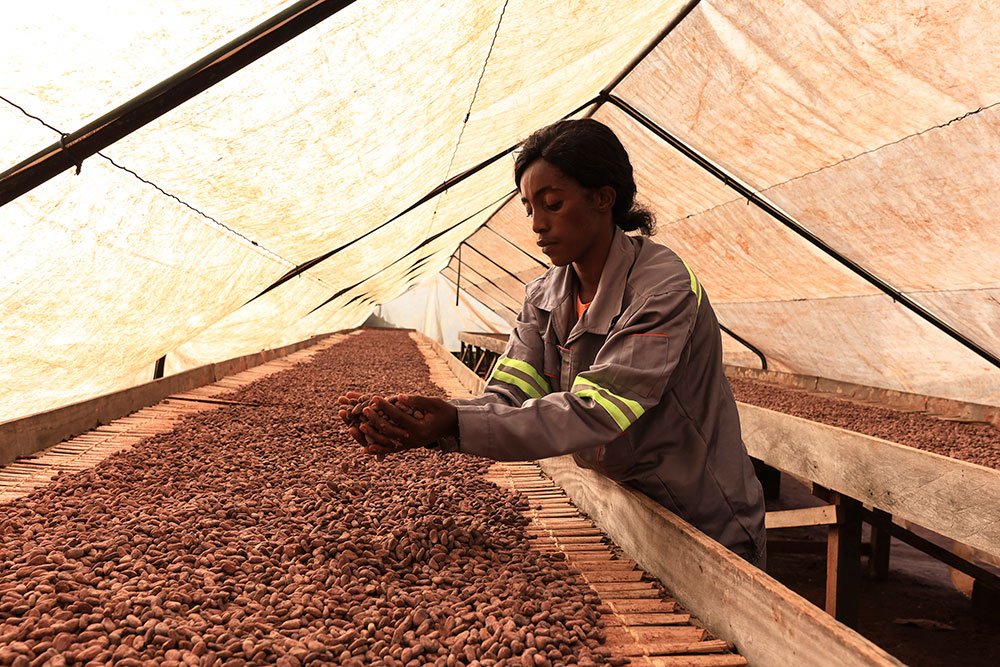

© FAO/BELOUMOU OLOMO DANIEL IN YAOUNDÉ, CAMEROON, THÉRÈSE ANGOULA, COCOA FARMER, TURNS OVER COCOA BEANS IN A DRYER.


