
OPPORTUNITIES
MOVE FOOD
FORWARD
YOUTH
MOVE FOOD
FORWARD
ENGAGEMENT
MOVE FOOD
FORWARD
SOLUTIONS
MOVE FOOD
FORWARD

Acknowledgements
The Status of Youth in Agrifood Systems was prepared by a team from the Rural Transformation and Gender Equality Division (ESP) of FAO under the leadership of Benjamin Davis and Lauren Phillips, under the overall guidance of Máximo Torero Cullen (Chief Economist). The report was developed under the conceptual guidance of Felix Kwame Yeboah (Assistant Professor and Director of Partnerships for Sustainable Community, Development Michigan State University) and the technical leadership of Lauren Phillips, Marwan Benali, Peter Wobst and Felix Kwame Yeboah, who coordinated the contributions prepared by FAO and academia for this report.
The core coordination team of the report included Carlo Angelico, Marwan Benali, Adriano Campolina, Francesca Dalla Valle, Benjamin Davis, Ileana Grandelis, Hitomi Ho, Alberto Marazzi, Lauren Phillips, Nicholas Sitko, Vanya Slavchevska, Peter Wobst and Felix Kwame Yeboah.
All individuals are affiliated with the ESP Division of FAO unless otherwise specified.
Chapter 1: Felix Kwame Yeboah (Michigan State University) led the research and writing team for Chapter 1 with contributions from Benjamin Davis, Lauren Phillips, Marwan Benali, Nicholas Sitko and Peter Wobst. Members of the report’s core coordination team provided valuable comments and insights on earlier drafts. Spotlight 1.1 on generational renewal was authored by Nicholas Sitko. Huda Alsahi carried out the research for Box 1.2.
Chapter 2: Felix Kwame Yeboah (Michigan State University), Vanya Slavchevska, Marwan Benali and Jan Martin Rossi co-led the research and writing of Chapter 2, with additional contributions from Cristina Rapone and Jacqueline Demeranville. The data analysis and visualization for the demographic section was carried out by Jan Martin Rossi and for the migration section by Yechale Endalew. Box 2.4 was developed by Luis Becerra Valbuena and Vanya Slavchevska, with inputs from Marwan Benali. Dung Thi Phuong Le supported the cleaning of survey data and Godwin Nutsugah (University of Georgia) provided research assistance for the initial drafts. The chapter benefited from valuable comments and insights from Benjamin Davis, Lauren Phillips, Nicholas Sitko, Gustavo Anríquez (Pontificia Universidad Católica de Chile) and Peter Wobst.
Chapter 3: Vanya Slavchevska, Lauren Phillips, Huda Alsahi and Clara Mi Young Park led the research and writing team for Chapter 3. Yechale Endalew played a crucial role in providing data analyses and research assistance, as well as preparing and revising most of the chapter's figures. Nimra Azhar carried out the initial analysis for the digital inclusion section, contributed to parts of the financial inclusion section and the individual-level analysis for the livestock section, as well as preparing Figure 3.12. Jacqueline Demeranville prepared Box 3.2. Annarita Macchioni Giaquinto carried out the analysis for Figure 3.6. Nimra Azhar and Huda Alsahi prepared Spotlight 3.1 on agri-digital financial services for young farmers and agriprenures. Lauren Phillips, Monica Romano and Libor Stloukal prepared Spotlight 3.2 on youth with disabilities.
Additionally, Ana Paula de la O Campos and Martina Improta (FAO ESA) prepared the figures derived from the RuLIS dataset included in the livestock, land and technology sections. Marzia Pafumi and Ileana Grandelis contributed to the initial draft of the Social capital section, and Marzia Pafumi further contributed to the initial drafting of the Digital inclusion section.
The authors are grateful to Haroon Akram-Lodhi (Trent University), Jessica Heckert (International Food Policy Research Institute [IFPRI]) and Ben White (International Institute of Social Studies, Erasmus University) for their invaluable and thoughtful feedback on the first draft.
Chapter 4: Marwan Benali, Natalia Piedrahita and Benjamin Davis led the research and writing team for Chapter 4, and Valentina Costa contributed to the initial draft of the chapter. Gustavo Anríquez (Pontificia Universidad Católica de Chile) carried out the analysis on intergenerational mobility and contributed to the related section. Jan Martin and Esther Heesemann played a crucial role in processing the geospatial data used in Spotlight 4.1 and the full-time equivalent data for Figure 4.12, respectively. Marwan Benali, Francesca Pastorelli, Maria Lee and Léo Keller prepared Spotlight 4.2 on child labour among the 15––17 cohort. Lauren Phillips and Mikaila Way (FAO Liaison Office for North America) prepared Spotlight 4.3 on Indigenous youth.
The authors thank colleagues who provided data instrumental to this chapter. Veronica Boero, Yonca Gurbuzer, Priti Rajagopalan and the RuLIS team (FAO ESS) kindly provided access to the “Employment in agrifood systems” microlevel data and the RuLIS harmonized data. David Bescond (ILO STATISTICS) and Stefan Kühn (ILO RESEARCH) kindly prepared and shared ILO ad hoc microdata tabulations and ILO global and regional estimates of youth employment in agriculture.
The authors also thank Ana Paula de la O Campos (FAO ESA), Nicholas Sitko, Lauren Phillips, Peter Wobst and Pierre Girard (French Agricultural Research Centre for International Development [CIRAD]) for their valuable feedback on previous versions of the chapter. The authors would also like to thank Aslihan Arslan (FAO ESA) for sharing her insights and advice on the computation of full-time equivalents.
Chapter 5: Christine Blake (University of South Carolina), Felix Kwame Yeboah (Michigan State University), and Lynnette Neufeld (FAO ESN) coordinated the research and writing of Chapter 5 with significant contributions from Edward Frongillo, Emma Kenney and Morgan Boncyk (all University of South Carolina), Annarita Macchioni Giaquinto, Erdgin Mane and Lauren Phillips. Sara Viviani and Carlo Cafiero (both FAO ESS) contributed to the food security analysis on youth. Annarita Macchioni Giaquinto, Natalia Piedrahita and Lauren Phillips prepared Box 5.1
We gratefully acknowledge the valuable insights and feedback from Benjamin Davis, Peter Wobst, Jane Lowicki-Zucca, members of the Food and Nutrition Division (ESN) at FAO, and Surabhi Dogra (International Association of Adolescent Health), Gahssan Mehmood (University of South Carolina), Molly O’Sullivan (Adolescent Health, Murdoch Children’s Research Institute), Natasha Lelijveld (Emergency Nutrition Network, United Kingdom of Great Britain and Northern Ireland), Tolulope Jayeola (Emergency Nutrition Network, Nigeria), Daisy Liz (Emergency Nutrition Network, Uganda) and Tawanda Mukwekwezeke (Emergency Nutrition Network, Zimbabwe), who reviewed and provided comments on earlier versions of the chapter.
Chapter 6: Nicholas Sitko led the research and writing team for Chapter 6. Additional authors include Esther Heesemann and Jessika Kluth. The chapter benefited from additional input from Erdgin Mane and Wolfgang Stojetz (International Security and Development Center), who conducted the analysis of armed conflicts and youth employment, and Kamran Khan Niazi, Rebecca Pietrelli and David Laborde (all FAO ESA) who led the analysis of subjective and material resilience. Natalia Piedrahita produced Figures 6.1 and 6.2.
We are grateful to John Hoddinott (Cornell University) and Greg Collins (University of Arizona) for their comments and inputs in earlier drafts.
Chapter 7: Felix Kwame Yeboah (Michigan State University) and Hitomi Ho led the research and writing team for Chapter 7. The team comprised Marzia Pafumi, Ileana Grandelis, Valentina Sommacal, Cecile Berranger and Andrea Sanchez Enciso. The chapter also benefited greatly from contributions by Nicholas Sitko and his team on resilience interventions, Lynnette Neufeld and her team on food security and nutrition, Vanya Slavchevska on resource access, Huda Alsahi and Nimra Azhar on digital technologies, Cristina Rapone, Jacqueline Demeranville, Lukrecia Mannell and Ion Bulgac on migration, and Federico Spano and Marco Knowles on social protection. Research assistance for initial drafts was provided by Mariamma Sow (formerly Michigan State University) and Matilde Bonetta.
The methodology for estimating the gains of eliminating youth unemployment on gross domestic product and the contribution of agrifood systems was developed by Gustavo Anríquez (Pontificia Universidad Católica de Chile), with inputs from Marwan Benali, Annarita Macchioni Giaquinto and Erdgin Mane. Benjamin Davis, Lauren Phillips, Nicholas Sitko, Vanya Slavchevska, Peter Wobst and Felix Kwame Yeboah contributed to exchanges on this analysis.
We are grateful to Lauren Phillips for her overall guidance throughout the process. Special thanks go to Thomas S. Jayne (Michigan State University), Benjamin Davis, Marwan Benali, Peter Wobst and members of the Decent Rural Employment team of the ESP Division, the Office of Youth and Women (FAO OYW), and the Save the Children team who provided valuable comments and insights in earlier drafts.
Report review: The Directors and Deputy Directors of the Economic and Social Development stream of FAO provided comments. Colleagues from the Agrifood Systems and Food Safety Division (ESF) of FAO also provided comments on various sections of the report.
Expert advisory group: The report’s advisory group included Elisenda Estruch-Puertas (ILO), Louise Fox (Brookings Institution), Pierre Girard (CIRAD), Jane Lowicki-Zucca, Sudha Narayanan (IFPRI), Julie Perdue and Malini Tolat (Save the Children), Carolina Trivelli (Institute of Peruvian Studies), Veronica Valdivieso (Save the Children) and Thomas Yeboah (Kwame Nkrumah University of Science and Technology, Ghana). Members of the expert advisory group provided thoughtful feedback and inputs that contributed to improving the report’s structure and content at various stages of its development.
Expert consultations: An internal consultation was held in January 2024 to discuss the initial structure and thematic foci of the report. The workshop brought together colleagues from the technical teams of the ESP Division of FAO, namely the Decent Rural Employment Team, the Gender Team, the Land Tenure Team, the Right to Food Team, the Inclusive Rural Finance Team, the Rural Institutions and Territorial Development Team, the Social Protection Team and the Socio-Economic Research and Analysis Team. Colleagues from other divisions of the Economic and Social Development stream of FAO participated in and contributed to the workshop, namely Aslihan Arslan, Katia Covarrubias, Ana Paula de la O Campos (all FAO ESA) and Yonca Gurbuzer (FAO ESS).
Special thanks also to Aslihan Arslan for her insights and feedback on the initial concept of the report and the initial themes identified to be covered in the report.
Two additional consultations were held as part of the process of writing The Status of Youth in Agrifood Systems. The first consultation, conducted remotely in July 2024, discussed the report’s outline and concept with youth representatives. The second consultation, held in October 2024, involved a wider range of participants. This session covered a variety of important topics, including the profile of rural youth across time and space, youth labour outcomes in agrifood systems, food security, nutrition and climate change impacts, as well as youth resilience in the face of shocks and migration. The consultation also explored key enablers of youth engagement in agrifood systems.
External participants: Angela Arevalo (World Rural Forum [WRF]); Christine Blake (University of South Carolina); Merewalesi Bogi Rokosawa (WRF); Maria Paola Boselli (La Via Campesina); Célia Bühler (Young Professionals for Agricultural Development [YPARD]); Silvia Caprara (World Farmers’ Organization [WFO]); Evangelista Checkera (WFO); Alanna Coneybeare (Canadian Agricultural Youth Council); Valentine Copt (Bern University of Applied Sciences (BFH-HAFL)); Edoardo Corriere (YPARD); Giulia De Castro (WFO); Joao De Morais (WFO); Nicolas Domke Venegas (Global Youth Biodiversity Network [GYBN]); Opeyemi Elujulo (MGCY – Major Group for Children and Youth); Elisenda Estruch Puerta (ILO); Lorenzo Gentile (World Food Forum [WFF]); Wendy Geza (University of KwaZulu-Natal, South Africa); Isnawati Hidayah (WFF – Young Scientists Group); Shaik Imran Hussein Choudhary (YOUNGO – official children and youth constituency of the United Nations Framework Convention on Climate Change [UNFCCC]); Apollo Karuga (YOUNGO); Bine Liem (UN Youth Representative for Biodiversity and Food for the Kingdom of the Netherlands); Jane Lowicki-Zucca; Tafadzwanashe Mabhaudhi (University of KwaZulu-Natal, South Africa); Tiffany Marcelle (WRF); William McManiman (Canadian Agricultural Youth Council [CAYC]); Josiah Mullet Koop (CAYC); Sudha Narayanan (IFPRI); Asli Ocal (La Via Campesina); Sebastian Pedraza (YPARD); Jamie Pepper (WFO); June Pomposo (WRF); Lilaraj Raut (WRF); Ida Simonsen (UN Youth Representative for Biodiversity and Food for the Kingdom of the Netherlands); Lisa Nellie Tamtam (Global Indigenous Youth Caucus); Genna Tesdall (YPARD); Malini Tolat (Save the Children); Veronica Valdivieso (Save the Children); Yazmeen Wardman (Global Indigenous Youth Caucus) and Raymond Wauya (WRF); Felix Kwame Yeboah (Michigan State University) and Thomas Yeboah (Kwame Nkrumah University of Science and Technology, Ghana).
Internal participants within FAO: Huda Alsahi, Carlo Angelico, Ward Anseeuw, Marwan Benali, Cécile Berranger; Veronica Boero (ESS); Adriano Campolina, Valentina Costa, Tea Dabrundashvili, Francesca Dalla Valle, Benjamin Davis; Ana Paula de la O Campos (ESA); Jacqueline Demeranville, Daniele Epifanio, Ariane Genthon, Ileana Grandelis, Hitomi Ho; Tomoko Kato (ESN); Katherine Kemp (ESA); Jessika Kluth, Maria Lee, Annarita Macchioni Giaquinto, Erdgin Mane, Alberto Marazzi, Rumbidzai Ndoro; Lynnette Neufeld (ESN); Kamran Khan Niazi (ESA); Marzia Pafumi, Clara Park, Lauren Phillips, Natalia Piedrahita; Rebecca Pietrelli (ESA); Giorgia Prati; Priti Rajagopalan (ESS); Cristina Rapone, Rodrigo Rivera, Maria Paola Rizzo, Jan Martin Rossi, Nicholas Sitko, Vanya Slavchevska, Libor Stloukal and Peter Wobst.
Editorial, communications and administrative support: Carlo Angelico led the production of the report. Fabiana De Giorgio provided support throughout the process. Bruce Ross-Larson (Communications Development, Inc) helped refine the structure of the publication and David McDonald copy-edited the content and prepared the list of abbreviations. Creative design and graphic template were provided by Futerra, while Visiontime and Art&Design Srl worked on content layout and formatting. Alberto Marazzi provided administrative support throughout the development of the report and the production process. Translations were delivered by the Language Branch (CSGL) of the FAO Governing Bodies Servicing Division (CSG). Huda Alsahi, Marwan Benali, Ileana Grandelis, Jun He, Alejandra Safa, Yahor Vetlou and Lixia Yang reviewed the translated versions of the Overview of the report. Hitomi Ho, Peter Wobst and Anna Befus prepared the Glossary for the report.
Carlo Angelico led the outreach and communications activities for the report. Fabiana De Giorgio played a central role in supporting these efforts. Fiona Funke, Emily Kitongo, Daniele Epifanio and Anna Befus contributed throughout the process. The communications campaign was crafted in collaboration with Futerra. We gratefully acknowledge the FAO Office of Communications (OCC) and the FAO Office of Youth and Women (OYW) for their support in outreach efforts. We also extend our sincere thanks to the Kingdom of the Netherlands for the financial contribution to the launch of the report.
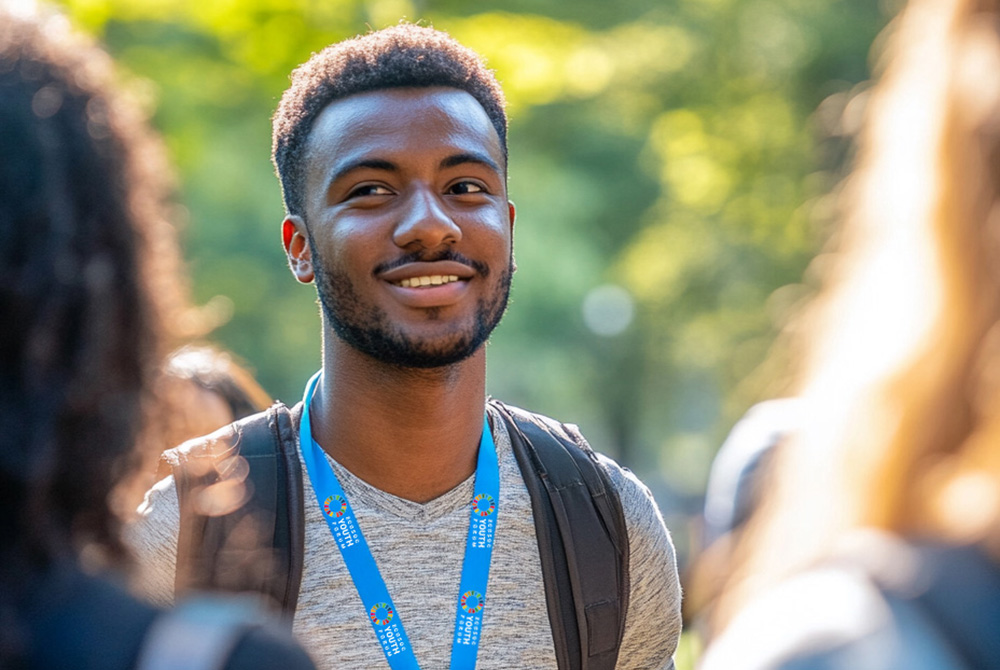

©VISIONTIME/MELANIE BOUTROS YOUTH GATHERING AT CENTRAL PARK, ON THE SIDELINES OF THE ECOSOC INFORMAL YOUTH SUMMIT OF THE FUTURE AND LOCAL PACTS FOR THE FUTURE, NEW YORK, 2024.


