info
close
For almost every safe ingredient that hits our plates, a lab somewhere has done the hard work
©FAO/Miguel Arreategui

The science behind food safety

Safe food does not occur spontaneously: it is the result of intense research, codification and policymaking.

For over 60 years, drawing strength from mandate complementarity, FAO has worked with the World Health Organization (WHO) to provide sound, neutral and independent scientific advice. The Codex Alimentarius, addressed in detail later, captures the science as the basis for international food safety standards, guidelines and codes of practice.

Policymakers use this scientific advice in managing food safety risks and making human nutrition recommendations in step with the resources available to them.

FAO/WHO bodies providing scientific advice on food safety, nutrition and hazards

The following scientific expert committees and meetings convene or take place regularly, with participants selected on the basis of specialist knowledge to serve in a personal capacity alongside FAO and WHO experts.

Ad hoc expert consultations and meetings are also organized in response to specific needs or emergency situations.

JECFA

The Joint FAO/WHO Expert Committee on Food Additives

The body was founded in 1956 to provide scientific advice on food additives, contaminants and residues of veterinary drugs in food. It establishes and updates the principles for the safety assessment of chemicals in food. This is an evolving field, with ever more nuanced health outcomes requiring analysis. JECFA has paved the way to comprehensively addressing acute and chronic risks posed by contaminants, including exposure to a single pesticide or veterinary drug from multiple dietary sources.

JEMRA

The Joint FAO/WHO Expert Meetings on Microbiological Risk Assessment

This scientific expert group was formed in 2000 to gauge different aspects of microbiological hazards in food, with an emphasis on applicability to low- and middle-income countries. To date, almost 400 experts have contributed to around 40 monographs. With 900 citations, JEMRA has made a demonstrable contribution to science.

JMPR

The Joint FAO/WHO Meeting on Pesticide Residues

Established in 1963, JMPR conducts risk assessments on pesticide residues and provides independent scientific expert advice on setting maximum residue limits (MRLs). It also develops and updates the principles and methodologies for risk assessment of pesticide residues in food. As of late 2022, JMPR had evaluated more than 300 pesticides and recommended more than 5 000 MRLs.

JMPS

The Joint FAO/WHO Meeting on Pesticide Specifications

JMPS is an expert ad hoc body created in 2002 to produce recommendations on the adoption, extension, modification or withdrawal of pesticide specifications. To date, more than 2 000 pesticide specifications/equivalences have been established/determined. JMPS has also developed the FAO/WHO training manual on development and use of the pesticide specifications.

JMPM

The Joint FAO/WHO Meeting on Pesticide Management

First convening in 2007, JMPM advises on matters pertaining to pesticide regulation, management and use, and issues alerts on new developments, problems or issues that otherwise merit attention. JMPM combines the FAO Panel of Experts on Pesticide Management and the WHO Panel of Experts on Vector Biology and Control. Both are statutory bodies of their respective organizations.

JEMNU

The Joint FAO/WHO Expert Meetings on Nutrition

JEMNU was established in 2010 to provide scientific information and advice on nutrition. A recent example of its work was the publication of methods to determine the protein content of soy-based and milk-based ingredients in infant and follow-up formula.

The Codex Alimentarius

The Codex Alimentarius is a crucial resource, with a vital role in ensuring the safety and quality of food. This “food code” contains internationally agreed standards, applicable throughout the food supply chain. Its purpose is to protect health and facilitate trade. For consumers, this means food produced according to Codex guidance is safe and of the expected quality.

The texts contained in the Codex are considered the gold standard for international commerce in food – and as such are recognized by the World Trade Organization (WTO). They facilitate cross-border exchange, while preventing and helping resolve trade disputes.

Work towards the Codex started in the 1950s, as post-war international food trade took off. But conflicting or absent safety standards remained a serious obstacle.

A founding meeting was held in 1963. Some 60 years later, the Codex represents a comprehensive and continuously updated collection of more than 300 standards, guidelines and codes of practice. It also includes over 10 000 specified limits for additives, contaminants, pesticide and veterinary drug residues.

Of particular note are the “General Principles of Food Hygiene” adopted in 1969, a foundational Codex text that is regularly updated and guides food producers worldwide, from multinationals and chain restaurants to the local street food vendor.

Building consensus

Participation is wide. Discussions are held in 20 technical committees that meet throughout the year. Decisions are taken by 189 Members at the annual session of the Codex Alimentarius Commission. Over 240 Observer organizations are accredited to Codex to give input in their area of expertise. These include non-governmental organizations and umbrella bodies representing the private sector.

Productive collaboration is a driving principle. For example, the FAO GM Foods Platform is a publicly accessible repository, informed by sections of the Codex, through which Members can share information on safety assessments of foods derived from genetically modified plants.

We have developed a four-part, publicly available online training course that covers the background to the Codex; how to use its standards; regional collaboration and FAO/WHO coordination committees; and the role of science and risk assessment in formulating Codex texts.

nutrition facts labels

Labels save lives

Food labelling is vital. Food labels tell us what is in our food and how long it will keep. By reading them, we make healthy choices, prevent wastage and are better protected from counterfeit products which may harm us.

The Codex Alimentarius includes the “General Standard for the Labelling of Prepackaged Foods”, used by countries as guidance for harmonization and as the basis for new food labelling policies.

The rise in food intolerances, and increasing awareness of the dangers of allergies, are another reason to focus on labelling that is standardized, accurate and easy to understand. Guidance on allergen management for food business operators is included in the Codex. It is based on the latest scientific information provided by FAO and WHO.

Science in action

Grounds for safe food

Mycotoxins – toxic metabolites produced by fungi – can spoil foods like maize and groundnuts, as well as high-value commodities such as coffee and cocoa. They present a threat to both human and animal health. They are implicated in liver and kidney damage, as well as in the risk of developing cancer. And their presence at hazardous levels has an economic impact, with disadvantaged populations typically experiencing the worst effects.

Climate change presents new risks here. Increased temperatures, for example, can adversely affect the prevalence of mycotoxins in susceptible crops at all points in the chain, from seed storage, propagation and growth, to harvest, storage, processing and distribution.

Our scientific work on this and similar subjects has underpinned texts in the Codex Alimentarius that help guide countries which otherwise lack research or regulatory capacity.

FAO has also produced an easy-to-understand, freely available online tool to guide testing of different commodities for mycotoxins. It should be of use to national authorities and food producers.

Keeping antimicrobials working

Resistance to antibiotics, along with other antimicrobials such as fungicide, is one of today’s most urgent public health threats. Globally, it is estimated that antimicrobial resistance (AMR) directly caused 1.27 million deaths in 2019, while antimicrobial-resistant infections played a role in 4.95 million deaths.

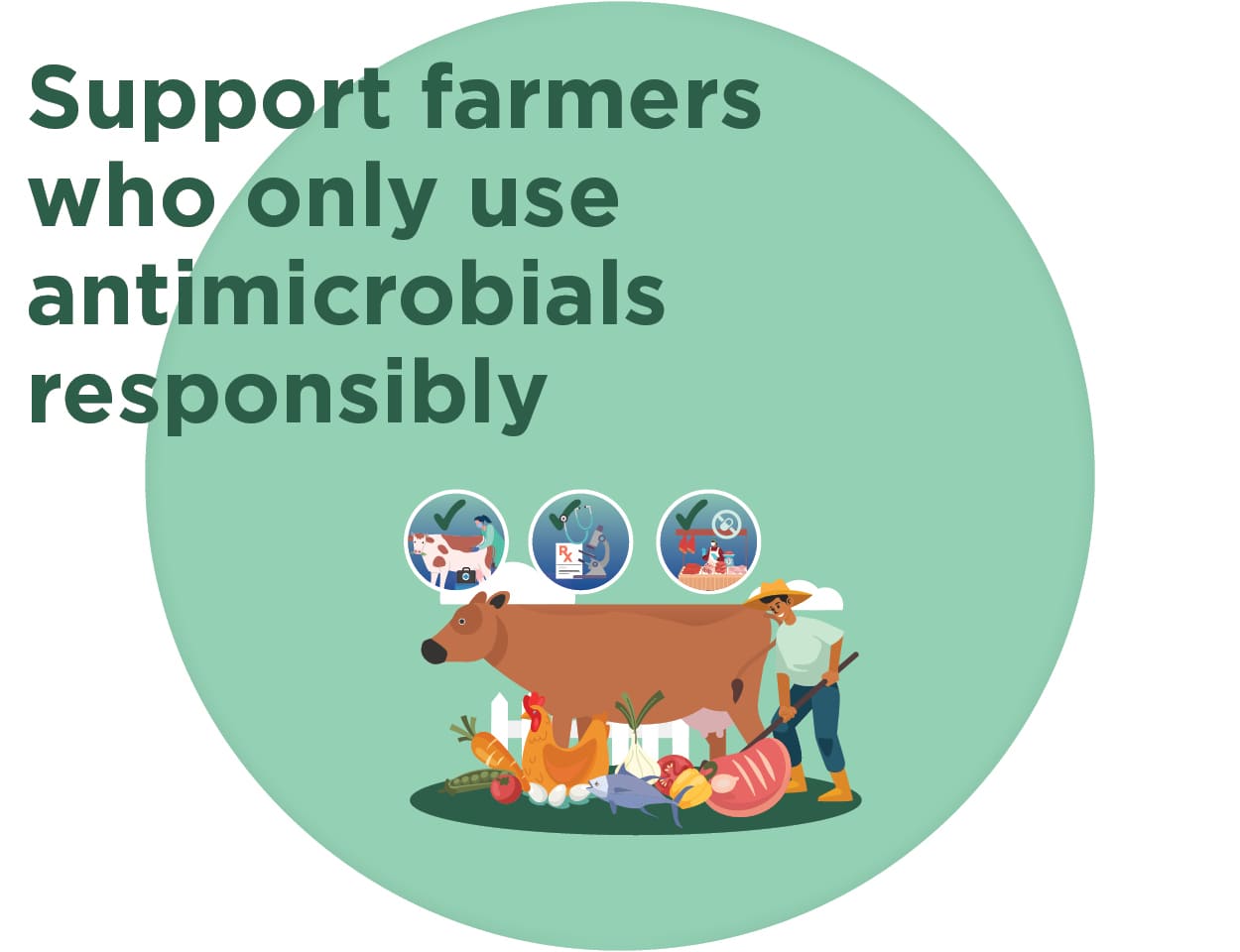
Some antimicrobial infections may be transmitted through food. In addition to use in human medicine, the use of antimicrobials in livestock, aquaculture and crop production is driving resistance, making diseases difficult or impossible to treat – in humans, animals and plants alike.

FAO is committed to the responsible use of antimicrobials. This means improving food production practices, hygiene and sanitation to limit the contamination of foods during both production and processing. It also involves strict monitoring of the prevalence of antimicrobial-resistant pathogens and unsafe residues.

With scientific advice from FAO and WHO, Codex recently updated and developed texts which provide Members with a One Health approach to minimize and contain foodborne antimicrobial resistant bacteria, and undertake monitoring and surveillance of these organisms in the food chain.

Safe seafood

Some algae, phytoplankton and fishborne bacteria produce powerful toxins which, if ingested, can cause gastrointestinal illness and even long-term neurological disease. In a small percentage of cases, they cause death.

Climate change and coastal water pollution create an enabling environment for harmful algal blooms, which have become more frequent, more intense and more widespread in recent decades.

Ciguatera fish poisoning is typically caused by an algal toxin that accumulates in reef fish. The toxin has no smell or taste and cannot be destroyed by home cooking. The symptoms of poisoning include nausea, vomiting, and neurological symptoms such as tingling fingers or toes. In very light cases, these pass after a few days or weeks, but in some cases the effects can be severe and last for years. Together with WHO, FAO has developed guidelines for managing and mitigating the risk.

FAO supports fishers, fish farmers, fish handlers and processors to stop such toxins entering the supply chain. The 189 Codex Members have agreed to a code of practice which directs and incentivizes preventative measures.

info
close
The ciguatera-producing Gambierdiscus toxicus
@Smithsonian/M.A. Faust
info
close
Group B Streptococcus found in raw tilapia poisoned many in Singapore in 2015
©FAO/Timothy Barkham

Addressing emerging threats

In 2015, a bacterium called Streptococcus agalactiae, also known as Group B Streptococcus (GBS), caused an unprecedented foodborne disease outbreak that affected almost 150 people in Singapore, many of them healthy adults. The consequences were severe, including septicaemia or bacteraemia (blood poisoning). Penicillin can combat the symptoms, but only if they are identified quickly. Mortality may reach 80 percent.

The authorities traced the outbreak to the consumption of raw tilapia, a freshwater fish. But there is much that is not known about this sequence type of GBS. FAO rapidly produced a risk profile to inform aquaculture practices and guide producers throughout the supply chain to minimize danger, pending further research.

Meanwhile, seaweed has long formed part of the diet in many countries. Since 2000, production across the world has more than tripled. But seaweed consumption is not without risk. Factors at play include the type of seaweed, the season, and the way it is harvested and processed. There may also be hazards associated with heavy metals and marine biotoxins.

With legislation on seaweed production and utilization largely lacking, FAO is at the forefront of work to identify and analyse hazards, and develop guidance for what may become a pillar of future food security.

back to top back to top