

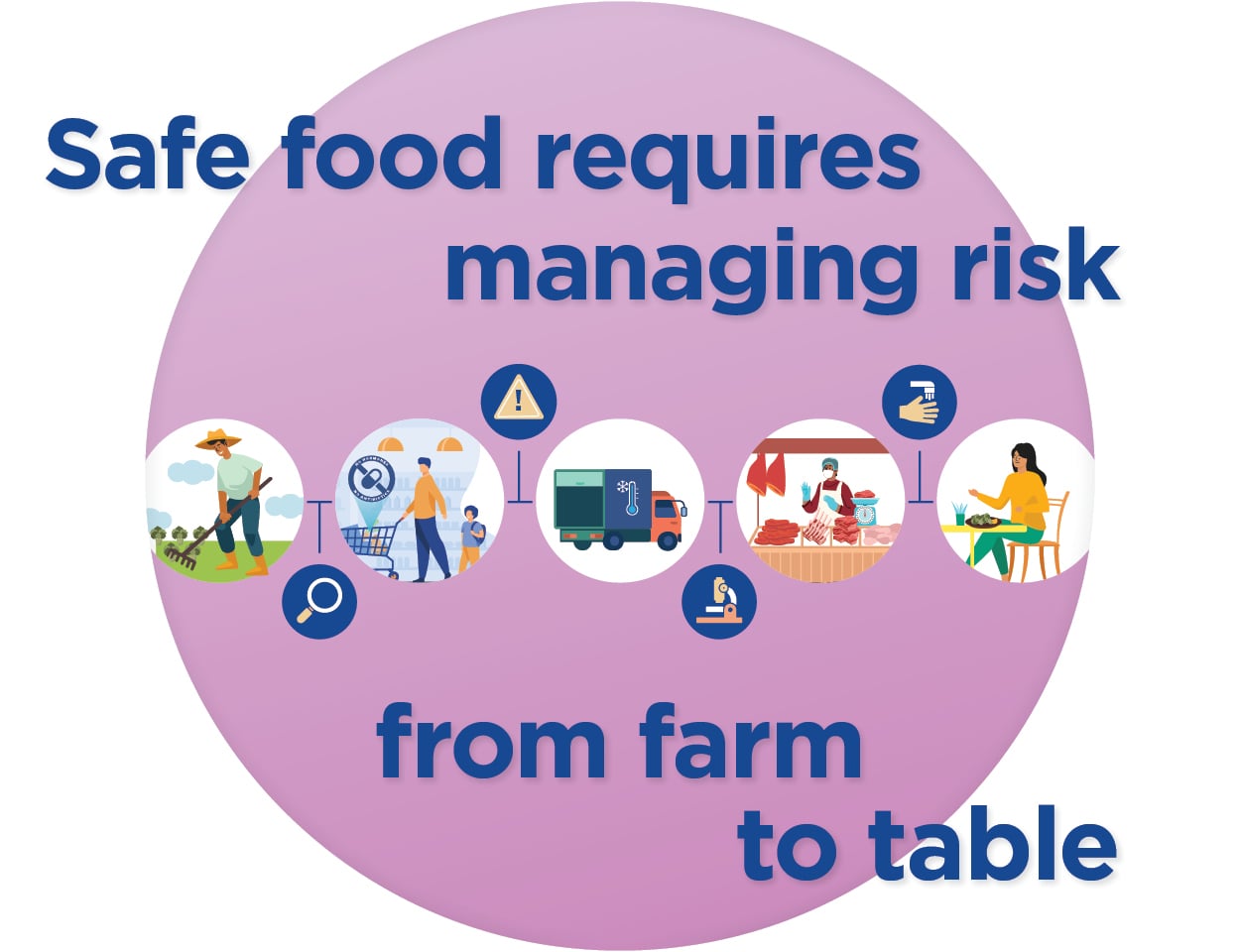


The world needs safer, more affordable and healthier diets for all, produced in a sustainable manner, along with the equitable improvement of economic outcomes and livelihoods.
Emerging technologies and new food production systems such as cell-based food production, 3D-printed food, aquaponics and vertical urban agriculture, may hold some of the answers we seek. Likewise, the global adoption of foods that were previously unique to some parts of the world, like seaweed, algae, jellyfish or edible insects, may contribute solutions.
However, even potentially positive developments in sustainable supply can have food safety implications which need to be assessed, communicated and managed across borders.
FAO Foresight is a programme that helps policymakers and private sector operators address issues that will, or could, emerge in the medium-to-long term. It starts with gathering information through horizon scanning and scenario building, then analysing it and using the results for proactive decision-making. While the hazard may be substantial, the risk, if properly managed, can be kept to a minimum.
Hazards are evolving daily. Each day, for example, our microbiome is exposed to new microorganisms and compounds. The potential of food additives, residues of veterinary drugs and other contaminants to induce changes in the gut, along with possible consequences for human health, is increasingly on FAO’s food safety agenda. The need to evaluate hazards, for the microbiome as in all areas where food is a factor, is therefore constant and ever-changing.

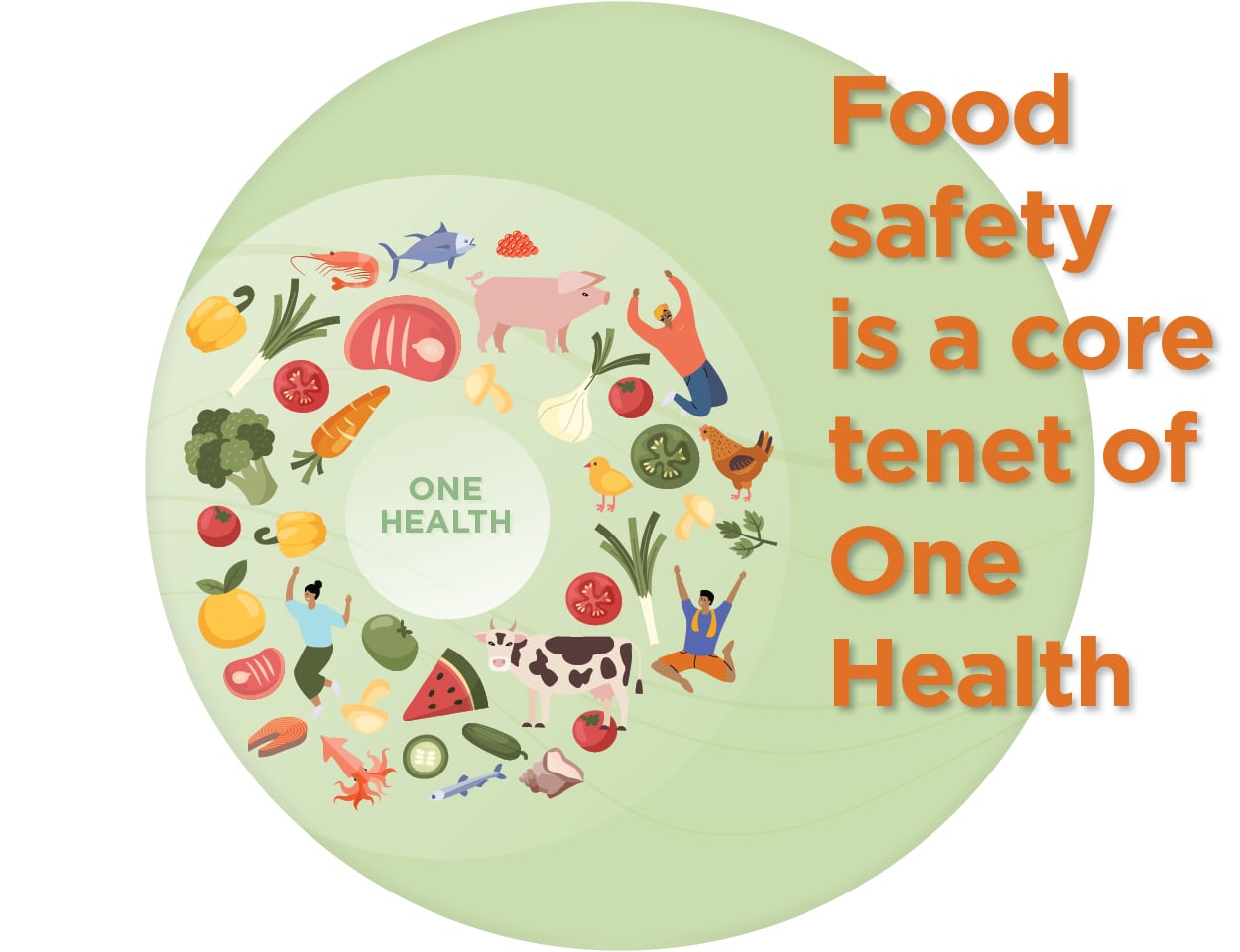
The way we interact as humans with animals, plants and the environment as a whole, involves tightly interwoven and extremely delicate mechanisms. This idea is especially relevant to the field of food safety, where microorganisms are easily transferred to people through crops grown on contaminated soil, or from foods sourced from diseased animals.
FAO embraces the concept of One Health, which recognizes the holistic nature of life on Earth. The idea has long been part of effective food safety management, and will play an even more important role in ensuring food remains safe in an era of emerging technologies and new food sources.
The seasoning is typical for the region: lime, chilli, garlic and salt. But the key ingredient of Mexican chapulines is not meat as many might understand it: it is deep-fried grasshoppers.
Insects have long formed part of diets around the world, and entomological agriculture may be a source of food for many more of us in future. Their carbon footprint and water requirements, lower than those of other animal species, can make insects ideally suited to help achieve food security for a growing world population.
Insects also offer high nutritional value, ease of rearing, and the ability to be farmed in modular environments that could suit urban spaces. But if insects are to find a place on menus globally, there is much work to be done to ensure they are safe to eat.
As with other foods, edible insects can also be associated with food safety hazards, including biological contaminants, which may be greater if they are harvested in the wild or eaten raw. There is also the risk of allergy, and an absence of regulation governing their production and trade.
FAO is at the forefront of food safety in this new field.
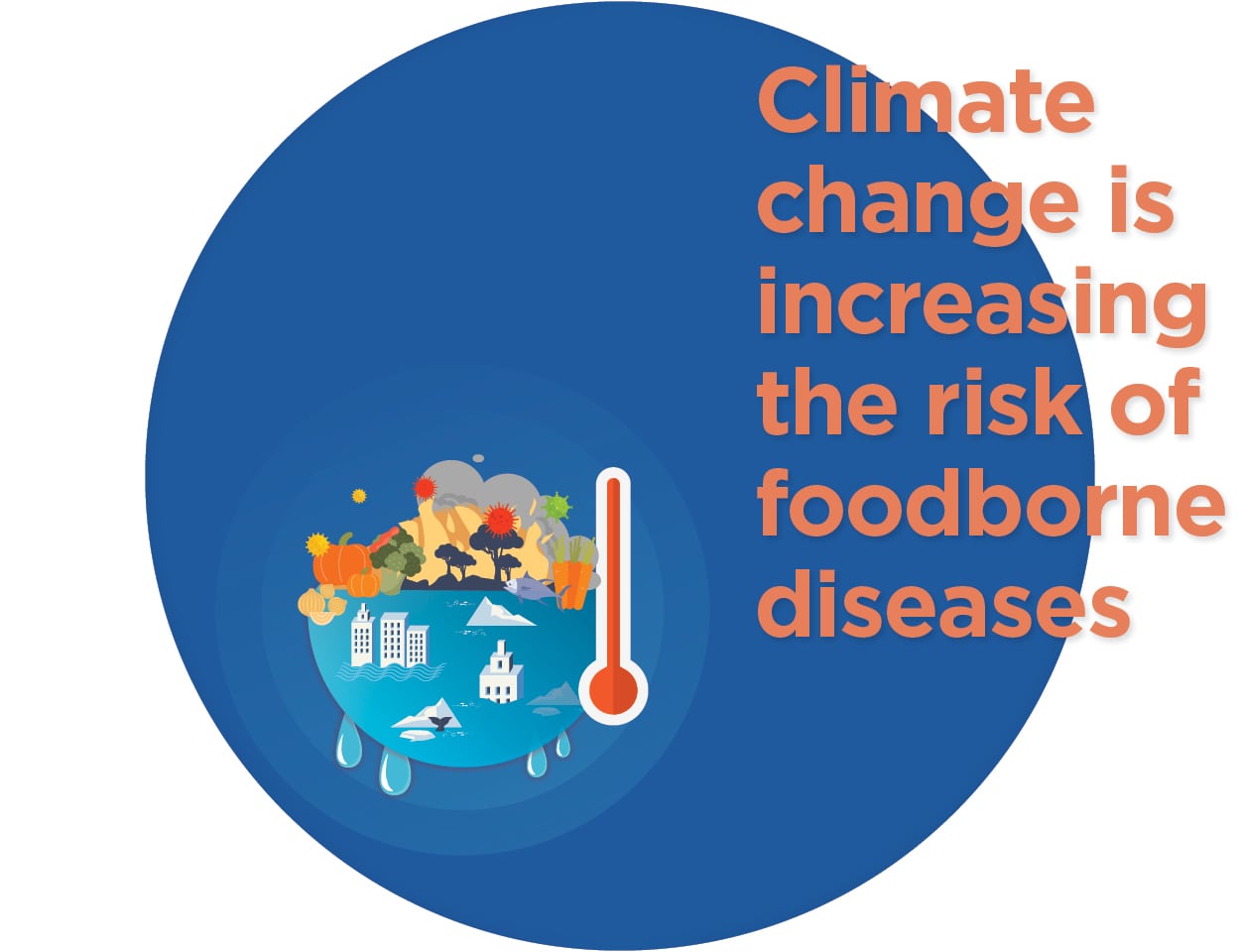
While climate change is a reality most are familiar with, FAO believes its effect on food safety should be much better understood. The Organization produced a publication on the topic in 2020.
Increasing temperatures can promote the survival and proliferation of foodborne pathogens like salmonella and vibrio, while there is evidence that the prevalence of mycotoxins and marine toxins from algal blooms may be increased by climate change. Put simply, these are beginning to occur outside their “traditional” environments.
Climate change can also increase contamination of staple foods such as rice, presenting further danger to populations already at risk from malnutrition.
Globalization has greatly lengthened food supply chains, which adds to the stress on existing food control systems. Climate change means regulations need further improvement still.
Effective international collaboration and monitoring, permitting digitized traceability and analysis, integrated into a structured foresight system, would provide many of the answers we need.
The relationship between unsafe food and climate change is circular: a third of the food we produce is wasted, in part because of contamination, the risks of which grow as temperatures rise.
 back to top